

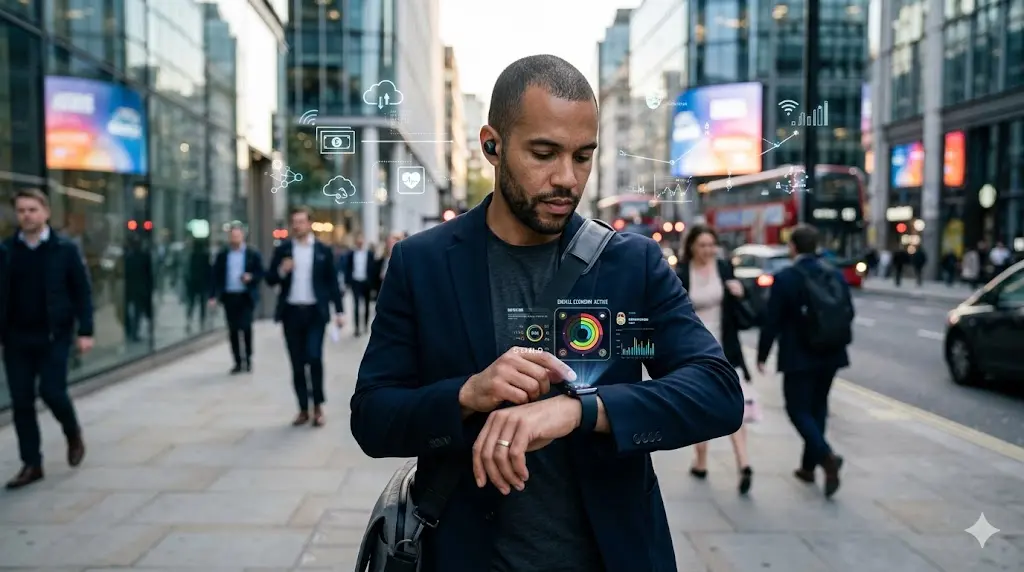
Wearable technology is no longer just about counting steps or checking notifications on your wrist. It’s becoming a core part of the digital economy because businesses, workers, consumers, and healthcare providers now rely on real-time data to make faster and smarter decisions. From smartwatches to industrial wearables, these devices are quietly changing how people work, shop, communicate, and even stay healthy.
Wearable technology matters because it connects people directly to digital systems in real time. Businesses use wearable devices to improve productivity, collect data, increase customer engagement, and support remote work. Consumers benefit from convenience, health tracking, faster payments, and personalized experiences.
What Is Wearable Technology?
Wearable Technology: Electronic devices designed to be worn on the body that collect, process, and share data through internet-connected systems.
That definition sounds technical, but the idea is pretty simple. A smartwatch that tracks your heart rate, smart glasses used in warehouses, fitness bands, and even connected healthcare patches all fall into this category.
What makes wearable technology powerful isn’t the hardware alone. It’s the nonstop flow of information between the device, the user, and digital platforms.
Here’s the thing most people overlook: wearable devices aren’t replacing smartphones. They’re reducing the need to constantly use them.
That shift matters more than it sounds.
A delivery worker checking route updates through smart glasses saves time. A hospital monitoring patient vitals remotely can respond faster during emergencies. Retail stores using wearable payment systems shorten checkout lines and improve customer experience.
In my experience, the businesses adapting early to wearable technology usually gain an edge because they react faster to data than competitors still depending on slower manual systems.
Why Wearable Technology Matters in 2026
By 2026, wearable technology is expected to become deeply connected with digital payment systems, remote healthcare, AI-driven personalization, and workplace automation. It’s no longer a niche consumer gadget market.
It’s infrastructure.
Companies now understand that real-time data creates real-time business opportunities. That’s why wearable devices are becoming central to the digital economy.
Several factors are driving this shift.
Real-Time Consumer Behavior Data
Businesses love data. Wearables provide constant behavioral insights without forcing users to manually enter information.
For example, fitness apps can recommend products based on activity levels. Insurance providers can offer dynamic pricing based on wellness habits. Retail apps can personalize offers depending on movement patterns and shopping behavior.
Some people find that slightly creepy. Honestly, they’re not wrong.
Still, consumers often trade data for convenience if the value feels worthwhile.
Contactless Payments Are Becoming Standard
Smartwatches and wearable payment bands are making physical wallets less necessary. In many urban areas, consumers now tap wearable devices for transportation, coffee purchases, and grocery shopping without pulling out a card.
What once felt futuristic now feels normal.
This shift supports the broader digital economy because faster transactions reduce friction. Businesses process more customers efficiently, while consumers spend less time waiting.
Remote Healthcare Is Expanding Fast
Healthcare wearables are probably one of the biggest reasons this industry keeps growing.
Doctors can monitor patient health remotely through connected devices tracking blood pressure, glucose levels, oxygen saturation, and heart activity. That improves preventive care while reducing unnecessary hospital visits.
A realistic example? Imagine a patient recovering after surgery at home while doctors receive alerts if unusual health patterns appear. That kind of monitoring wasn’t practical at scale a decade ago.
Now it is.
Wearables Improve Workplace Productivity
Factories, logistics companies, and warehouses increasingly use wearable technology to improve efficiency and worker safety.
Smart helmets can detect fatigue. Connected gloves reduce picking errors in warehouses. Wearable scanners speed up inventory management.
Some workers initially resist these systems because they feel monitored too closely. That concern is fair. But companies using wearables responsibly often see fewer accidents and better operational performance.
AI and Wearables Work Together
Artificial intelligence becomes more useful when it receives continuous data.
Wearables feed AI systems with information about movement, habits, health, sleep, location, and behavior patterns. That allows businesses to personalize services far more accurately.
You’ve probably noticed this already. Music recommendations, fitness coaching, shopping suggestions, and even productivity reminders increasingly adapt to your routines.
That personalization keeps users engaged longer, which directly supports digital business growth.
Businesses adopting wearable technology should focus on solving one clear problem first instead of trying to build an all-in-one system immediately. Companies that start small usually see faster adoption and fewer internal pushbacks.
How Wearable Technology Supports the Digital Economy Step by Step
Many people understand wearable devices individually but struggle to see how they fit into the larger digital economy. Let me break it down in a practical way.
1. Devices Collect User Data
Wearables gather information such as movement, location, health metrics, purchasing habits, and communication activity.
This happens continuously and often automatically.
2. Cloud Platforms Process Information
The collected data moves into connected systems where algorithms analyze patterns and behaviors.
That analysis creates actionable insights.
3. Businesses Personalize Services
Retailers recommend products. Healthcare systems send alerts. Employers optimize workflows. Financial apps adjust notifications.
Consumers receive experiences tailored to their behavior.
4. Faster Decisions Improve Efficiency
Companies can react quickly because data arrives in real time rather than days or weeks later.
That speed matters in customer service, healthcare, logistics, and online commerce.
5. Consumers Stay Connected Everywhere
Wearable devices reduce the gap between online and offline experiences. People interact with digital systems while walking, exercising, traveling, shopping, or working.
That constant connectivity drives digital transactions throughout the day.
The Unexpected Downside Most People Ignore
Here’s a slightly unpopular opinion.
More wearable technology doesn’t automatically mean better productivity.
I’ve seen workplaces overload employees with notifications, alerts, tracking systems, and performance metrics. Instead of improving efficiency, it creates mental fatigue.
Sometimes less data leads to clearer decisions.
Companies that succeed with wearable adoption usually avoid micromanaging employees through nonstop monitoring. They use technology selectively rather than obsessively.
That balance matters.
How Wearable Technology Is Changing Consumer Expectations
Consumers now expect instant experiences.
Wearables feed that expectation because they reduce delays and interruptions. Instead of opening apps repeatedly, users receive information proactively.
Think about how quickly habits change. Ten years ago, people manually checked weather apps multiple times daily. Today, smart devices often notify users before weather conditions become a problem.
That convenience reshapes customer expectations across industries.
Banking and Payments
Consumers expect frictionless transactions. Wearables make payments nearly invisible.
Healthcare
Patients increasingly expect remote monitoring and digital access to health insights.
Fitness and Wellness
People want real-time progress tracking instead of occasional checkups.
Retail
Shoppers expect personalized recommendations and location-based experiences.
Businesses ignoring these behavioral shifts may struggle to keep customer attention.
If you’re a business owner exploring wearable technology, focus heavily on privacy communication. Consumers are more willing to adopt wearable systems when companies clearly explain how data is collected and protected.
Real-World Example: Wearables in Logistics
A mid-sized logistics company introduced wearable barcode scanners and smart glasses inside one warehouse operation.
At first, workers hated the idea.
Management assumed the technology alone would improve performance, but productivity barely moved during the first month because employees weren’t trained properly.
After simplifying the system and reducing unnecessary alerts, picking accuracy improved by nearly 20%, while order processing times dropped significantly.
What most guides miss is this: wearable technology only works when humans actually want to use it.
Bad implementation ruins otherwise useful tools.
Wearable Technology and the Rise of Digital Health
Digital health technology is becoming one of the strongest growth areas for wearable devices.
Smart health wearables now help people monitor stress, sleep quality, hydration, heart activity, and exercise recovery. That creates opportunities for healthcare providers, insurance companies, and wellness brands.
Some experts believe wearable healthcare monitoring could eventually reduce pressure on overcrowded hospitals by helping identify medical risks earlier.
That seems realistic, at least from what I’ve seen in current healthcare trends.
There’s also a financial side to this shift.
Healthcare systems spend huge amounts treating preventable conditions. Wearables encourage ongoing monitoring rather than reactive treatment after symptoms worsen.
That changes the economics of healthcare over time.
Why Businesses Are Investing Heavily in Wearable Technology
Businesses aren’t investing billions into wearables because they’re trendy gadgets.
They’re investing because wearable ecosystems generate valuable commercial advantages.
Better Customer Engagement
Wearables keep brands connected to users throughout the day rather than during isolated app sessions.
Faster Data Collection
Companies gain immediate behavioral insights instead of waiting for surveys or reports.
Stronger Automation
Wearables reduce repetitive tasks in industries like logistics, healthcare, manufacturing, and retail.
More Personalized Experiences
Personalization increases customer retention, spending, and satisfaction.
Competitive Advantage
Businesses adopting wearable technology early often improve operational efficiency before competitors catch up.
That advantage compounds over time.
Common Misconception About Wearable Technology
Wearables Are Only for Fitness Enthusiasts
This assumption is outdated.
Fitness trackers helped popularize wearables, but the industry now includes healthcare monitoring, industrial safety equipment, augmented reality glasses, connected payment systems, and workplace productivity tools.
A warehouse employee using smart gloves is part of the wearable technology economy just as much as someone tracking daily steps.
Expert Tip
Don’t measure wearable technology success by device sales alone. The real value comes from how effectively businesses use the data generated by those devices.
What Challenges Could Slow Wearable Technology Growth?
Despite rapid growth, wearable technology still faces real obstacles.
Privacy Concerns
Users worry about how companies collect and use personal information.
Battery Limitations
Frequent charging remains annoying for many consumers.
Data Overload
Too much information can overwhelm both businesses and users.
Cost Barriers
Advanced wearable systems remain expensive in some industries.
User Fatigue
Not everyone wants constant digital interaction every hour of the day.
Honestly, that last point doesn’t get discussed enough.
Some consumers are already pulling back from nonstop notifications and digital dependence. Future wearable companies may need to focus more on subtle integration rather than constant engagement.
People Most Asked About Wearable Technology
How does wearable technology support the digital economy?
Wearable technology supports the digital economy by enabling real-time data collection, faster communication, contactless payments, remote healthcare, and personalized digital services. Businesses use wearable data to improve operations and customer experiences.
What industries use wearable technology the most?
Healthcare, retail, logistics, manufacturing, fitness, insurance, and finance are among the biggest users of wearable technology. Industrial wearables are growing especially fast in warehouse and safety operations.
Are wearable devices safe for personal data?
In most cases, wearable devices include security protections, but privacy risks still exist. Users should review permissions, software updates, and data-sharing settings carefully before using connected wearables regularly.
Why are businesses investing in wearable technology?
Businesses invest in wearable technology because it improves efficiency, enhances customer engagement, collects useful data, and supports automation. Many companies also use wearables to reduce operational delays and improve workplace safety.
Will wearable technology replace smartphones?
Probably not completely. Wearables are more likely to complement smartphones by handling quick interactions, notifications, payments, and health tracking without requiring constant phone use.
What’s the future of wearable technology?
Future wearable technology will likely become smaller, smarter, and more integrated into daily life. AI-powered personalization, remote healthcare, smart workplaces, and augmented reality systems are expected to expand significantly.
Can small businesses benefit from wearable technology?
Yes. Small businesses can use wearable payment systems, employee productivity tools, customer engagement features, and health-focused programs without massive investments. Adoption depends more on strategy than company size.
Final Thoughts on Why Wearable Technology Is Becoming Essential in the Digital Economy
Wearable technology is becoming essential in the digital economy because it connects people, businesses, and digital systems continuously in real time. That connection improves efficiency, personalization, communication, healthcare, and customer experiences across nearly every major industry.
The interesting part is that wearables work best when they feel almost invisible.
Consumers don’t necessarily want more screens or more notifications. They want easier experiences. Businesses want faster decisions. Wearable technology sits right in the middle of those needs, which is why its influence keeps expanding year after year.
If current trends continue, wearable technology probably won’t feel like “technology” much longer. It’ll simply become part of normal daily life.
Our network platforms like PR Wires and Rank Locally UK help businesses, agencies, and startups improve brand visibility, SEO ranking, and organic traffic through high authority backlinks, digital marketing services, press release distribution services, and local SEO services. With instant publishing opportunities and stronger media coverage support, brands can expand online reach while building long-term search authority that actually converts.