
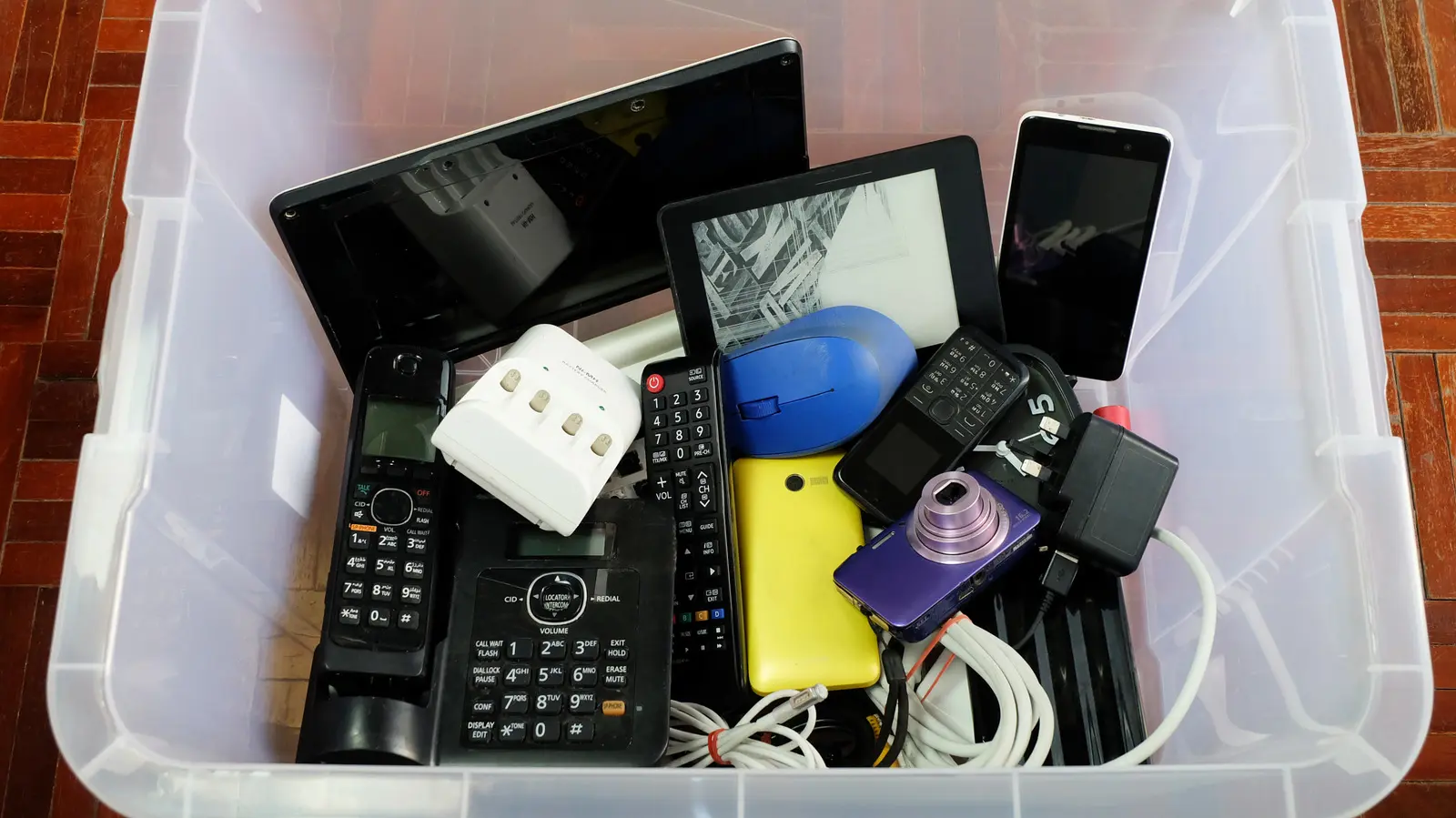
Smartphones are remarkable. They replaced cameras, music players, maps, watches, and more with a single slab of glass. But the convenience has come at a cost. Many users are tired of constant notifications, endless app switching, and the feeling that one device owns their attention. That fatigue has created a quiet revival of interest in older, single-purpose gadgets.
These devices did one thing well. They did not ping, buzz, or track. Some are already making a comeback, while others remain niche alternatives. Here are nine once-popular tech gadgets that deserve to be brought back, along with the key facts behind their renewed appeal.
Key Facts
- Smartphone fatigue is driving renewed interest in dedicated, single-purpose devices.
- iPod Classic and Nano searches have risen since early 2026, with about a third of buyers from Gen Z.
- Compact digital camera shipments reached around 120 million units in 2010 and are now showing signs of recovery.
- PDAs peaked roughly from 1992 to 2007, and new crowdfunded models are testing demand for distraction-free organizers.
- Dumb phones are returning through remakes and minimalist alternatives, with users reporting reduced screen time.
- Fax machines remain essential in healthcare, legal, and property sectors because they are harder to intercept than email.
- Pebble smartwatches are back after the PebbleOS platform was open-sourced, with two new models available.
- Dedicated GPS satnavs offer offline maps and can reduce distracted driving caused by phone use.
- Landline-style home phones that run over Wi-Fi are finding new audiences, especially for children.
- Physical keyboard phones are being revived by startups, and crowdfunding shows demand beyond nostalgia.
iPod Classic
The iPod was more than a music player. It was a status symbol, a fashion accessory, and a cultural icon. The click wheel became instantly recognizable, and the white earbuds were a badge of belonging. Apple eventually discontinued the iPod line, with the final model fading away in 2022. The iPhone had absorbed the job, and the iPod was left behind.
Now something has shifted. A new generation wants music without pings, pop-ups, and algorithmic recommendations. They want to own their songs rather than rent access to a shifting library. Searches for iPod Classics and Nanos have climbed noticeably since early 2026. Nearly every iPod on the secondhand market is refurbished or used, but demand remains strong. About a third of today's buyers are Gen Z. The iPod is not just a nostalgic throwback. It is proof that a dedicated music player can still make sense in a world of infinite digital noise.
Compact Digital Cameras
Compact digital cameras had a golden age. In 2010, global shipments reached around 120 million units. These point-and-shoot devices were the default way a generation captured birthdays, vacations, and ordinary days. As phone cameras improved, sales collapsed, and many manufacturers stopped making compact models.
But the case for a comeback is strong. Phone cameras often second-guess every frame, applying computational processing until the image looks like everything else. Many photographers want photos that feel personal. They want images shaped by the specific character of a chosen tool, used deliberately, in a process they control. A compact camera's buttons and dials have no interest in your inbox.
The revival is already underway. Shipments of fixed-lens cameras rose notably in 2025, and short-form videos about digital cameras have racked up billions of views. Budget options like the Kodak PIXPRO FZ55 offer casual shooting. Mid-range models like the Canon PowerShot SX740 HS provide sharper detail and more zoom. Premium compact cameras such as the Ricoh GR IV have won awards and built a strong following among street photographers. These cameras are not about convenience alone. They are about intentional image-making.
Personal Digital Assistants
The personal digital assistant was once the standard for a pocket-sized computer. It ran on batteries and used a touchscreen and stylus to organize calendars, contacts, and notes. The category peaked roughly from 1992 to 2007. Early touchscreen PDAs like the Tandy Z-PDA helped launch the era, but the PalmPilot brought the gadget to mass popularity. Later devices from Psion, Handspring, and Windows Mobile kept the idea alive.
The all-in-one smartphone ended that run. It packed every PDA function into one device and added a phone, camera, and internet connection. Yet some users still miss the PDA for the same reasons they miss other single-purpose gadgets. A PDA does not demand attention with endless notifications. It does not require a data plan. It offers a simple, dedicated space for personal organization.
Official support for old PDAs dried up long ago. Getting help today often means turning to hobbyist forums and enthusiast communities. Syncing an old PDA with a modern computer is increasingly difficult. A recent answer is the PocketMage, a 2026 crowdfunded PDA with a physical QWERTY keyboard and an e-paper display. It is a niche device, but it proves that the appetite for a distraction-free pocket organizer never disappeared.
Dumb Phones
At their peak, dumb phones were owned by just about everyone. They were built for calls, messages, and the occasional game of Snake. People did not call them dumb phones at the time. They were simply the latest and greatest technology. Smartphones changed everything by offering a camera, music, maps, and apps in one device. The simple phone did not stand a chance.
Now the dumb phone is staging a comeback. A remake of the Nokia 3210 arrived in 2024, and many other basic phones remain available. Minimalist devices like the Light Phone strip things back even further. Reviewers have described switching back as a reminder of a time before endless doomscrolling. One writer spent a week with a basic flip phone and reported reclaiming about three hours of her day. She also described a sense of calm and clarity that came from fully disengaging from a smartphone.
Still, reviews of current dumb phones are mixed. Going dumb is harder than it sounds. Streaming, navigation, ride-hailing, contactless payments, video calling, and food delivery all disappear. Online communities have grown around the switch, with thousands of members debating what works and what does not. The benefits are clear, but anyone considering the change should keep realistic expectations.
Fax Machines
Before email, there was the fax machine. It moved time-sensitive documents over a telephone line. Legal paperwork, medical records, and property documents were all sent this way. Email made the job cheaper and faster, and the fax quietly disappeared from everyday life. But it did not vanish completely.
Healthcare, legal, and property sectors still depend on fax machines today. These are industries where a document error or a privacy breach carries real consequences. Unlike email, faxes do not pass through multiple servers. That makes them harder to intercept. The technology also creates a physical record that can be held, filed, and verified.
There is also a consumer case for a comeback. A fax does not sit unread in an inbox. Its messages arrive warm from the machine. You can hold the paper, read it slowly, and keep it as a physical object. For simple handwritten notes, drawings, or letters between people who care, a fax offers an experience no smartphone app can replicate. For home and small office use, all-in-one printers make it possible to join the comeback of a technology many assumed was dead.
Pebble Smartwatch
When the Pebble smartwatch launched on Kickstarter in 2012, it broke records. More than 2 million watches were eventually sold. It promised a simple interface with phone notifications, music control, and a week-long battery life. Its watch face library offered over 16,000 options, built by an open developer community. That level of customization was rare then and remains rare now.
Pebble was sold to Fitbit, Fitbit was sold to Google, and somewhere in that chain the product disappeared. The smartwatch industry moved toward more features, more sensors, and more reasons to keep your eyes on your wrist. Nobody stepped back and asked whether less might be preferable. Except for Pebble founder Eric Migicovsky, who hoped someone else would build a replacement. No one did.
Then a door opened in early 2025. Google open-sourced PebbleOS, and Migicovsky moved quickly. The brand is back. Two new watches are already available, and the team promises to keep things simple. It is a low-key comeback, but it is one that users can support if they believe in the original vision. The Pebble proved that a smartwatch does not need to be a tiny phone. It can be a focused companion.
Dedicated GPS Satnavs
Dedicated GPS satnavs were once the standard way to navigate a vehicle. They featured preloaded maps and turn-by-turn directions without needing a data connection. Brands like Garmin, TomTom, and Magellan dominated the market. Then Google Maps made a dedicated device seem redundant, and the market fell apart.
Today there is a strong case for a comeback. A dedicated satnav carries its maps on board. It works anywhere, including remote areas where a cell signal is nonexistent. Handling your phone while driving is illegal in most U.S. states. A satnav is built specifically for driving. It has a display size for arm's-length viewing, and there is no need to touch it while navigating busy streets.
The distracted driving problem is difficult to ignore. In 2023, the National Highway Traffic Safety Administration recorded 3,275 deaths and an estimated 324,819 injuries in crashes involving distracted drivers. Using a dedicated satnav keeps your phone in your pocket or glove box. Garmin is one major name that still sells dedicated GPS hardware in the U.S. The Garmin Drive 53 and Traffic is an affordable entry point with live traffic reports. For safety and simplicity, the dedicated navigator still makes sense.
Landline Phones
At its peak, just about every home in the U.S. had a landline. It was the default way to make and receive calls. Landlines continued to work during a power outage. No battery or internet connection was required. They provided a direct line to your exact address when you called 911. Many people also remember that landlines delivered clearer calls than cell phones.
Those advantages were forgotten in the push toward mobile ownership. By 2010, there were already more cell phones in the U.S. than landline phones. The infrastructure is fading. AT&T intends to shut down its landline network almost entirely across the country by 2029. Yet the home phone is not dead as an idea.
Some companies are bringing back the home phone without the landline. Tin Can offers a corded, screen-free phone designed specifically for kids. It looks and feels like a landline, but it runs over Wi-Fi. It launched in April 2025 and has had waiting lists for every release since. Reviewers who tested it with children found that it taught them to communicate. They introduced themselves, asked who was calling, and held real conversations. One parent reported that the children completely stopped asking for a smartphone. The landline may be almost dead as infrastructure, but as an idea it still has a pulse.
Physical Keyboards on Phones
There was a time when typing on a phone meant you actually felt something. BlackBerry and other iconic keyboard phones, like the T-Mobile Sidekick, had keys that clicked under thumbs. Words were typed without a second thought. The iPhone's arrival in 2007 changed everything. It introduced a sleeker, more intuitive touchscreen, and the industry copied it. The day of the keyboard phone was over. BlackBerry held out the longest, but by 2022 it had shut down software operations for good.
Now the physical keyboard deserves a comeback. Touchscreens are so common that a physical keyboard feels strange, but the benefits are real. Keys provide genuine tactile feedback. They reduce autocorrect errors and smudged fingerprints on the screen. Physical keyboards also help people with visual impairments or limited motor control. Doomscrolling tends to be more difficult when your phone no longer responds to mindless swipes.
A wave of startups is responding. Clicks, Unihertz, and the Minimal Phone are attempting to bring physical keyboards back. Reviews have been mixed so far, and none have matched BlackBerry's cult-like status. But the Unihertz Titan 2 Kickstarter raised $4.8 million. About 45% of Clicks buyers had never used a keyboard phone before. This is not just nostalgia. The comeback is on.
Source: SlashGear News