

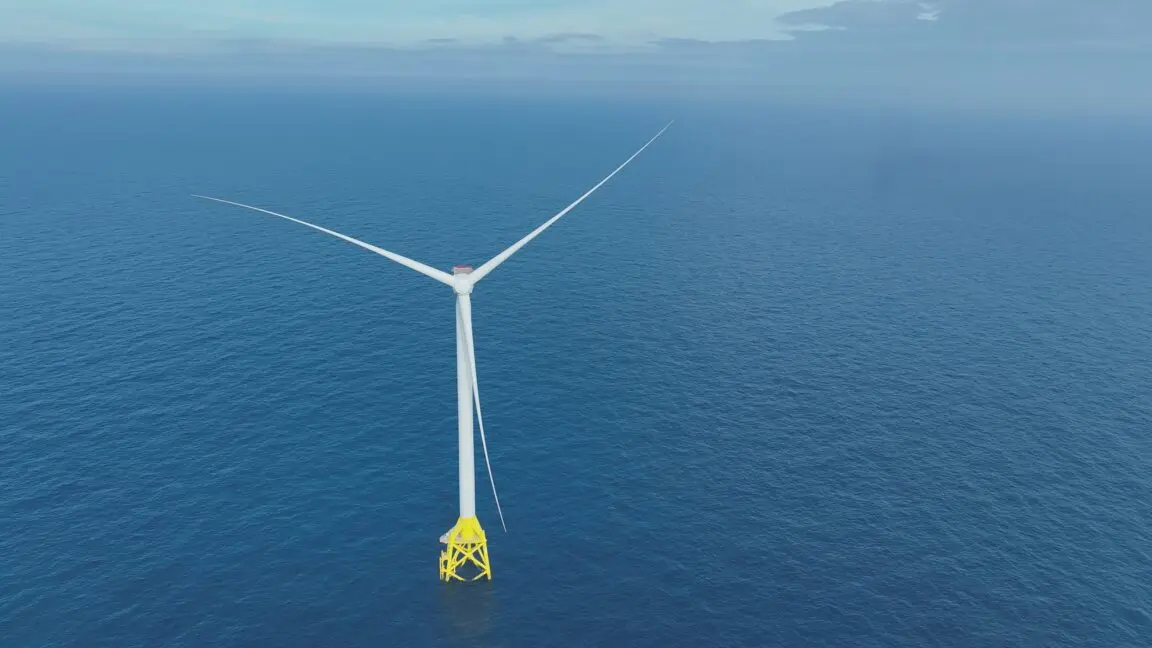
Taiwanese chipmaking giant TSMC is riding a wave of record profits thanks to insatiable global demand for artificial intelligence (AI) chips. But the company is also grappling with a mounting energy challenge that could threaten its production capacity. In a bold move to secure sustainable power, TSMC has signed a 30-year corporate power purchase agreement (PPA) to take 100% of the electricity generated by the Hai Long offshore wind project off the coast of central Taiwan.
Announced on April 30, the deal with Canadian developer Northland Power covers more than 1 gigawatt (GW) of capacity from three offshore wind sites in the Taiwan Strait. Once fully operational, the Hai Long project could power the equivalent of over 1 million Taiwanese households. The wind farms began feeding electricity into Taiwan's grid in 2025, with full completion scheduled by 2027. This long-term commitment marks an important step in TSMC's strategy to decarbonize its operations and stabilize its energy supply.
The urgency of TSMC's push for renewables reflects a broader energy crisis that has gripped Taiwan. The island relies on imported natural gas for about half of its electricity generation. However, the war in the Middle East severely disrupted production and shipping when Iranian drone strikes damaged Qatar's natural gas facilities in March 2026. According to Bloomberg, Taiwan lost one-third of its usual liquefied natural gas (LNG) supply almost overnight. Because Taiwan holds only about two weeks of fuel reserves, the risk of blackouts became acute. Reuters reported that the government scrambled to secure alternative supplies from Australia and the United States, barely staving off shortages.
Taiwan's vice minister of economic affairs stated during a May 6 energy forum that the government had secured enough oil and gas to operate normally through August and possibly September, as reported by Taiwan News. But the crisis has accelerated efforts to diversify energy sources. President Lai Ching-te's administration is exploring all options, including restarting shuttered nuclear power plants and rapidly scaling up renewable energy projects. According to the Global Taiwan Institute, a Washington, D.C.-based think tank, Taiwan imports nearly 97% of its overall energy needs—for electricity, transport, and heating—making it extremely vulnerable to global supply disruptions.
Offshore wind power has become a cornerstone of Taiwan's energy diversification plan. The government aims to make 15 GW of offshore wind capacity available to developers by 2035. TSMC is at the forefront of this push, not only through the Hai Long PPA but also through earlier agreements. In 2020, TSMC signed a PPA with Danish renewable energy company Ørsted for 920 megawatts from the Greater Changhua offshore wind farm, which is expected to be fully operational later in 2026. Additionally, in 2021, TSMC struck a deal with German developer WPD to develop more than 1 GW of onshore and offshore wind power.
These efforts align with TSMC's public sustainability targets: the company aims for renewable energy to meet 60% of its global operations' needs by 2030 and 100% by 2040. But achieving these goals is complicated by the chipmaker's enormous and growing electricity consumption. A report from the International Energy Agency noted that TSMC's fabs consumed nearly 10% of all electricity used in Taiwan in 2023. As the company invests in more energy-intensive manufacturing processes to produce advanced chips for AI, its share of Taiwan's overall electricity usage could climb to nearly one-quarter by 2030, according to S&P Global estimates cited by Data Center Dynamics.
The AI boom shows no signs of slowing. TSMC is the sole manufacturer of the most advanced AI chips used by companies like Nvidia and AMD, and demand continues to surge. Each new generation of chip requires more power, both for the manufacturing process and for the cooling systems needed to keep fabs running. The company is building or expanding fabs in the United States, Japan, and Germany, but its largest and most advanced facilities remain in Taiwan. This concentration of energy-intensive operations makes the island's energy stability a strategic imperative not just for TSMC, but for the entire global tech industry.
The energy crunch in Taiwan also highlights the vulnerability of semiconductor supply chains. During the height of the 2026 crisis, TSMC reportedly had to coordinate with the government to prioritize power allocation for its fabs, which could have strained relations with other industrial users. The company has also invested in on-site backup power systems, including natural gas generators and battery storage, but these are stopgap measures. Long-term, offshore wind offers a more reliable and sustainable solution.
However, scaling up offshore wind in Taiwan faces several challenges. The Taiwan Strait is prone to typhoons and earthquakes, which can damage turbines and disrupt construction timelines. The Hai Long project itself has faced delays due to permitting and supply chain issues. Moreover, the cost of offshore wind remains higher than that of natural gas, though prices have been falling globally. TSMC's willingness to sign long-term PPAs at fixed prices provides developers with the financial certainty needed to invest, but it also locks the chipmaker into higher electricity costs compared to fossil fuels.
Another key factor is the political dimension. Taiwan's energy independence is a matter of national security, given the island's vulnerability to blockades or disruptions from China. By investing in domestic renewable energy, TSMC reduces its reliance on imported fuels that could be cut off in a crisis. This aligns with the government's goal of achieving net-zero emissions by 2050, but the path is fraught with technical, economic, and geopolitical hurdles.
Beyond wind, Taiwan is also exploring solar power and battery storage, but wind is expected to provide the bulk of new renewable capacity. TSMC's purchases represent a significant portion of the total contracted capacity, making the company a de facto leader in Taiwan's energy transition. Other industrial players are likely to follow suit, but TSMC's sheer size gives it outsized influence.
In summary, TSMC's ambitious wind power investments are critical not only for meeting its own sustainability goals but also for ensuring the stability of Taiwan's electricity grid amid a global energy crisis. As AI chip demand continues to soar, the company's energy needs will only grow, making these long-term renewable energy deals a strategic necessity. The success of these projects could serve as a model for other energy-intensive industries facing similar challenges, and could help Taiwan reduce its dependence on fossil fuel imports in the face of geopolitical tensions.
Source: Ars Technica News