
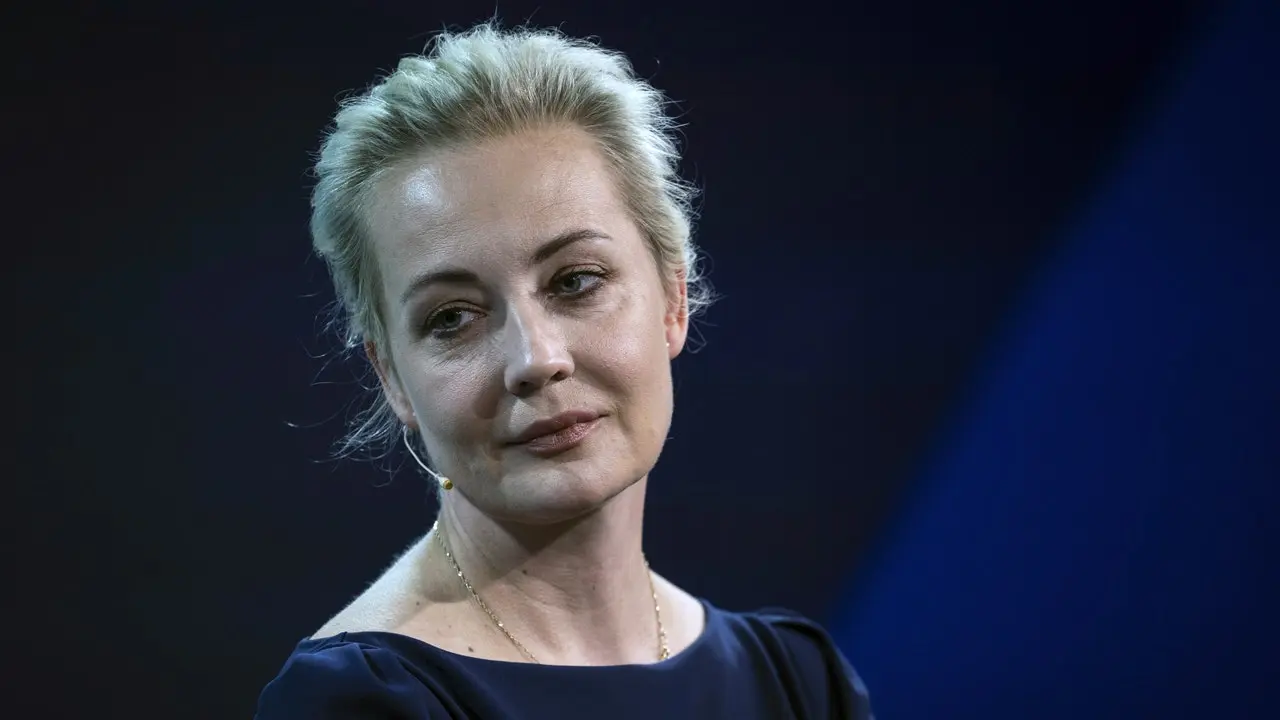
A Russian court has ordered the arrest of Yulia Navalnaya, the widow of the late opposition leader Alexei Navalny, in a hearing conducted in absentia on Tuesday. The Moscow Basmanny District Court charged her with alleged participation in an extremist organization, a designation that stems from the earlier outlawing of Navalny's Foundation for Fighting Corruption. If she returns to Russia, she will be immediately detained and face prosecution.
Yulia Navalnaya, who currently lives abroad, has become a prominent figure in the opposition movement since her husband's death in February 2024. Alexei Navalny, the fiercest political opponent of President Vladimir Putin, died in an Arctic penal colony while serving a 19-year sentence on extremism charges that he and his supporters denounced as politically motivated. Authorities said he collapsed after a walk but have provided no further details, and the cause of death remains disputed internationally.
Navalny was imprisoned after returning to Moscow in January 2021 from Germany, where he had been recovering from a near-fatal nerve agent poisoning that he blamed on the Kremlin. The poisoning, which occurred in August 2020 during a domestic flight, led to widespread condemnation and allegations of state involvement. Russian officials have consistently denied any role in the poisoning or in Navalny's death.
In response to the court's ruling, Navalnaya took to social media, mocking the decision and calling for President Putin himself to be prosecuted. Her spokesperson, Kira Yarmysh, characterized the arrest warrant as a recognition of Navalnaya's merits in continuing her husband's work. German Chancellor Olaf Scholz expressed solidarity, stating that the arrest warrant is effectively an attack on the desire for freedom and democracy.
The charges against Navalnaya appear to be linked to the 2021 court decision that designated Navalny's Foundation for Fighting Corruption as an extremist organization. That ruling forced many of Navalny's close associates and team members to flee Russia. In recent months, several journalists have also been jailed on similar charges for their coverage of Navalny and his movement.
The Kremlin's crackdown on opposition activists, independent media, and ordinary citizens has escalated sharply since Russia's full-scale invasion of Ukraine in February 2022. Thousands have been arrested for anti-war protests, and laws criminalizing criticism of the military have been passed. The arrest of Yulia Navalnaya is the latest example of the government's efforts to silence dissent and prevent the emergence of any organized opposition.
Alexei Navalny rose to prominence through his investigations into corruption among the Russian elite. His anti-corruption blog and YouTube channel exposed lavish lifestyles of officials, including Putin's inner circle. Despite multiple arrests and prison sentences, he remained a symbol of resistance. His death prompted widespread international outrage and renewed calls for sanctions against Russian officials.
Yulia Navalnaya has vowed to carry on her husband's legacy. She has addressed the European Parliament and met with world leaders, urging them to hold the Kremlin accountable. Her activism has made her a target, but she has shown no signs of backing down. The arrest warrant is a clear attempt to intimidate her and discourage others from following her path.
The international community has largely condemned the court's decision. The United States, European Union, and several human rights organizations have called for Yulia Navalnaya's safety and for the charges to be dropped. The case adds to the growing list of politically motivated prosecutions in Russia, which include those of opposition politician Vladimir Kara-Murza (sentenced to 25 years), activist Ilya Yashin, and many others.
The use of extremist laws to silence critics has become a hallmark of Putin's rule. The designation of Navalny's foundation as extremist was a legal maneuver that allowed authorities to arrest anyone associated with it. This broad interpretation of extremism has been used against lawyers, journalists, and ordinary citizens who share or repost Navalny's content. The arrest warrant against Yulia Navalnaya is a direct continuation of that policy.
As Russia approaches the third year of its war in Ukraine, domestic repression shows no signs of abating. Independent media outlets have been shuttered, journalists have fled, and the space for dissent has shrunk to near zero. The arrest of Yulia Navalnaya sends a chilling message to those who might consider challenging the government. However, many observers note that the Kremlin's actions often have the opposite effect, galvanizing opposition and drawing attention to the regime's abuses.
Yulia Navalnaya's response on social media reflects a defiant tone. She wrote that it is Putin who should be prosecuted, not her. Her spokesperson added that every year Navalnaya remains free is a victory. The coming months will determine whether the international community can offer her protection or if the Kremlin will manage to detain her through extradition efforts. For now, she continues her work abroad, advocating for a free Russia and justice for her husband's murder.
Source: Fox News News