

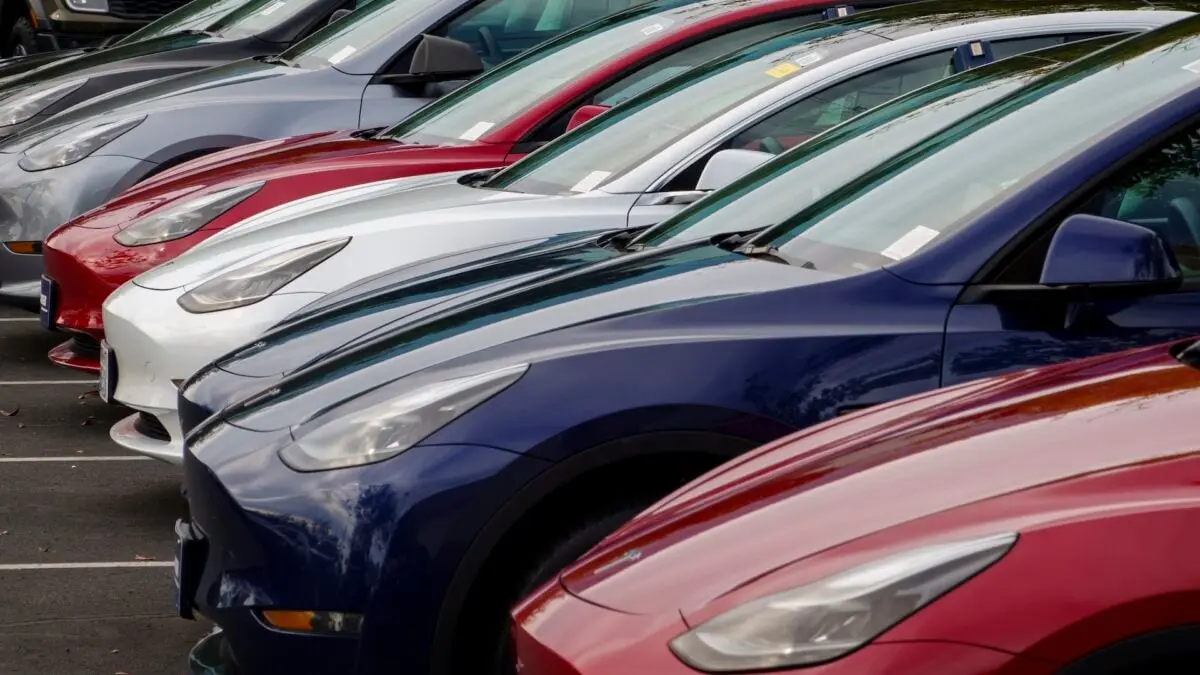
Tesla’s fortunes in Europe appear to be turning around. After a difficult 2025 in which sales plunged across the continent, the electric vehicle maker is now scaling up operations at its German Gigafactory near Berlin. The company announced plans to hire 1,000 additional workers as part of an effort to reach a production rate of 7,500 vehicles per week by October 2026, according to reports from Electrek. This follows a previous hiring round of 1,000 workers earlier in the year, when Tesla aimed for 6,000 vehicles per week by the end of June.
The expansion means Tesla’s Berlin factory could soon produce approximately 390,000 EVs annually, though that still falls short of the 500,000-vehicle target set when the facility opened in 2022. The news signals that the company is confident demand in Europe will remain strong, despite recent headwinds tied to CEO Elon Musk’s political positioning and the broader geopolitical tensions between the United States and Europe.
Tesla’s European registration data supports that optimism. According to the European Automobile Manufacturers’ Association (ACEA), Tesla registrations in Europe rose 57 percent to more than 118,000 vehicles in the first five months of 2026, compared with the same period last year. That recovery is driven in part by rising fuel costs and new government incentives for zero-emission vehicles in Germany, Europe’s largest auto market.
The rebound comes at a time when European leaders have been vocal about reducing dependence on American technology companies. French President Emmanuel Macron, speaking at the Munich Security Conference in February, said Europe must become a “geopolitical power” in defense, technology, and “derisking vis-à-vis all the big powers.” The European Commission has unveiled a “tech sovereignty package” focused on semiconductors, AI, cloud computing, and open-source software. It has also proposed designating Amazon Web Services and Microsoft Azure as “gatekeepers” under the Digital Markets Act, potentially subjecting them to stricter regulation.
Yet electric vehicles represent what should be one of the easiest sectors for Europe to assert independence. The continent already boasts major automakers like Volkswagen, BMW, and Stellantis that produce their own EVs. Additionally, Chinese companies such as BYD have made significant strides in driving range and charging speed, giving European consumers more non-American options than ever. However, Tesla’s renewed popularity suggests that European buyers are not yet ready to abandon the American brand, even as Musk’s political ties create a complicated backdrop.
Musk’s involvement in controversial issues undoubtedly hurt Tesla’s sales in 2025. His support for far-right and anti-immigrant movements in Europe, including Germany’s AfD party, along with his association with President Donald Trump’s tariff threats and geopolitical maneuvers—such as Trump’s suggestion of taking over Greenland—created a headwind. Musk was also accused of inciting violence with social media posts related to anti-immigrant demonstrations in Belfast. These factors led to a sharp drop in Tesla registrations last year, as many European consumers appeared to boycott the brand on political grounds.
But time and market forces seem to have healed the wounds. Rising fuel costs across Europe, exacerbated by the ongoing energy crisis and geopolitical instability, have made EVs more attractive from a cost-of-ownership perspective. Germany, in particular, introduced new incentives for zero-emission vehicles, including tax breaks and purchase subsidies, which helped revive demand. At the same time, Tesla has been able to maintain its reputation for technological innovation and performance, factors that outweigh political considerations for many buyers.
The hiring push in Berlin is also a strategic move to meet local demand and avoid potential tariff complications. By producing vehicles within the European Union, Tesla can bypass some of the trade barriers that have been erected in response to US policies. The factory, officially named Gigafactory Berlin-Brandenburg, has been ramping up production since its opening and now employs thousands of workers. With the new hires, the workforce will grow further, contributing to the local economy and strengthening Tesla’s foothold in Europe.
Tesla’s comeback is not without challenges. The company still faces competition from established European manufacturers and new entrants from China. BYD, for example, has been expanding its presence in Europe with models that offer competitive range and charging speeds, often at lower price points. Volkswagen’s ID series and BMW’s i models are also gaining traction. Moreover, the European Commission’s push for tech sovereignty could eventually extend to stricter regulations on data privacy, software integration, and battery supply chains, which might impact Tesla’s operations.
However, for now, Tesla seems confident that European customers will continue to return. The decision to invest in hiring and production expansion reflects a belief that the market will remain robust. As European leaders talk about reducing dependence on American technology, Tesla’s resurgence shows that rhetoric does not always translate into immediate consumer behavior. Economic factors such as fuel costs, incentives, and product quality still play a dominant role in car-buying decisions.
The broader context of US-European relations also affects the EV market. While the EU has been taking steps to increase digital autonomy, the automotive sector is deeply integrated. Tesla is not the only American automaker selling in Europe—Ford and General Motors also have a presence, though Tesla remains the dominant US EV brand. The company’s ability to weather the political storm and even thrive is a testament to the strength of its brand and the appeal of its technology. Whether this trend continues will depend on future policy developments, economic conditions, and potential further controversies surrounding Musk.
In the meantime, Tesla’s German factory will be buzzing with activity as new workers are trained to assemble Model Y vehicles and potentially other models. The push to reach 7,500 vehicles per week is ambitious but aligns with Tesla’s global expansion goals. If successful, it could help the company regain lost market share and even surpass its previous sales highs in Europe.
For European leaders who advocate for tech sovereignty, Tesla’s resurgence presents a dilemma. On one hand, they want to promote local industry and reduce reliance on US companies. On the other hand, they cannot ignore consumer demand for Tesla products. The European EV market is still growing, and there is room for multiple players. But if Tesla continues to capture a significant share, it may slow the pace of Europe’s drive for independence in electric mobility.
The story of Tesla in Europe is far from over. As the company ramps up production and sales rebound, it demonstrates that even in an era of geopolitical tension and calls for sovereignty, consumer preferences and market incentives often prevail. The coming months will reveal whether this is a temporary bounce or a sustained recovery that will reshape the European EV landscape.
Source: Gizmodo News