

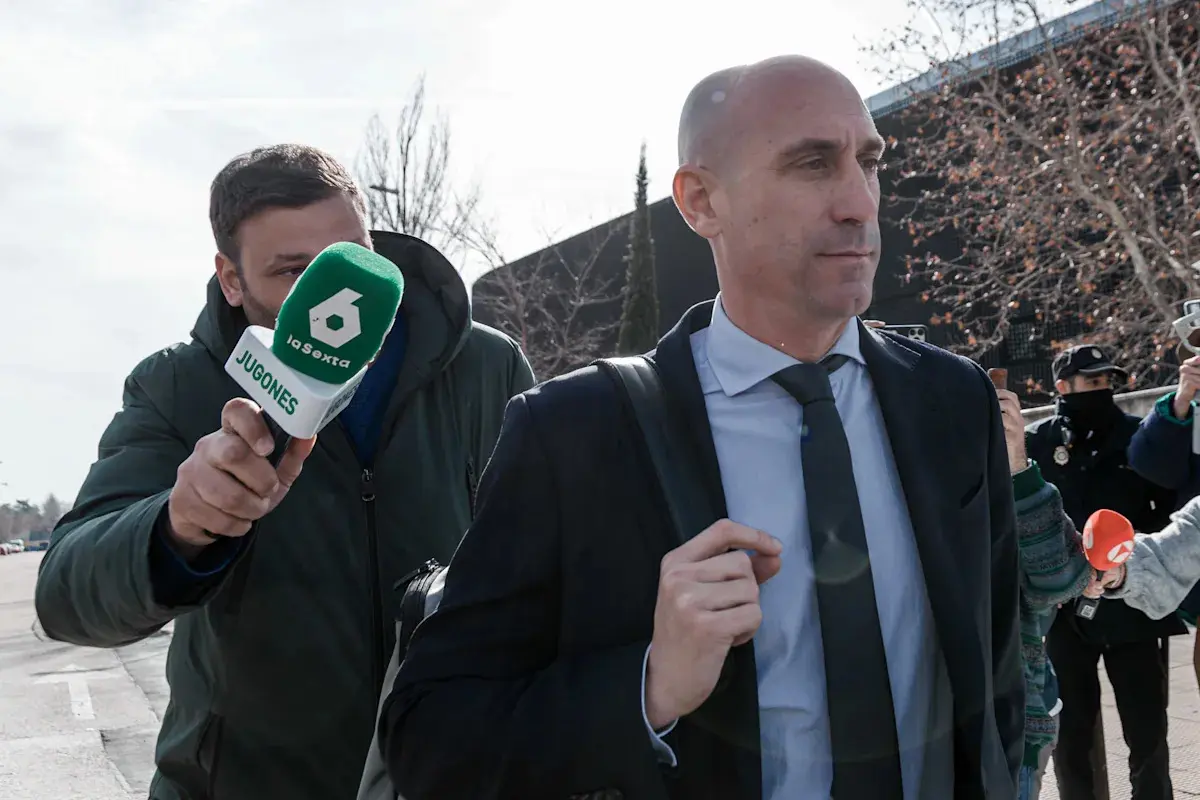
In a landmark ruling that reverberated across the sports world, former Spanish Football Federation (RFEF) president Luis Rubiales was found guilty of sexual assault on Thursday for forcibly kissing player Jenni Hermoso without her consent after the 2023 Women's World Cup final. The verdict, delivered by a Spanish court, marks a pivotal moment in the ongoing fight against gender-based violence in athletics and has drawn both praise and calls for systemic reform.
The court sentenced Rubiales to a restraining order requiring him to stay at least 200 meters away from Hermoso and refrain from contacting her for one year. He was also fined €10,000 (approximately $10,437 USD). However, the court acquitted him of coercion charges, which alleged that he pressured Hermoso to publicly claim the kiss was consensual. Additionally, three other RFEF officials – former women's national team head coach Jorge Vilda, former sporting director Albert Luque, and former marketing chief Rubén Rivera – were cleared of coercion in connection with the same incident.
The case stems from the chaotic moments following Spain's 1-0 victory over England in the 2023 Women's World Cup final in Sydney, Australia. During the medal ceremony, Rubiales grabbed Hermoso by the ears and kissed her on the lips without her consent. The act, captured live on television, sparked immediate global condemnation and ignited a firestorm of controversy that ultimately forced Rubiales to resign from his post three weeks later.
A Testimony That Shook the Courtroom
During the trial, Hermoso delivered a powerful and emotional testimony that authorities described as key to the conviction. She recounted the moment of the kiss, stating that she "couldn't react" and that it "stained one of the happiest days of my life." She testified that Rubiales approached her on the podium, held her head, and kissed her without any prior indication or consent. "I didn't hear or understand anything," she said. "The next thing he did was to grab me by the ears and kiss me on the mouth."
Hermoso further described how her life has been profoundly affected by the incident and the ensuing media frenzy. She told the court that she has been unable to "really live freely" since returning to Madrid, where she faces constant public scrutiny. To escape the attention, she plays professionally for Tigres in Mexico's Liga MX Femenil, but the peace vanishes whenever she returns to Spain. The athlete also revealed that on the flight back from Australia, Rubiales asked her to help him mitigate the public backlash, claiming that people were calling him an "aggressor." She refused, stating that she felt it was important to celebrate the historic World Cup victory with her teammates, even though the incident had cast a shadow over their achievement.
Fallout and Wider Implications
The guilty verdict is more than a personal defeat for Rubiales; it represents a broader reckoning with sexism and male entitlement within Spanish football and beyond. The incident sparked nationwide protests, with women's rights activists pouring into the streets to demand accountability and systemic change. Many fans and players alike criticized the RFEF for its initial lack of support for Hermoso, leading to a boycott of international matches by the Spanish women's national team. The team refused to play until structural reforms were implemented, a move that pressured the federation to commit to transparency and gender equality.
Rubiales, 47, had consistently denied the charges, portraying himself as a victim of a "witch hunt" led by what he called "false feminists." He resigned from the RFEF presidency three weeks after the kiss, facing intense pressure from FIFA, the Spanish government, and sponsors. In addition to the criminal court proceedings, FIFA imposed a three-year ban from all football-related activities, which is set to expire in 2026. However, the criminal conviction carries legal weight beyond the sport, establishing a precedent for holding powerful figures accountable for non-consensual physical contact.
The Trial and the Acquittals
The prosecution had sought a one-year sentence for sexual assault and an additional 18 months for coercion. While the court convicted Rubiales on the sexual assault charge, it acquitted him of coercion, ruling that the evidence was insufficient to prove that he attempted to pressure Hermoso into changing her story. Similarly, the three other officials were cleared. The court noted that while there were attempts to manage the fallout, they did not cross the legal threshold for coercion under Spanish law. Rubiales has the right to appeal the conviction to a higher court, a process that could prolong the legal battle.
Hermoso's legal team expressed satisfaction with the verdict but emphasized that the fight for justice does not end here. They highlighted that the case underscores the need for stronger protections for athletes against sexual misconduct and for institutional accountability. The verdict sends a clear message that non-consensual acts, even those occurring in the heat of celebration, are unacceptable and will be penalized.
Background: The 2023 Women's World Cup and Its Aftermath
Spain's triumph in the 2023 Women's World Cup was a historic achievement, marking the country's first title in the tournament. The team featured a generation of talented players, including Alexia Putellas, Aitana Bonmatí, and Jenni Hermoso, who had long fought for recognition and equal treatment. The kiss incident, however, overshadowed the victory, exposing deep-seated issues of sexism and power abuse in the RFEF. The Spanish government stepped in, creating a crisis committee to oversee reforms, and FIFA eventually suspended Rubiales pending an investigation.
The scandal also catalyzed a broader movement within women's football globally. Players from other nations expressed solidarity with Hermoso, and the SeAcabó ("It's Over") movement gained traction, demanding an end to sexist behavior in sports. The case became a flashpoint for discussions about consent, power dynamics, and the treatment of female athletes, with many calling for mandatory training and stricter codes of conduct for officials at all levels.
For Hermoso, the ordeal has been deeply personal. The 34-year-old forward, one of Spain's most accomplished players with over 100 international caps, has continued her career at Tigres, where she has thrived away from the Spanish media spotlight. She has spoken about the emotional toll of reliving the incident throughout the trial, but also about the importance of standing up for herself and other victims. "I have not been able to really live freely," she said in court, a statement that resonated with many who have experienced similar invasions of bodily autonomy.
The conviction of Luis Rubiales is a significant step toward justice for Jenni Hermoso, but it also serves as a cautionary tale for all sports organizations. The case highlights how moments of victory can be tarnished by acts of disrespect and abuse, and why institutions must prioritize the safety and dignity of their players. As the football world processes this verdict, the focus now shifts to the appeal process and the continued efforts to reform the culture of Spanish football.
Source: Yahoo Sports News