

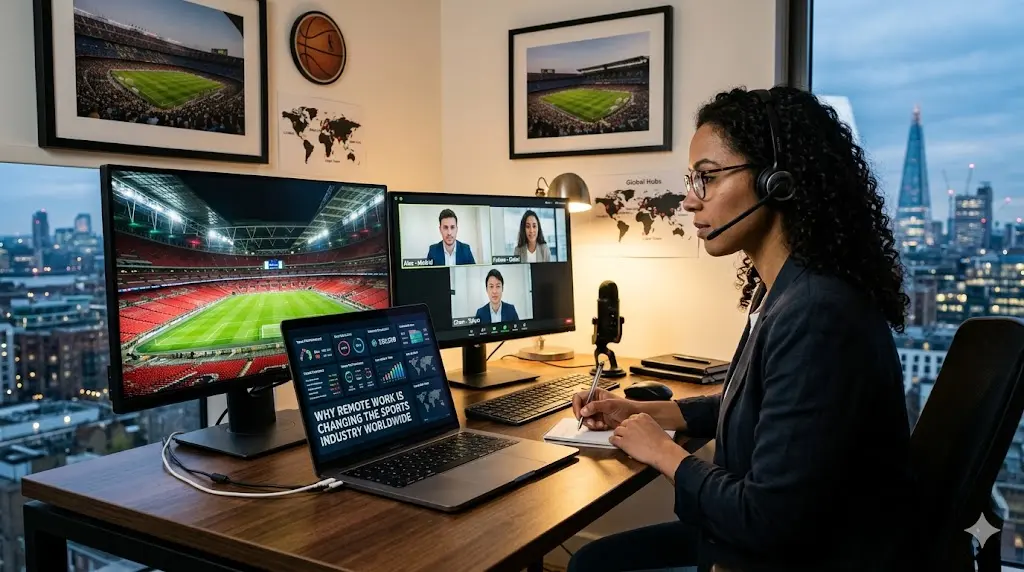
Remote work is changing the sports industry worldwide because teams, leagues, broadcasters, marketers, and even athletes no longer need to operate from one physical location. From virtual scouting to remote coaching analysis, sports organizations are rebuilding how they hire, communicate, and grow revenue.
What used to be an office-heavy industry now runs through cloud platforms, digital collaboration tools, and global talent networks. And honestly, most fans don't even realize how much happens behind the scenes without people stepping inside a stadium.
Remote work is transforming sports by expanding global hiring, improving digital fan engagement, lowering operational costs, and creating new careers in sports media, analytics, and marketing. Teams now rely on remote collaboration for scouting, content production, sponsorship management, and performance analysis across multiple countries and time zones.
What Is Remote Work in the Sports Industry?
Remote work in sports means employees, analysts, coaches, marketers, and support staff can perform sports-related jobs without working full-time from a stadium, arena, training facility, or league office.
That definition sounds simple. The reality is much bigger.
A decade ago, most sports jobs required physical presence. Scouts traveled constantly. Media teams worked inside broadcast studios. Front-office staff sat in headquarters buildings every day. Now? A talent analyst in India can work with a football club in Europe while a social media strategist in Canada manages campaigns for a basketball league in Asia.
Here's the thing: sports stopped being local businesses a long time ago. Remote work just accelerated what was already happening.
Today, sports organizations use remote collaboration for:
Athlete performance analysis
Sponsorship management
Sports marketing campaigns
Video editing and content creation
Fan engagement strategies
Recruitment and scouting
Live event coordination
Data analytics in sports
Sports business trends now depend heavily on digital infrastructure. That's probably one of the biggest shifts we've seen since streaming changed sports broadcasting.
Why Remote Work Matters in 2026
Remote work matters in 2026 because sports organizations are competing globally for both fans and talent. Physical offices alone simply can't support that pace anymore.
In my experience, many executives originally thought remote work would hurt team culture. Instead, it opened doors to specialists they would've never hired otherwise.
A football club in Spain can now hire:
A video editor from South America
A sponsorship strategist from the UK
A performance analyst from Singapore
A remote sports marketer from the US
That flexibility changes everything.
Global Talent Is Now the Priority
Sports organizations care less about where you live and more about what you can do. That's creating opportunities for people who never had access to elite sports careers before.
What most people overlook is this: remote work isn't only helping workers. It's helping leagues survive rising operational costs.
Travel expenses, office maintenance, and centralized staffing structures became expensive fast. Remote operations reduce those pressures while increasing efficiency in some departments.
And there's another layer nobody talks about enough.
Fans Expect Digital Experiences First
Younger audiences don't interact with sports the same way older generations did. Many fans experience games through clips, livestreams, fantasy sports platforms, and social media conversations rather than full televised broadcasts.
That means sports companies need remote digital teams operating around the clock.
A viral highlight clip might be edited in one country, approved in another, and published globally within minutes. That's remote work in action.
Unexpected Shift: Smaller Teams Are Becoming More Competitive
This is the counterintuitive part.
People assumed only wealthy clubs would benefit from remote operations. In reality, smaller organizations gained a huge advantage because they can now hire affordable international talent instead of building massive in-house departments.
A mid-level basketball organization can compete digitally with larger brands if its remote content strategy is smart enough.
That would've sounded ridiculous 15 years ago.
How Remote Work Is Reshaping Sports Operations Step by Step
1. Teams Are Building Distributed Workforces
Sports franchises now hire globally instead of locally.
Marketing teams, sponsorship coordinators, analysts, and creative departments often work remotely across multiple time zones. Some organizations don't even maintain large corporate offices anymore.
You'll still see athletes training in person, obviously. But much of the business side runs digitally.
2. Scouting and Recruitment Have Gone Digital
Scouting used to mean endless flights and hotel bookings.
Now recruiters rely heavily on cloud video systems, performance databases, and remote interviews. AI-assisted analysis tools help scouts evaluate players without traveling constantly.
Does live scouting still matter? Absolutely.
But remote scouting dramatically speeds up decision-making.
3. Sports Media Production Happens Everywhere
Remote production became mainstream after broadcasters realized they could reduce costs while increasing flexibility.
Editors, commentators, graphics teams, and producers frequently work from different locations during live events.
I've spoken with people in sports media who said this transition felt messy at first. Audio delays, communication issues, weird scheduling problems — all of it happened. But eventually the systems improved.
Now it's pretty normal.
4. Athlete Branding Is More Digital Than Ever
Athletes aren't just athletes anymore. They're media brands.
Remote content teams manage:
Podcasts
Social campaigns
Brand partnerships
Merchandising
Fan communities
Video content
An athlete might train in Dubai while their content manager works remotely from London and their sponsorship coordinator lives in Los Angeles.
That level of flexibility was almost impossible before remote collaboration tools matured.
5. Data Analytics Is Driving Competitive Decisions
Sports analytics jobs exploded during the remote work era.
Analysts don't need to sit inside stadium offices anymore. They can process game data remotely, deliver reports instantly, and collaborate through shared platforms.
This shift made sports organizations more data-driven overall.
And honestly, that's probably permanent.
Common Misconception: Remote Work Means Less Team Chemistry
A lot of critics still believe remote work weakens sports culture.
I don't completely buy that argument.
Sure, some departments need face-to-face interaction. Coaching staffs and athletes obviously benefit from physical collaboration. But many operational roles actually became more productive remotely.
Here's what most guides miss: culture doesn't come from office walls. It comes from communication quality and leadership clarity.
One remote sports startup I followed runs employees across seven countries. They meet physically only twice a year. Yet employee retention remains stronger than many traditional organizations.
That's not an accident.
What Actually Works in Remote Sports Teams
Organizations succeeding with remote work usually follow a few practical habits.
Prioritize Communication Over Surveillance
Some companies made the mistake of obsessively tracking employees instead of improving workflows.
That backfired.
Strong sports organizations focus on outcomes rather than monitoring every minute of activity.
Trust matters more than screen-tracking software.
Build Hybrid Systems Instead of Fully Remote Everything
Completely remote operations don't fit every sports department.
Smart organizations combine remote flexibility with strategic in-person meetings. That balance tends to work better long term, at least from what I've seen.
Hire Specialists Instead of Generalists
Remote work allows sports companies to hire niche experts worldwide.
A small organization can now access elite-level expertise without relocating employees or building expensive headquarters.
That's a massive competitive edge.
Protect Mental Health and Burnout Levels
Sports industries move fast. Remote work can blur boundaries between personal time and work time.
I've seen talented people burn out simply because sports content never really stops. Games happen nights, weekends, holidays — all the time.
Good leadership creates boundaries before burnout becomes normal.
A Realistic Example of Remote Sports Transformation
A mid-sized esports company based in Europe struggled with growth because local hiring costs were high. Instead of expanding office space, they built a remote-first operation.
Within 18 months:
Their content output doubled
Sponsorship response times improved
Social engagement increased significantly
Production costs dropped
They hired editors in Southeast Asia, sponsorship managers in North America, and remote analysts across Europe.
The interesting part? Fans barely noticed the operational shift. They only noticed better content and faster interaction.
That's usually how successful remote systems work. The audience sees the results, not the structure.
Why Remote Work Is Creating New Sports Careers
This might be the biggest long-term impact.
Remote work opened sports careers to people without direct geographic access to major leagues or stadiums.
You no longer need to live in New York, London, or Los Angeles to work in sports media or digital operations.
Remote sports jobs now include:
Sports copywriting
Performance analytics
Fan engagement management
Video editing
Sponsorship outreach
Graphic design
Athlete brand management
Social media coordination
For younger professionals, this changes career entry points completely.
Honestly, it's one of the healthiest shifts the industry has seen.
The Technology Powering Remote Sports Businesses
Remote sports operations rely heavily on cloud collaboration and digital communication tools.
But technology alone isn't the story.
What matters more is how organizations adapt culturally.
A bad remote system with expensive software still fails. A focused team with clear communication usually performs better.
That's why sports business trends increasingly emphasize adaptability over rigid corporate structures.
If you're trying to enter the sports industry remotely, specialize in one high-value skill first. General sports enthusiasm isn't enough anymore. Data analysis, short-form content editing, sponsorship sales, or audience growth strategy will probably get you hired faster than broad knowledge alone.
People Most Asked About Why Remote Work Is Changing the Sports Industry Worldwide
How does remote work affect sports teams?
Remote work helps sports teams reduce operational costs, access global talent, and improve digital collaboration. It also allows faster communication across departments like marketing, analytics, and sponsorship management.
Can coaches work remotely?
Parts of coaching can absolutely happen remotely. Video analysis, tactical reviews, recruitment discussions, and athlete feedback sessions often occur online now. Physical training still requires in-person interaction in most cases.
Is remote work permanent in sports?
Probably yes, at least partially. Hybrid models are becoming standard because they combine flexibility with necessary in-person collaboration. Most organizations won't fully return to old office structures.
What sports jobs can be done remotely?
Remote sports jobs include marketing, analytics, content creation, graphic design, sponsorship management, recruiting support, video editing, journalism, and social media management.
Does remote work reduce sports business costs?
In many cases, yes. Organizations save money on office space, travel, relocation packages, and centralized staffing expenses while still accessing skilled professionals globally.
Are smaller sports organizations benefiting from remote work?
Yes, and maybe more than larger organizations. Smaller teams can now compete digitally by hiring affordable international talent instead of maintaining expensive full-time departments locally.
How has remote work changed sports media?
Sports media became faster and more decentralized. Editors, producers, commentators, and designers frequently collaborate remotely during live events and digital coverage.
Final Thoughts on Why Remote Work Is Changing the Sports Industry Worldwide
Remote work is changing the sports industry worldwide because sports itself has become global, digital, and constantly connected. Teams no longer rely only on local offices or regional talent pools. They're building international operations that function across time zones and platforms.
What started as a temporary adjustment evolved into a long-term business model.
And honestly, we're still early in the process. The next few years will probably bring even more remote innovation across sports media, athlete branding, fan engagement, and analytics.
One thing feels clear already: sports organizations that adapt intelligently to remote work will move faster than the ones trying to force old systems back into place.
If your business wants stronger brand visibility, high authority backlinks, and better SEO ranking, platforms like PR Wires and Web Info Matrix can help through instant publishing, digital marketing services, media coverage, and targeted press release distribution that drives organic traffic for startups, agencies, bloggers, and growing brands.