

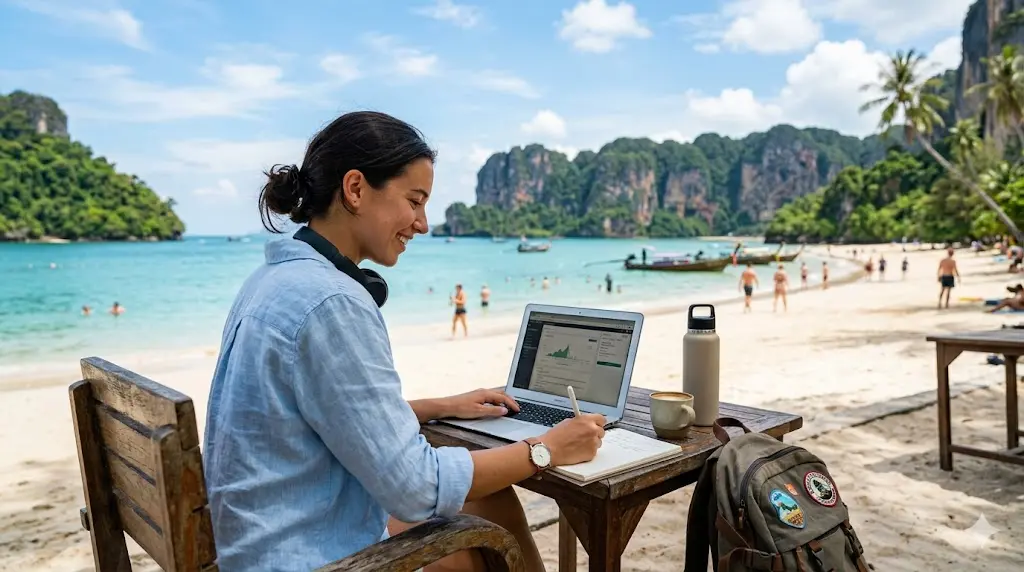
Online education isn’t just changing how people learn anymore; it’s quietly reshaping how they travel, where they travel, and even why they travel. The connection between online education and tourism might not look obvious at first, but once you start paying attention, it’s everywhere.
What I’ve seen in recent years is simple: learners are no longer tied to physical classrooms, and that shift has started influencing global travel patterns in ways most people still underestimate. Destinations are adapting, tourism businesses are adjusting, and travelers are mixing education with exploration more than ever before.
Here’s the thing—education used to stop mobility. Now it’s creating new kinds of mobility.
Online education is reshaping the global tourism industry by enabling flexible learning, increasing digital nomad travel, and encouraging learners to combine study with travel experiences. It’s driving demand for short-term stays, learning-based tourism, and hybrid travel models. This shift is changing how destinations attract visitors and how tourism businesses design services for long-stay, education-focused travelers.
What Is Online Education’s Impact on Tourism?
Online education and tourism integration is the growing overlap between digital learning platforms and travel behavior, where learners travel while studying remotely or choose destinations based on educational opportunities.
At its core, this trend means people don’t need to pause their education to travel. Instead, they bring education with them.
What most people overlook is that this isn’t just about students anymore. Working professionals, freelancers, and even retirees are joining online courses while traveling. Platforms like Coursera and similar systems have made structured learning portable, and that portability is quietly rewriting tourism demand.
In my experience, tourism boards didn’t see this coming early enough. They were still targeting traditional holidaymakers while a new category of “learning travelers” was already forming.
Why Online Education Is Reshaping the Global Tourism Industry in 2026
Let me be direct: tourism in 2026 isn’t just about sightseeing anymore. It’s about purpose-driven travel.
Online education has introduced a new travel motivation—learning while living somewhere else. This shift aligns closely with broader changes in work culture, especially remote-first lifestyles.
One important influence comes from global organizations like the World Tourism Organization, which has highlighted the rise of experience-based and long-stay tourism models.
Here’s what’s happening on the ground:
People are choosing destinations with stable internet instead of just scenic beauty. Cities are competing not only on attractions but on study-friendly infrastructure. Cafés now market themselves as “study spaces,” and accommodation providers increasingly advertise long-stay discounts.
An unexpected twist? Some smaller cities are outperforming famous tourist hubs because they offer quieter environments for online learning.
That’s something traditional tourism models didn’t predict.
How to Combine Online Education and Tourism Step by Step
If you’re wondering how learners actually mix education with travel, it’s more structured than it looks.
Step 1: Choosing a Learning Program That Supports Flexibility
Most learners start with self-paced or asynchronous courses. If the program has strict live schedules, travel becomes harder.
Step 2: Selecting a Destination Based on Learning Conditions
Instead of choosing places only for tourism appeal, learners now check internet reliability, cost of living, and time zone compatibility.
Step 3: Setting Up a Work-Learn-Travel Routine
This is where discipline matters. Many people study in the morning, explore in the afternoon, and review lessons at night.
Step 4: Blending Local Experiences with Learning Goals
Some learners tie coursework to their destination. For example, a marketing student in Bangkok might analyze local tourism campaigns as part of assignments.
Step 5: Adjusting Travel Pace Based on Course Load
Heavier study weeks often mean staying longer in one place. Lighter weeks allow more movement.
Common Misconception: “Travel Reduces Learning Quality”
That’s not always true. In fact, I’ve noticed the opposite in some cases.
When people travel while learning, they often become more engaged. Maybe it’s the change of environment, or maybe it’s just that learning feels more meaningful when tied to real-world exposure.
Expert Tips: What Actually Works in Learning-Based Tourism
Here’s what most guides miss.
Consistency matters more than destination. You don’t need the “perfect” city; you need a stable routine that survives travel disruptions.
In my experience, learners who constantly chase aesthetic destinations struggle more than those who pick practical locations first.
Another overlooked point is social learning. Travelers who join co-working or study communities tend to complete courses faster. Isolation sounds appealing at first, but it often kills momentum.
And let me add a hot take: overly luxurious travel setups can actually reduce learning output. Comfort sometimes leads to procrastination, at least from what I’ve seen in real cases.
What Role Do Digital Learning Platforms Play in Tourism Growth?
Digital learning platforms have become indirect drivers of tourism demand.
Platforms like Coursera, edX-style ecosystems, and independent academies allow people to study from anywhere, which increases travel flexibility. This leads to longer stays in tourist destinations, especially in cities that support digital infrastructure.
Tourism providers are now responding by offering “learning stay packages,” where accommodations are designed for study routines rather than short vacations.
This shift also affects spending patterns. Instead of spending heavily on short trips, learners spread budgets across months, benefiting local economies in more stable ways.
Unexpected Ways Online Education Is Changing Travel Behavior
Here’s something not many people talk about.
Online education is slowly turning tourism into a semi-permanent lifestyle for some groups. Instead of “traveling to learn,” people are “learning while living abroad.”
This creates a hybrid traveler category:
Not a tourist in the traditional sense
Not a full-time resident either
Something in between
What’s interesting is that these travelers often return to the same destination multiple times. They build familiarity, not just memories.
And honestly, that changes how destinations think about loyalty.
Real-World Style Example: The Digital Learner in Lisbon
Take a learner moving to Lisbon for three months while studying digital marketing online.
At first, the goal is simple: complete coursework. But over time, the routine shifts. Mornings are for lectures, afternoons for city exploration, evenings for group discussions with other learners.
By the end of the stay, the person isn’t just a visitor anymore. They’re part of a micro-community of global learners.
Tourism in this case becomes secondary. Education becomes the anchor, and travel becomes the environment.
That’s the shift we’re talking about.
Expert Perspective: Why Tourism Businesses Need to Pay Attention
Tourism businesses that still treat visitors as short-term guests are missing a growing segment.
Learning travelers stay longer, spend differently, and expect infrastructure that supports focus, not just entertainment.
What most people overlook is that this group values reliability over luxury. A stable internet connection can matter more than a beachfront view.
And that’s reshaping how destinations compete globally.
People Also Ask About Online Education and Tourism
How does online education influence travel decisions?
Online education allows people to study from anywhere, so travel decisions become more flexible. Instead of planning trips around academic breaks, learners now choose destinations that support both study and lifestyle needs.
Is online learning increasing long-term tourism stays?
Yes, in many cases it is. Learners often stay longer in one location to maintain study routines, which increases demand for long-stay accommodations and stable living conditions.
Can tourism destinations benefit from online education trends?
Absolutely. Cities that invest in digital infrastructure and affordable housing often attract more learning travelers, boosting local economies in more consistent ways than short-term tourism.
What skills are learners most often pursuing while traveling?
Digital marketing, language learning, programming, and design are among the most common areas. These skills align well with remote learning and flexible schedules.
For businesses aiming to boost brand visibility and SEO ranking, our network site provides tailored opportunities through high-authority backlinks and trusted guest posting solutions. Explore publishing options via PR Wires and Press Release Power to access press release distribution services, online press release distribution, and global newswire services designed to improve organic traffic and media coverage. These platforms support PR distribution services and digital marketing services that help brands achieve instant publishing and stronger search performance.