

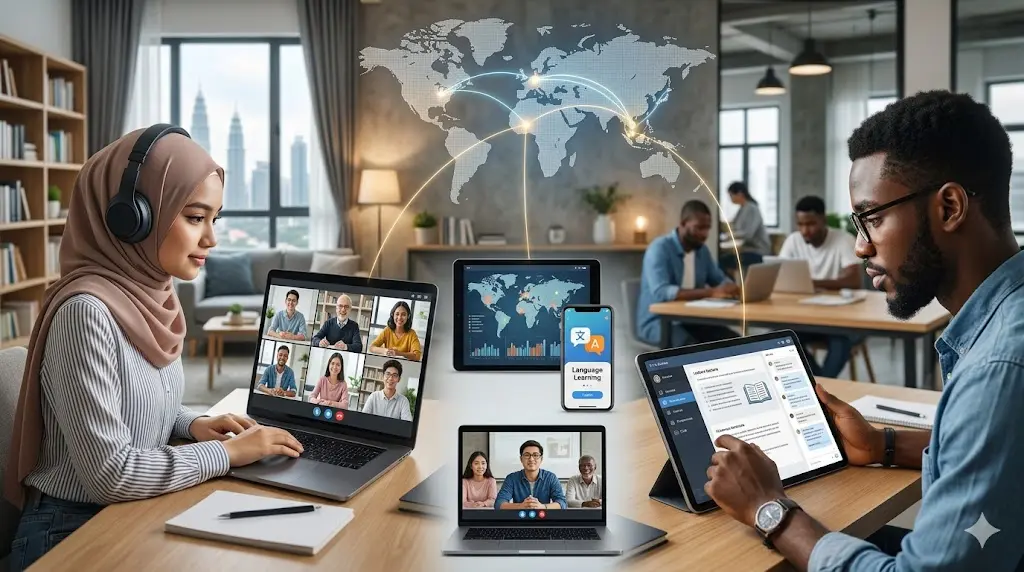
Online education is changing how countries interact, cooperate, and compete. Students now attend classes across borders without leaving home, and governments are beginning to realize that digital learning platforms shape diplomacy almost as much as trade agreements do. Research shows that virtual classrooms are creating cultural exchange at a scale that traditional systems never managed.
Online education is influencing international relations because it increases global collaboration, soft power influence, cultural exchange, and workforce mobility. Countries investing heavily in digital learning are strengthening diplomatic ties while also competing for global educational influence.
What Is Online Education and Why Does It Matter?
Online education refers to structured learning delivered through internet-based platforms, virtual classrooms, and digital academic systems. It includes university courses, skill certifications, remote training programs, and international collaborative learning.
Here’s the thing. Ten years ago, online education was mostly viewed as a backup option. Now it’s shaping foreign policy discussions, migration trends, and international workforce development. That shift happened faster than most experts expected.
Online Education Diplomacy: The use of digital learning systems and educational access to improve international influence, cooperation, and global engagement.
Countries are no longer competing only through military strength or economic power. Educational accessibility has become part of geopolitical strategy. A nation offering affordable online programs to global students can quietly build long-term influence.
In my experience, this is one of the most overlooked changes in modern diplomacy. People still think foreign policy happens only in government meetings. A lot of it now happens inside virtual classrooms.
Research from international academic institutions suggests that cross-border digital education improves intercultural understanding and increases future collaboration between nations. Students who study together online often maintain professional relationships for years afterward.
That matters more than it sounds.
A software developer in Kenya learning from a university instructor in Canada might later collaborate with businesses in Europe or Asia. Those educational pathways slowly reshape global alliances.
Expert Tip
Countries that support multilingual online learning programs usually gain stronger international engagement because accessibility creates trust before politics ever enters the conversation.
Why Online Education Matters in 2026
By 2026, online education isn’t simply part of education systems. It’s becoming part of national strategy.
Governments are investing billions into digital learning infrastructure because they understand what most people overlook: educated international audiences often become future economic partners, researchers, and political allies.
Let me be direct. Influence today isn’t only about exporting products anymore. It’s also about exporting ideas, training systems, and educational standards.
Several global studies now connect online learning access with improved diplomatic cooperation. Nations sharing educational technology frequently strengthen trade discussions afterward. That pattern appears repeatedly across Asia, Europe, and parts of Africa.
Another reason this matters is demographic change. Younger populations prefer flexible learning systems. Traditional university exchange programs still exist, but virtual learning reaches far more people at lower cost.
That scale changes everything.
A student who couldn’t afford international travel five years ago can now attend global seminars from home. Those interactions create familiarity with foreign cultures and institutions. Familiarity tends to reduce distrust.
Oddly enough, one counterintuitive point keeps appearing in research findings: smaller countries sometimes benefit more from online education influence than larger nations. Why? Because niche expertise travels well digitally.
A small nation specializing in cybersecurity education or renewable energy training can become globally respected despite limited political power.
That’s fascinating if you think about it.
How Online Education Shapes International Relations Step by Step
1. Expanding Cross-Border Learning
Students now participate in global classrooms daily. Shared educational experiences build cultural understanding naturally.
A political science student in India discussing climate policy with classmates in Germany and Brazil gains perspective that textbooks alone can’t provide.
That exposure changes attitudes over time.
2. Building Soft Power Influence
Countries offering accessible digital education often improve their international reputation.
Soft power grows when foreign students associate a nation with innovation, accessibility, and opportunity. Educational influence usually lasts longer than political campaigns.
3. Strengthening Workforce Collaboration
Global industries increasingly rely on remote teams. Online education prepares workers for international communication and collaboration.
Research suggests multinational employers value candidates with cross-cultural online learning experience because they adapt faster in distributed work environments.
4. Increasing Diplomatic Cooperation
Educational partnerships frequently lead to research agreements, technology sharing, and policy discussions.
One university collaboration can eventually support broader government cooperation. That chain reaction happens more often than people realize.
5. Reducing Educational Inequality
Digital education lowers barriers for students in developing regions.
It’s not perfect, obviously. Internet access gaps still exist. But compared to traditional international study costs, online systems dramatically increase accessibility.
Expert Tip
Programs focused on collaborative projects instead of passive video lectures tend to create stronger international engagement and long-term professional networks.
Common Misconception About Online Education
Online Learning Doesn’t Reduce Human Connection
A lot of critics assume virtual learning weakens relationships because students aren’t physically together.
Honestly, I used to think that too.
Then I observed international project teams working together for months online. Some students communicated more consistently than traditional campus classmates because digital systems encouraged constant collaboration.
Human connection doesn’t disappear online. It changes form.
In many cases, online education actually increases communication frequency. Students message, share documents, and collaborate across time zones daily.
That creates a different kind of relationship. Sometimes a surprisingly strong one.
Research from collaborative learning studies suggests digital academic communities often remain active years after coursework ends. Alumni continue networking globally through shared platforms.
Traditional classrooms rarely achieve that scale.
What Research Findings Reveal About Global Educational Influence
Researchers studying international relations increasingly view online education as part of digital diplomacy.
Several patterns appear consistently across studies:
Countries investing heavily in educational technology often improve international perception.
Students exposed to multinational classrooms develop stronger cultural empathy.
Remote learning networks encourage business partnerships across borders.
International academic collaboration boosts innovation exchange.
That last point deserves more attention.
Innovation rarely happens in isolation anymore. Scientists, developers, healthcare researchers, and engineers collaborate globally through online learning ecosystems.
One realistic example involves renewable energy training programs connecting students across Southeast Asia and Europe. Those educational relationships later contributed to startup partnerships and shared sustainability initiatives.
Education started the conversation. Economic cooperation followed afterward.
That sequence appears repeatedly in modern international development.
Expert Tips and What Actually Works
Here’s what most guides miss about online education and global influence: technology alone isn’t enough.
You can build the best platform in the world, but if students don’t feel culturally included, engagement drops fast.
In my experience, successful international programs focus heavily on communication style, accessibility, and collaborative learning rather than flashy features.
Simple interaction tools often outperform overly complicated systems.
Another important factor is language flexibility. Programs offering multilingual discussion spaces generally attract broader participation and stronger retention.
One hot take here: some universities are still too obsessed with prestige branding while ignoring user experience.
Students care about outcomes and interaction quality more than institutional image than many administrators want to admit.
And honestly, they probably should.
Expert Tip
Smaller online communities with active engagement often create stronger international influence than massive platforms where students barely interact.
How Governments Are Responding to Digital Education Growth
Governments worldwide are adjusting policies because online education now affects labor markets, migration, and diplomatic strategy.
Some nations provide digital scholarships to foreign learners. Others create international certification partnerships to strengthen workforce mobility.
There’s also growing concern about educational dependence.
If one country dominates digital learning infrastructure globally, it may gain disproportionate influence over educational standards and information access.
That raises political questions.
Who controls certification systems? Which languages dominate online instruction? How are cultural perspectives represented?
Those debates are becoming more common in policy discussions.
At the same time, collaborative educational agreements continue expanding because economic benefits are difficult to ignore.
Countries need skilled workers. Online education helps fill that gap faster than traditional systems alone.
People Most Asked About Why Online Education Is Influencing International Relations
How does online education affect diplomacy?
Online education improves diplomacy by increasing cultural exchange, academic collaboration, and communication between global populations. Students often develop long-term professional relationships that later influence business and political cooperation.
Why are governments investing in digital education?
Governments see online learning as both an economic and strategic tool. It supports workforce development while also increasing international influence and educational accessibility.
Can online education improve global cooperation?
In many cases, yes. Shared learning environments encourage dialogue between people from different countries, which can reduce misunderstandings and strengthen collaboration.
Does online education create soft power?
Absolutely. Countries offering respected digital education programs often improve their international image and attract future business, research, and diplomatic partnerships.
What industries benefit most from international online learning?
Technology, healthcare, engineering, finance, and renewable energy sectors benefit heavily because global collaboration is already common in those industries.
Is online education replacing traditional universities?
Probably not entirely. Hybrid systems are more likely. Many students still value campus experiences, but digital learning continues growing because it offers flexibility and affordability.
How does youth participation affect international relations?
Young people adapt quickly to digital collaboration tools. Their global interactions through education shape future workforce trends, political attitudes, and international cooperation.
Final Thoughts
Why Online Education Is Influencing International Relations comes down to one simple reality: education shapes perception, and perception shapes global cooperation.
Virtual classrooms now connect millions of people who might never have interacted otherwise. Those conversations influence business partnerships, cultural understanding, workforce development, and eventually policy itself.
Here’s the thing. International relations used to be controlled mostly by governments. Now students, educators, researchers, and digital communities quietly influence global relationships every single day.
That shift is probably only getting started.
Boost your brand visibility and organic traffic with press release distribution services and trusted digital marketing agency solutions designed for businesses, startups, and SEO professionals. Get high authority backlinks, instant publishing, stronger SEO ranking, and wider media coverage through performance-focused campaigns that help your business grow faster online.