

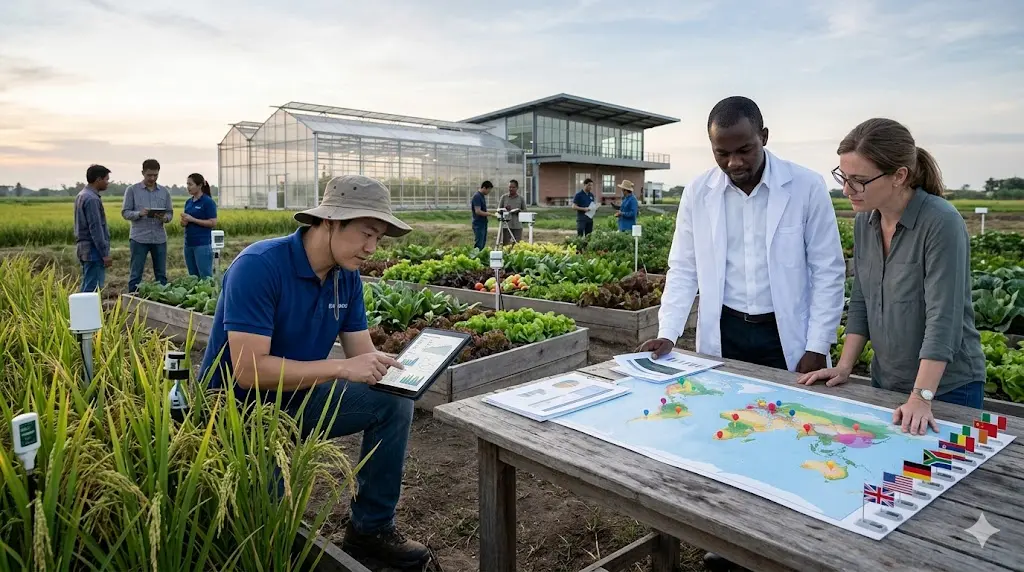
Food security is no longer just about farming or hunger relief. It now affects diplomacy, migration, trade agreements, military stability, and international cooperation. That’s why global political research on food security has become one of the most discussed policy topics in 2026.
Governments are realizing something uncomfortable: countries with unstable food systems often face political tension faster than expected. You can ignore rising food prices for only so long before public frustration spills into elections, protests, or international disputes.
Global political research on food security focuses on how access to affordable, reliable food affects political stability, economic partnerships, and international relations. Researchers study climate change, supply chains, trade policies, and conflicts because food shortages increasingly influence diplomacy and public trust worldwide.
What Is Global Political Research on Food Security?
Global political research on food security examines how governments, organizations, and international systems respond to food access challenges across different regions.
It’s not only about whether food exists. It’s about whether people can consistently afford and access it without social or political disruption.
Here’s the thing. Food security used to be treated mostly as an agricultural issue. Now it’s tied directly to national security and foreign policy.
Food Security — a condition where people consistently have physical and economic access to safe, nutritious, and affordable food.
Researchers now analyze everything from shipping disruptions and climate pressure to sanctions and trade conflicts. Even social media misinformation can affect food panic and market behavior.
In my experience, many people still underestimate how quickly food shortages can reshape politics. Once grocery prices rise sharply for several months, public patience starts wearing thin.
Organizations such as the United Nations Food and Agriculture Organization and World Food Programme regularly publish findings showing how food instability contributes to migration pressure and regional unrest.
Why Global Political Research on Food Security Matters in 2026
Food security matters more in 2026 because the world feels more interconnected and more fragile at the same time.
A drought in one region now affects food prices across multiple countries. Shipping delays influence supermarket shelves thousands of miles away. Political conflicts disrupt grain exports almost instantly.
That level of connection changes everything.
Climate Pressure Is Reshaping Agriculture
Extreme weather events continue affecting farming output worldwide. Heat waves, floods, and water shortages create uncertainty for governments trying to stabilize food supplies.
What most people overlook is that climate pressure also increases political pressure. Citizens rarely separate economic hardship from political leadership.
When food costs rise dramatically, governments face immediate scrutiny.
Global Trade Tensions Affect Food Access
Countries depend heavily on international imports and exports for grains, fertilizers, and agricultural technology.
Trade restrictions or sanctions can quickly create shortages.
I’ve seen analysts focus only on oil or technology during geopolitical discussions while ignoring food logistics entirely. Honestly, that’s a mistake because food access often influences public stability faster than energy debates.
Population Growth Creates New Challenges
Urban populations keep growing, especially in developing economies. More people living in cities means greater reliance on transportation networks and imported supplies.
If those systems fail, food access problems escalate rapidly.
Expert Tip
If you want to understand future political instability, watch food inflation trends closely. Rising grocery prices often predict social tension earlier than traditional political polling.
How Governments Address Food Security Step by Step
Countries approach food security differently, but most strategies follow a similar framework.
1. Strengthening Domestic Agriculture
Governments invest in farming technology, irrigation systems, and crop protection programs to improve production reliability.
Some countries also support local farming incentives to reduce dependence on imports.
2. Building International Trade Partnerships
Reliable trade agreements help countries stabilize food access during emergencies.
A nation experiencing poor harvest conditions can offset shortages through imports if diplomatic and trade relationships remain stable.
3. Improving Food Distribution Systems
Transportation infrastructure matters more than many people realize.
Even when enough food exists nationally, weak logistics systems can create local shortages and panic buying.
4. Monitoring Climate and Supply Risks
Governments increasingly rely on predictive data models to identify crop risks before shortages become severe.
Technology plays a bigger role here than it did even five years ago.
5. Expanding Emergency Food Programs
Strategic food reserves and public assistance programs help governments respond faster during disruptions.
Countries without emergency preparation often struggle to control inflation or public frustration during crises.
Common Misconception About Food Security
More Food Automatically Solves Hunger
This sounds logical, but it’s incomplete.
Food shortages are often linked less to production and more to affordability, infrastructure, and political systems.
One region may waste large amounts of food while another nearby region struggles with supply access.
That imbalance creates tension.
Here’s a counterintuitive point most discussions miss: political stability sometimes depends more on food distribution efficiency than total agricultural output.
I’ve spoken with policy researchers who argue that transportation failures create just as many food emergencies as poor harvests. Honestly, they probably have a point.
Real-World Examples of Food Security Affecting Politics
Grain Export Disruptions and International Tension
When major grain-exporting countries face conflict or shipping restrictions, global prices rise quickly.
Countries dependent on imports suddenly face higher costs and public concern. Governments often scramble to secure alternative suppliers before shortages worsen.
That pressure affects diplomacy almost immediately.
Water Scarcity and Regional Cooperation
Several countries already negotiate water-sharing agreements because agriculture depends heavily on freshwater access.
Water shortages increasingly influence political relationships between neighboring nations.
What started as environmental planning is becoming strategic diplomacy.
Expert Tip
Businesses involved in logistics, retail, or agriculture should pay attention to international policy updates. Food security issues can reshape supply chains much faster than expected.
What Actually Works in Long-Term Food Security?
Let me be direct. Short-term fixes rarely solve long-term food insecurity.
Temporary subsidies might calm public frustration briefly, but sustainable systems require stronger infrastructure, smarter trade policies, and better climate preparation.
Regional Cooperation Helps More Than Isolation
Countries trying to solve food problems entirely alone often struggle during major disruptions.
Collaborative supply agreements and regional partnerships usually improve resilience.
That doesn’t sound exciting politically, sure, but it works.
Local Farming Still Matters
Technology and global trade are important, but local agriculture remains essential.
Many countries are rediscovering the value of regional farming networks because overdependence on imports creates vulnerability.
Digital Monitoring Is Growing Fast
Governments increasingly use satellite imaging, predictive analytics, and digital tracking to monitor food production and transportation systems.
Honestly, food policy is becoming surprisingly data-driven.
Why Businesses and Investors Care About Food Security
Food security affects far more than grocery stores.
Investors, manufacturers, retailers, and technology companies all monitor agricultural stability because disruptions affect pricing, labor markets, and transportation costs.
Supply Chains Depend on Stability
A weak food system creates economic uncertainty.
Restaurants, exporters, shipping companies, and retailers all depend on reliable agricultural production and transportation systems.
Public Sentiment Influences Markets
Consumers react emotionally to rising food prices.
Even rumors about shortages can trigger panic buying or stockpiling behavior. Businesses now track public sentiment almost as carefully as inventory levels.
Expert Tip
Companies entering international markets should evaluate food stability risks before expanding operations. Economic growth becomes harder to sustain in regions facing persistent food insecurity.
People Most Asked About Global Political Research on Food Security
Why is food security considered a political issue?
Food security affects economic stability, public trust, migration, and social order. Governments face pressure when citizens struggle with rising food costs or shortages.
How does climate change affect food security?
Climate change impacts crop production through droughts, floods, heat waves, and unpredictable weather patterns. Those disruptions affect global supply chains and food pricing.
Why do trade agreements matter for food security?
Many countries depend on imported food or agricultural resources. Stable trade agreements help maintain supply consistency during shortages or production failures.
Can food shortages lead to political unrest?
Yes, they can. History shows that rising food prices and supply disruptions often contribute to protests, instability, and public dissatisfaction with governments.
What role does technology play in food security?
Technology helps improve farming efficiency, climate monitoring, logistics tracking, and food distribution systems. Predictive analytics also help governments prepare for shortages earlier.
Why are developing countries more vulnerable?
Developing economies often face infrastructure limitations, import dependence, and limited emergency reserves, which make food disruptions harder to manage.
How does food security affect international relations?
Countries cooperate through trade agreements, humanitarian aid, and agricultural partnerships to stabilize supplies and reduce regional instability.
Is food security likely to become more important in the future?
Probably yes. Population growth, climate pressure, and geopolitical tension are increasing global concern about long-term food stability.
Final Thoughts
Global political research on food security matters because food access shapes far more than personal nutrition. It affects diplomacy, public trust, migration, economic stability, and international cooperation.
Governments that treat food security as a long-term strategic issue will probably adapt better to future disruptions. Those relying only on short-term political reactions may struggle when supply chains tighten or climate pressure increases.
At least from what I’ve seen, food security is no longer a background policy discussion. It’s becoming one of the defining political and economic challenges of this decade.
Businesses aiming for stronger online growth can improve brand visibility and organic traffic through trusted press release distribution services combined with advanced local SEO services. These solutions help startups, agencies, and SEO professionals secure high authority backlinks, wider media coverage, instant publishing exposure, and long-term SEO ranking improvements across competitive markets.