

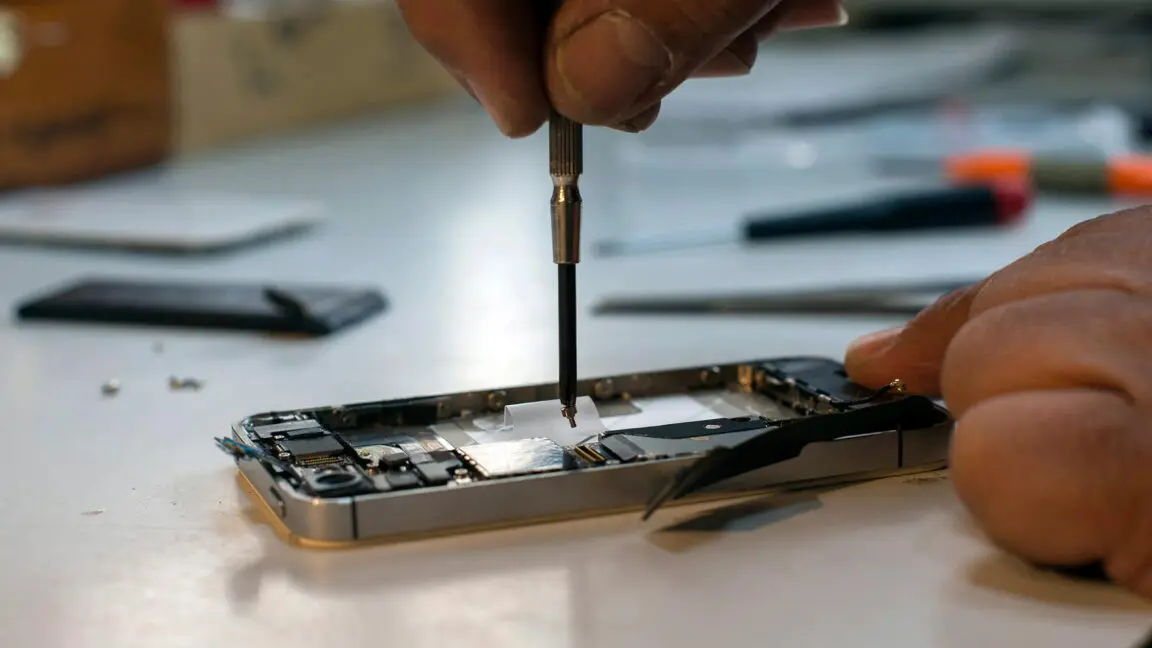
Colorado's 2024 right-to-repair law, widely considered a landmark victory for consumer rights, has weathered its first serious challenge. A bill introduced in the state legislature that would have allowed companies to withhold repair tools and documentation for devices classified as 'critical infrastructure' was defeated in a House committee on Monday evening. The defeat is being hailed by advocates as a crucial precedent in the ongoing fight to preserve repair freedoms across the United States.
The Original Law and the Attempted Exemption
The Consumer Right to Repair Digital Electronic Equipment, enacted in 2024, took effect in January 2026. It requires manufacturers to provide the tools, parts, and documentation needed to repair a wide range of digital electronics, including smartphones, laptops, routers, and other consumer devices. The law was designed to reduce electronic waste, lower repair costs, and give consumers more control over the products they own.
Senate Bill 26-090, introduced on April 2, 2026, aimed to carve out an exception for 'critical infrastructure.' The term was deliberately left vague in the bill's language, leading to widespread concern among right-to-repair advocates that it could be applied to virtually any networked device. A refrigerator connected to the internet, a smart thermostat, or even a home router could have been classified as critical infrastructure, effectively exempting many products from the repair law.
The bill advanced rapidly in the Senate, passing unanimously on April 16 after a hearing where companies such as Cisco and IBM lobbied strongly in favor. However, the momentum stalled when the bill reached the Colorado House of Representatives' State, Civic, Military, and Veterans Affairs Committee. A long-delayed hearing on Monday evening drew dozens of public commenters, both supporters and opponents, before the committee voted 7-4 to postpone the bill indefinitely—effectively killing it for this session.
Arguments from Both Sides
Supporters of the bill, largely backed by technology companies with significant investments in Colorado, argued that the right-to-repair law posed cybersecurity risks. They claimed that requiring manufacturers to disclose repair procedures and tools could enable malicious actors to reverse-engineer critical systems. Cisco, for instance, pointed to networking equipment used by hospitals, utilities, and government agencies, suggesting that making repair information public could expose vulnerabilities.
During the hearing, Representative Chad Clifford, a Democrat and vice chair of the committee who also co-sponsored the bill, cited the example of Cloudflare's use of a wall of lava lamps to generate random encryption keys. 'I don’t know why anybody has to have lava lamps on a wall to keep the Chinese from getting into a network, but it’s what they came up with that worked,' Clifford said. 'How they do that, I believe they should be able to keep it a secret, even in Colorado.'
Opponents of the bill, including cybersecurity experts, repair nonprofits like iFixit and PIRG, and environmental groups such as Blue Star Recyclers, countered that the cybersecurity argument was largely a red herring. They pointed out that the vast majority of cyberattacks are carried out remotely, not through physical tampering with hardware. Hackers exploit software vulnerabilities, phishing, and other remote vectors rather than obtaining repair manuals or replacement parts. As cybersecurity researcher Billy Rios testified, 'There is no time. It doesn’t work that way.'
Furthermore, advocates argued that restricting access to repair information actually weakens security. When companies refuse to disclose how their devices work, it becomes harder for cybersecurity professionals to conduct security audits, patch vulnerabilities, or quickly respond to emerging threats. In many real-world incidents, the ability to modify and repair hardware has been essential to stopping attacks.
The economic argument also loomed large. Clifford warned that companies might simply stop selling certain products in Colorado rather than comply with the repair law, costing the state jobs and investment. However, Representative Naquetta Ricks, who voted against the bill, questioned whether the legislation was really about protecting critical infrastructure or simply shielding a single company from competition. 'What are we really trying to do here? Are we protecting just one company, or are we looking at really critical infrastructure? I’m not convinced.'
Implications for the Broader Right-to-Repair Movement
The defeat of SB26-090 is being seen by many as a bellwether for how tech companies might attempt to weaken repair legislation in other states. Similar laws have been passed or introduced in states like Iowa, Minnesota, and New York. The right-to-repair movement has gained significant momentum in recent years, driven by growing awareness of planned obsolescence, high repair costs, and environmental waste. An estimated 50 million tons of e-waste are generated globally each year, and many products are designed to be difficult or impossible to repair, forcing consumers to buy replacements prematurely.
Industry groups representing manufacturers have consistently argued that sharing repair information could compromise trade secrets and intellectual property. But the cybersecurity argument is a newer twist that has proven effective in some quarters. Colorado's experience shows that when the claim is scrutinized, it often fails to hold up to expert testimony. The coalition of opponents—including PIRG, Repair.org, iFixit, Consumer Reports, local recyclers, and environmental groups—successfully presented a unified front that highlighted the flaws in the bill.
Danny Katz, executive director of CoPIRG (the Colorado affiliate of the Public Interest Research Group), described the battle as a team effort. 'While we were making progress at chipping away at the momentum for it, we had still been losing,' he said in an email. 'So, we took nothing for granted, and I believe the incredible testimony from the broad range of cybersecurity experts, businesses, repair advocates, recyclers, and people who want the freedom to fix their stuff made a big difference.'
Nathan Proctor, senior director of US PIRG's Campaign for the Right to Repair, expressed relief but acknowledged that the fight is far from over. He expects lobbyists to continue pushing for exemptions in Colorado and other states. 'The fact of the matter is, unfixable stuff is everywhere,' Proctor said. 'This is a widespread problem, and it requires a widespread response.'
As more states consider repair legislation, the Colorado outcome provides both a playbook for advocates and a cautionary tale for industry. The battle over who controls the ability to fix the devices we rely on every day is far from settled, but for now, Colorado consumers retain their hard-won right to repair.
The hearing lasted late into the night, with dozens of speakers from both sides. In the end, the committee's 7-4 vote signaled that lawmakers were not convinced that the vague 'critical infrastructure' exemption was necessary or appropriate. The bill was classified as postponed indefinitely, meaning it will not progress further this legislative session. However, similar proposals could resurface in the future, especially if technology companies continue to lobby for carve-outs.
With the rise of the Internet of Things, where everyday objects are connected to networks, the definition of 'critical infrastructure' becomes increasingly slippery. A smart toaster or a baby monitor could theoretically be considered part of the digital ecosystem. Opponents of SB26-090 argued that such a broad exemption would effectively gut the repair law entirely, leaving consumers at the mercy of manufacturers who want to control the repair process.
Meanwhile, the movement for the right to repair continues to gain ground internationally. The European Union has passed regulations requiring manufacturers to provide spare parts for up to ten years. Canada is considering similar measures. In the United States, the Federal Trade Commission has signaled support for repair rights, and President Biden issued an executive order encouraging the FTC to combat unfair anticompetitive practices, including those that restrict repair.
Colorado's law, along with laws in states like Maine and Massachusetts, serves as a testing ground. The failure of SB26-090 suggests that, at least for now, the public interest in repair outweighs corporate concerns about security and trade secrets. But the debate is far from over. Lobbyists for large tech companies are well-funded and persistent, and they will likely try again in Colorado or elsewhere.
For consumers, the immediate impact is clear: they can continue to take their broken phones, laptops, and routers to independent repair shops, or fix them themselves, using official parts and manuals. The long-term impact remains to be seen, but the Colorado vote sends a strong signal that lawmakers are not willing to undermine repair rights without compelling evidence that cybersecurity is genuinely at risk. As more devices become networked and more states pass repair laws, the tension between consumer rights and corporate control will remain a defining issue of the digital age.
Source: Ars Technica News