

The Rise of a Global Icon
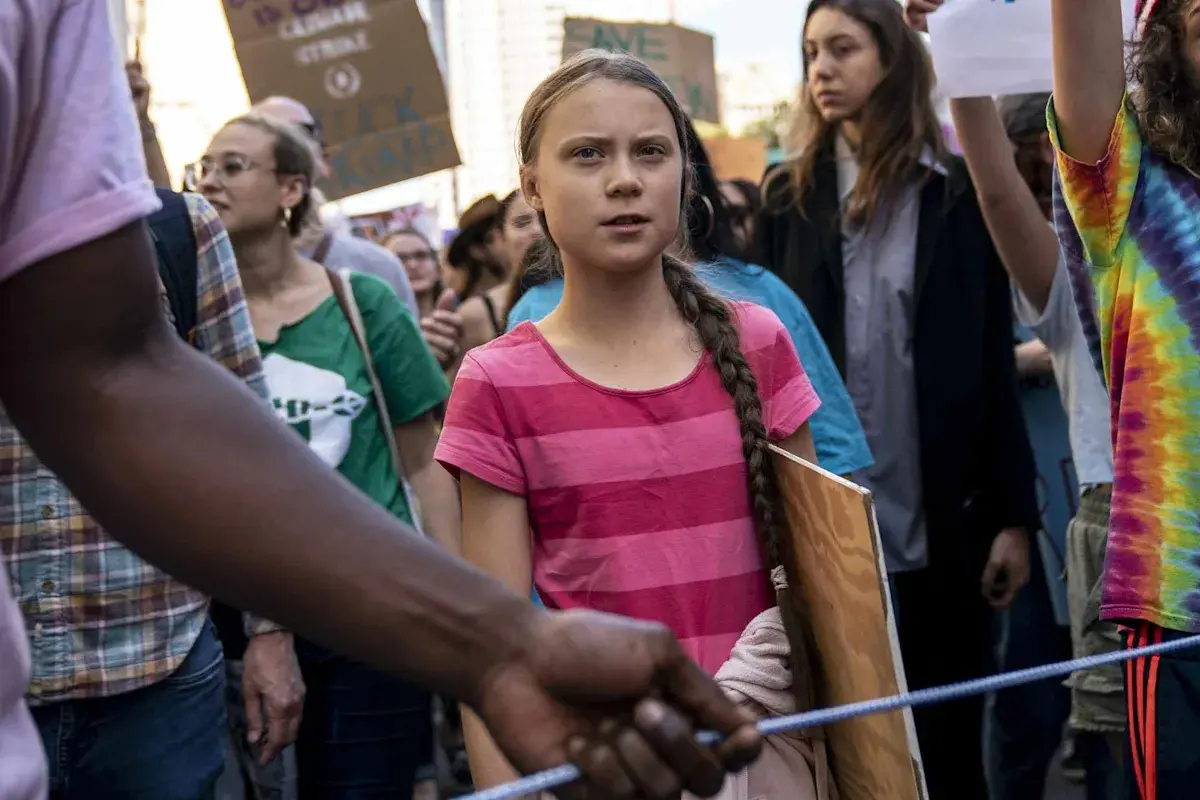
In August 2018, a 15-year-old Swedish girl named Greta Thunberg sat down outside the Riksdag (Swedish parliament) with a hand-painted sign reading ‘Skolstrejk för klimatet’ (School strike for climate). What began as a solitary protest grew into one of the largest youth-led movements in history. Within months, millions of students around the world skipped class on Fridays to demand that leaders take immediate action against the climate emergency. Thunberg’s straightforward, often blunt speeches resonated with a generation frustrated by political inertia, and her activism has since earned her numerous accolades, including Time magazine’s Person of the Year in 2019.
The climate crisis is the defining challenge of our time, and no single individual has done more to thrust it into the global spotlight than Thunberg. Her journey from an ordinary teenager with a diagnosis of Asperger’s syndrome to a Nobel Peace Prize nominee and bestselling author is remarkable. This article covers the key milestones in her life, her core beliefs, and the incredible impact she has made—all before turning 20.
Early Life and Awakening
Greta Tintin Eleonora Ernman Thunberg was born on January 3, 2003, in Stockholm, Sweden, into a family of artists. Her mother, Malena Ernman, is a renowned opera singer, and her father, Svante Thunberg, is an actor. She also has a younger sister, Beata. At age eight, Greta first learned about climate change at school. She was deeply disturbed by the information and could not understand why such a critical issue was not being treated as an emergency by adults and governments.
In an interview for the book I Know This to Be True: Greta Thunberg, she said: “I saw and heard these horrible stories about what humans had done to the environment, and what we were doing to the climate, that the climate was changing. I just couldn’t understand how we could just continue not caring about this.” That early sense of injustice stayed with her. She began urging her family to reduce their carbon footprint, convincing them to become vegan and to give up air travel.
Thunberg has been open about her diagnosis of Asperger’s syndrome, which she calls a “superpower.” She explains that her condition helps her see things in black and white, and she is less swayed by social pressure than many of her peers. Critics have sometimes used her diagnosis to belittle her activism, but she has consistently turned that negativity into a strength, using her platform to advocate for neurodiversity as well.
The School Strike for Climate
In August 2018, Greta decided she had to do more than change her family’s habits. She began a school strike, refusing to attend classes until the Swedish government took meaningful steps to reduce carbon emissions. For three weeks leading up to the national election, she sat outside the Riksdag every day, distributing flyers that read: “I am doing this because you adults are shitting on my future.” After the election, she continued striking every Friday, posting updates on social media with the hashtag FridaysForFuture.
Her message spread like wildfire. Within months, student strikes were being held in dozens of countries. In February 2019, nearly 10,000 young people in the United Kingdom walked out of school to protest. By March 2019, the movement had grown so large that an estimated 1.4 million students worldwide participated in a coordinated day of action. The strikes culminated in the week-long Global Climate Strikes in September 2019, which saw over 6 million people take to the streets in 185 countries—the largest climate protest in history.
Thunberg’s uncompromising tone was a hallmark of the movement. In her December 2018 speech at the UN COP24 Climate Summit in Poland, she told world leaders: “You are not mature enough to tell it like it is. Even that burden you leave to us children. But I don’t care about being popular. I care about climate justice and the living planet.” Her bluntness often attracted criticism from those who felt she was being disrespectful, but it also propelled the climate crisis to the top of news agendas.
Atlantic Crossing and UN Speech
When Thunberg was invited to speak at the UN Climate Action Summit in New York in September 2019, she faced a dilemma: flying would add to her carbon footprint, contradicting her message. So she chose to sail across the Atlantic Ocean on the racing yacht Malizia II, a zero-emissions vessel equipped with solar panels and underwater turbines. The two-week journey from Plymouth, England, to New York City garnered immense media attention. When she arrived on August 28, 2019, she told CBS News: “It is insane that a 16-year-old would have to cross the Atlantic Ocean to make a stand.”
At the UN Summit on September 23, 2019, Thunberg delivered one of the most memorable speeches of the decade. Eyes filled with tears, she declared: “You have stolen my dreams and my childhood with your empty words. The eyes of all future generations are upon you. And if you choose to fail us, I say we will never forgive you.” The speech went viral, and many called it a turning point in the public discourse on climate change. It cemented her status as a moral leader for young people worldwide.
Awards and Recognition
Thunberg’s activism has been recognized with some of the world’s most prestigious honors. In 2019, she was nominated for the Nobel Peace Prize by Norwegian lawmakers. Although she did not win (the prize went to Ethiopian Prime Minister Abiy Ahmed Ali that year), the nomination itself was a testament to her influence. In July 2020, she received the Gulbenkian Prize for Humanity, worth €1 million (about $1.15 million at the time). She donated every penny to organizations working on climate and environmental justice, including the Stop Ecocide Foundation and the SOS Amazonia campaign.
The crowning recognition came in December 2019, when Time magazine named her Person of the Year. At 16, she became the youngest individual ever to receive the title. Former Time editor-in-chief Edward Felsenthal said: “She became the biggest voice on the biggest issue facing the planet this year. Her rise and influence has been really extraordinary. She was a solo protester with a hand-painted sign 14 months ago. She’s now led millions of people around the world to act on behalf of the planet.”
She has also received honorary doctorates, the Amnesty International Ambassador of Conscience Award, and the Right Livelihood Award, sometimes called the “Alternative Nobel Prize.”
Books and Written Works
Thunberg has co-authored several books that amplify her message. In 2018, she released Our House Is on Fire: Scenes of a Family and a Planet in Crisis, written with her mother, father, and sister. The book combines personal memoir with an urgent call for action. A year later, she published No One Is Too Small to Make a Difference, a collection of her speeches that became a bestseller. In 2020, the book I Know This to Be True: Greta Thunberg featured an in-depth interview with the activist.
Her most ambitious project came in 2022 with The Climate Book, a comprehensive anthology that compiles contributions from over 100 experts—geophysicists, economists, meteorologists, and activists—to present a full picture of the climate crisis and possible solutions. Thunberg wrote the introductory sections and wove together the chapters. The book became a New York Times bestseller and was praised for its accessible yet thorough approach. The synopsis notes that it “shares her own stories of demonstrating and uncovering greenwashing around the world.”
Continued Activism and Recent Actions
Even as she has grown older, Thunberg has not stepped back from her role as a disruptor. She continues to participate in protests, speak at conferences, and pressure political and corporate leaders. In 2023, she joined the “Fossil Free London” protests and was present at the UNFCCC SB58 Climate Conference in Bonn, Germany. She has also been involved in efforts to hold governments accountable for their climate pledges, often calling out hypocrisy and “blah blah blah” rhetoric.
In early 2024, Thunberg made headlines for joining an aid boat bound for Gaza during the Israel-Hamas war, an action that underscored her belief that climate justice is inseparable from social justice, peace, and human rights. The boat was later seized by Israeli forces, and Thunberg faced criticism from some quarters for venturing into a politically sensitive conflict zone. She stood by her decision, stating that climate activists cannot ignore the suffering of people in war zones.
Legacy and Impact
Greta Thunberg has fundamentally changed how the world talks about climate change. Before her, few people had heard of a “school strike for climate.” Now, millions of students around the world have found a platform to demand action. She has inspired a generation of activists, such as the American teenager Jamie Margolin, co-founder of Zero Hour, and the Ugandan activist Vanessa Nakate. Thunberg’s insistence on following the science has also prompted many governments and media outlets to treat climate change as a crisis rather than a distant problem.
Despite the immense pressure of public life, she remains remarkably focused. She once said that her Asperger’s helps her see through empty promises and greenwashing. “When haters go after your looks and differences, it means they have nowhere left to go,” she wrote on Twitter. “And then you know you’re winning!” Her authenticity and refusal to be co-opted by any political party have kept her message sharp and credible.
Thunberg’s story is far from over. While she has stepped out of the daily headlines, her influence continues to shape climate policy and youth activism. She reminds us that one determined voice—even from a fifteen-year-old girl skipping school—can spark a movement that challenges the entire world to change.
Source: Yahoo News News