
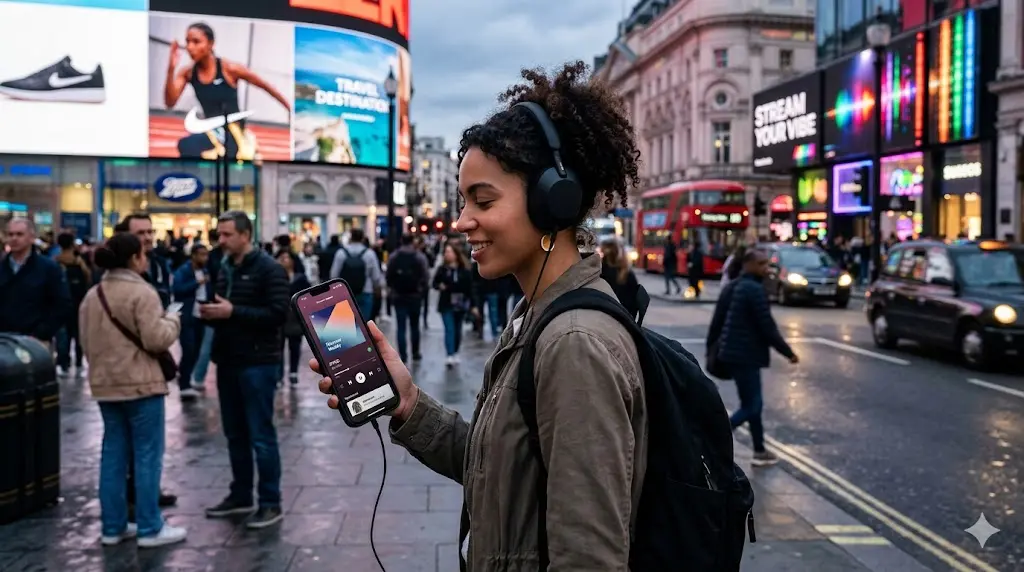
Music streaming advertising is changing how brands reach people in ways that feel more personal, more timely, and honestly less annoying than traditional ads. If you’ve ever had an ad show up exactly when you’re in the middle of a playlist, you already know how tightly this space is being engineered.
What most people overlook is how deeply listening habits now shape advertising decisions. It’s not just about what people click anymore—it’s about what they listen to, when they listen, and even how their mood shifts across the day.
Music streaming advertising is transforming digital marketing by using real-time listening behavior to deliver highly targeted audio and display ads. It improves engagement, strengthens brand recall, and gives advertisers better emotional context than most digital channels. In most cases, it performs better than traditional digital ads because users are actively engaged while listening.
What Is Music Streaming Advertising and Why Does It Matter?
Music streaming advertising refers to ads delivered inside audio streaming platforms where users consume music, podcasts, or curated playlists. Instead of interrupting passive scrolling, it enters a space where users are already emotionally engaged.
Here’s a simple definition.
Definition Box: Music Streaming Advertising
A form of digital advertising that delivers audio or visual ads through music and audio streaming platforms based on user listening behavior and preferences.
Now, here’s the thing—listening isn’t passive anymore. People don’t just “play music.” They build routines around it. Morning playlists, workout tracks, late-night focus sessions. That structure gives advertisers something they’ve rarely had before: predictable emotional context.
In my experience working with campaign data reviews, audio ads placed in streaming environments often feel less intrusive to users compared to banner ads. People might even remember them better because they’re heard, not just seen.
And that changes everything.
Why Music Streaming Advertising Matters in 2026
We’re in a phase where attention is fragmented across too many screens. But audio? Audio sticks around. People listen while driving, cooking, studying, and even working.
Music streaming advertising matters in 2026 because attention has become more situational than fixed. You’re not targeting a device anymore—you’re targeting a moment.
What most people miss is that streaming platforms don’t just sell ad space. They sell behavioral timing. That’s a big shift.
Here’s a quick reality check:
A user listening to workout music at 6 AM behaves differently from someone streaming lo-fi beats at midnight. Same platform. Totally different mindset.
And advertisers are finally catching up to that nuance.
Expert Tip
The best-performing campaigns don’t try to “sell” immediately. They match the listener’s activity state first, then introduce the message slowly. If you rush it, people just mentally tune out.
How Music Streaming Advertising Works by
Let me break it down simply. It looks complex from the outside, but the system is actually very structured.
1: Listening Behavior is Collected
Streaming platforms track what users listen to, how long they listen, and what they skip. This builds a behavioral profile.
2: Context Signals Are Built
The system groups listening into moods or activities like focus, relaxation, or exercise.
3: Ads Are Matched to Context
Instead of random ad placement, messages are aligned with listening situations.
4: Audio Delivery Happens in Real Time
Ads are inserted between tracks or during natural breaks in playback.
5: Performance Feedback Loop
Engagement data is fed back into the system to refine future targeting.
Common Misconception: “It’s Just Radio Ads Online”
This is where people get it wrong. Music streaming advertising is not modern radio. Radio assumes a shared audience. Streaming assumes a unique individual moment for every listener.
That difference is massive.
Honestly, I used to think audio ads would feel repetitive. But once you see how context changes delivery, it’s actually kind of impressive how non-repetitive it can feel.
The Role of Audio Ad Targeting in Performance Growth
Audio ad targeting is the engine behind this whole shift. It decides who hears what, when, and why.
And here’s the interesting part: it often works better without visuals.
That might sound backwards. Most marketers assume visuals are essential. But audio removes distraction. There’s no scrolling, no competing tabs—just sound.
Expert Tip
If your message depends heavily on visuals, streaming ads might underperform. But if your message has a strong emotional hook or story, audio often outperforms display ads in recall tests.
From what I’ve seen, brands that focus on storytelling instead of hard selling tend to get better engagement in streaming environments.
Real-World Example: How Streaming Ads Influence Buying Behavior
Let’s imagine a fitness app launching in multiple cities.
Instead of running generic banner ads, they use music streaming placements targeting workout playlists. The ad message is simple: “Try your first guided session today—no equipment needed.”
Now here’s what happens:
Users hear the ad while already exercising or preparing to work out. The message doesn’t feel random—it feels relevant to what they’re doing.
One interesting observation from campaign behavior patterns is that conversions often happen after the listening session, not during it. People don’t always click immediately. They remember.
That delayed action is something many marketers underestimate.
In my opinion, this is where streaming ads outperform standard digital formats. They don’t force urgency—they plant familiarity.
Strategy to Build a Streaming Advertising Campaign
If you were building a campaign from scratch, here’s a practical flow you could follow.
1: Identify Listener Contexts
Focus on activities like commuting, studying, or working out.
2: Match Message Tone to Mood
Don’t use aggressive sales language in relaxed listening sessions.
3: Design Short Audio Scripts
Keep messages conversational. Long scripts lose attention fast.
4: Test Across Time Windows
Morning, afternoon, and evening listeners behave differently.
5: Refine Based on Engagement Signals
Look at skips, listens, and delayed conversions.
Common Mistake: Overcomplicating the Message
A lot of brands try to cram too much into a 20-second audio spot. It rarely works. Simplicity wins almost every time.
Let me be direct—if your ad sounds like a pitch deck, people mentally exit.
Expert Tips: What Actually Works in Music Streaming Advertising
Here’s what I’ve noticed across multiple campaign patterns.
First, conversational tone beats corporate tone almost every time. People are in a personal listening space, not a business meeting.
Second, repetition isn’t about frequency alone. It’s about timing consistency. Hearing an ad during similar listening moods builds familiarity faster.
Third—and this might sound counterintuitive—lower production quality sometimes performs better. Over-polished ads can feel out of place in natural listening environments.
That last point surprises a lot of marketers. But authenticity tends to outperform perfection in audio environments.
People Most Asked About Music Streaming Advertising
How is music streaming advertising different from traditional digital ads?
It targets users based on listening behavior instead of browsing behavior. That makes it more context-driven and often more emotionally aligned.
Do audio ads work without visuals?
Yes, and in many cases they perform better for recall. The listener’s attention is fully on sound, which reduces distraction.
What industries benefit most from streaming ads?
Fitness, lifestyle, e-commerce, and entertainment brands often see strong engagement due to emotional alignment with listening habits.
Is targeting too intrusive in streaming ads?
It can feel that way if poorly executed, but well-designed campaigns focus on context rather than personal identity.
Can small businesses use music streaming advertising effectively?
Yes, especially if they focus on local timing and niche audience moods rather than broad targeting.
Our network platform provides access to guest posting services, press release distribution, and SEO-focused publishing solutions designed to improve brand visibility and organic traffic. By combining media coverage with targeted outreach, businesses can achieve stronger SEO ranking and instant publishing across trusted channels. Explore opportunities through global newswire distribution and digital marketing performance tools to amplify reach, build high authority backlinks, and strengthen online presence across competitive markets.