

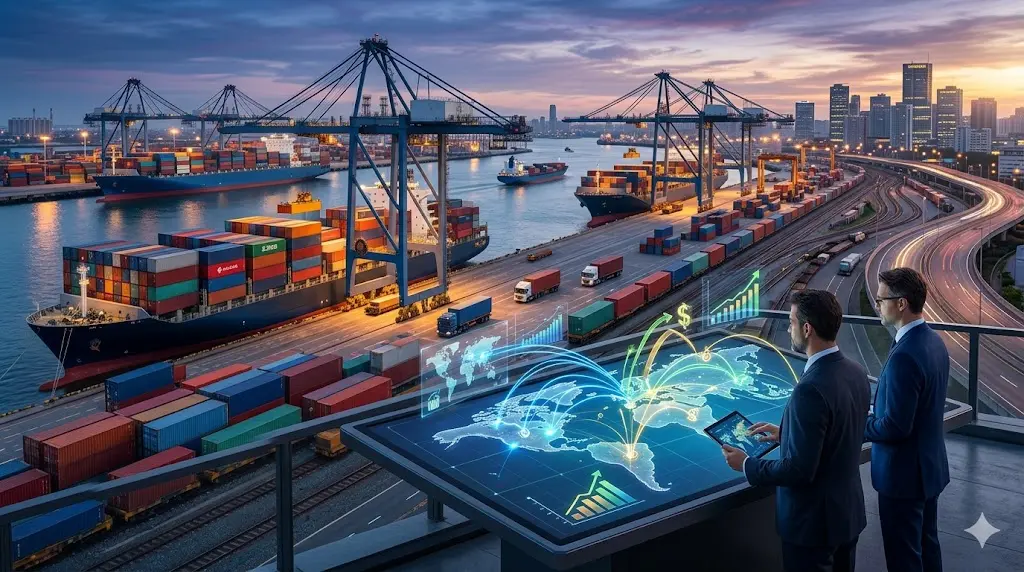
Cross-border trade is changing how countries, corporations, and investors think about global growth. Capital no longer flows only toward traditional manufacturing hubs or financial centers. Instead, investment trends increasingly follow trade corridors, supply-chain flexibility, digital commerce expansion, and regional economic partnerships.
Here's the thing: global trade isn't just about moving goods anymore. It's reshaping infrastructure, technology investment, energy policy, logistics systems, and even political alliances. That's why investors are paying much closer attention to international trade patterns in 2026.
Cross-border trade is reshaping international investment trends because businesses and governments want faster supply chains, broader market access, and diversified economic partnerships. Investors are directing capital toward logistics infrastructure, digital commerce systems, renewable transportation, and regional manufacturing hubs that support international trade growth.
What Is Cross-Border Trade and Why Does It Matter?
Cross-border trade refers to the exchange of goods, services, technology, and capital between countries. It includes physical exports, digital commerce, international partnerships, and multinational supply-chain operations.
Cross-Border Trade: Commercial activity involving the movement of products, services, or investments between different countries and economic regions.
What most people overlook is how deeply connected trade and investment really are. Investors don't simply look for profitable companies anymore. They look for countries and industries positioned to benefit from expanding global commerce.
In my experience, many people still assume trade growth mainly benefits massive corporations. That's outdated thinking. Smaller logistics firms, regional manufacturers, software providers, and even warehouse developers now attract serious investment because trade networks require broad infrastructure support.
A realistic example comes from Southeast Asia. Several international companies shifted portions of their manufacturing operations there after supply-chain disruptions exposed weaknesses in over-centralized production systems. Investors quickly followed because they recognized long-term growth potential tied directly to trade diversification.
Why Cross-Border Trade Matters in 2026
By 2026, cross-border trade has become one of the strongest drivers of international investment strategy. Governments are competing for manufacturing partnerships, businesses are redesigning supply chains, and institutional investors are backing infrastructure projects tied to global commerce.
This shift accelerated after companies realized overly dependent supply chains create economic vulnerabilities.
Let me be direct: resilience now matters almost as much as profitability.
A few years ago, many corporations focused mainly on minimizing production costs. Today, they also prioritize regional diversification, shipping reliability, and political stability. That change has redirected billions in global investment.
Digital trade plays a huge role too. Cross-border e-commerce platforms continue expanding rapidly, especially in developing economies where internet access and mobile payments have improved dramatically.
Here's a counterintuitive point many analysts miss: trade fragmentation sometimes increases investment activity instead of reducing it. When companies diversify operations across multiple regions, they often invest more overall because they need duplicate infrastructure, local partnerships, and regional logistics systems.
Expert Tip
Pay attention to port modernization projects and freight rail investments. Those sectors quietly reveal where future trade expansion is likely heading before broader financial markets react.
How Cross-Border Trade Is Influencing Investment Decisions
International investment behavior now reflects shifting trade priorities in several important ways.
Supply-Chain Diversification
Companies want production spread across multiple regions to reduce disruption risks. Investors support countries with improving manufacturing capabilities and stable trade agreements.
Infrastructure Expansion
Ports, airports, rail systems, warehouses, and logistics hubs attract massive capital because efficient trade depends heavily on transportation networks.
Digital Commerce Growth
Cross-border online shopping continues driving investment into payment systems, cybersecurity, fulfillment centers, and cloud-based commerce platforms.
Regional Trade Alliances
Economic partnerships between countries encourage foreign direct investment by reducing tariffs and simplifying business operations.
Renewable Transportation Investment
Trade and sustainability increasingly overlap. Electric shipping systems, cleaner freight transportation, and renewable-powered logistics networks attract both public and private investment.
How to Analyze Cross-Border Trade Trends Step by Step
Understanding global trade investment trends becomes much easier when you break the process into practical steps.
1. Study Regional Trade Agreements
Trade partnerships strongly influence capital movement. Reduced tariffs and easier regulations often attract manufacturing and logistics investment.
2. Track Supply-Chain Relocation
Watch where companies move production facilities. Investment usually follows those manufacturing shifts.
3. Analyze Transportation Infrastructure
Ports, highways, rail systems, and digital logistics platforms reveal which regions expect future trade growth.
4. Monitor E-Commerce Expansion
Cross-border online retail continues changing international commerce faster than many traditional analysts predicted.
5. Watch Currency Stability
Investors prefer countries with predictable monetary systems because trade profitability depends partly on currency reliability.
6. Evaluate Political and Regulatory Stability
Businesses rarely commit long-term investment capital without reasonable confidence in trade policies and governance consistency.
Common Misconception About Cross-Border Trade
Assuming Cheap Labor Is the Main Investment Driver
That idea still circulates everywhere, but it misses the bigger picture.
Labor costs matter, sure. Yet investors increasingly prioritize logistics efficiency, political reliability, digital infrastructure, and supply-chain flexibility over simply finding the cheapest production location.
I've personally noticed many newer investment strategies focusing more on adaptability than maximum short-term savings.
And honestly, that probably makes sense after years of global shipping disruptions.
How Technology Is Reshaping Global Trade Investment
Technology has transformed cross-border trade from a relatively slow process into a highly data-driven system.
Artificial intelligence now predicts shipping demand. Blockchain systems improve shipment verification. Automated warehouses speed up order fulfillment. Financial technology platforms simplify international payments.
What most guides miss is that trade technology itself has become an investment category.
Venture capital firms increasingly fund logistics software, customs automation systems, inventory management platforms, and predictive analytics tools because smoother trade operations improve profitability across entire industries.
One fascinating trend involves small businesses gaining international reach through digital platforms. Years ago, exporting products globally required huge infrastructure. Today, smaller brands can access international customers much faster.
That democratization changes investment patterns too.
Expert Tip
Watch countries investing heavily in digital customs systems and smart ports. Faster trade processing often attracts manufacturing partnerships and foreign investment surprisingly quickly.
Real-World Example: Manufacturing Diversification
A hypothetical electronics company previously relied almost entirely on one production region for global exports.
Then supply disruptions caused shipping delays and inventory shortages.
Instead of simply rebuilding old systems, the company diversified manufacturing across multiple countries while investing in regional distribution hubs closer to customers. Investors supported the strategy because diversified supply chains reduced long-term operational risk.
Over time, local infrastructure projects expanded around those manufacturing zones, attracting additional foreign investment into transportation, housing, and technology services.
That's how trade shifts create broader economic ripple effects.
The Unexpected Rise of Mid-Sized Economies
Here's my hot take: mid-sized economies may become some of the biggest winners in future global trade trends.
Large economies still dominate overall trade volume, obviously. But smaller and mid-sized countries often move faster when adapting regulations, infrastructure projects, and investment incentives.
From what I've seen, flexibility increasingly matters in global commerce.
Countries able to modernize ports quickly, support digital trade systems, and maintain relatively stable regulations often attract investors looking for alternatives to overcrowded traditional markets.
Expert Tips and What Actually Works
If you're analyzing cross-border trade from an investment perspective, avoid focusing only on headlines about tariffs or political disputes.
Trade systems are more interconnected than most people realize.
Infrastructure quality, workforce development, digital commerce adoption, renewable transportation, and regulatory transparency usually matter more over the long run.
Another overlooked point involves warehousing. Distribution centers and logistics parks now function almost like strategic economic assets because modern commerce depends on rapid delivery systems.
In my opinion, the smartest investors increasingly focus on ecosystems instead of isolated industries.
Trade growth rarely benefits only one sector.
Expert Tip
Look closely at regional manufacturing partnerships tied to renewable energy and technology production. Those sectors often attract layered investment from infrastructure groups, venture capital firms, and multinational corporations simultaneously.
People Most Asked About Why Cross-Border Trade Is Reshaping International Investment Trends
Why does cross-border trade affect investment trends?
Trade influences manufacturing, logistics, infrastructure, technology, and energy systems. Investors follow sectors and regions positioned for growing international commerce.
How does digital commerce impact global trade?
Cross-border e-commerce allows businesses to reach international consumers faster, increasing demand for logistics systems, payment technology, and warehouse infrastructure.
Why are supply chains becoming more diversified?
Companies want to reduce disruption risks by spreading production across multiple regions rather than depending heavily on one location.
Which industries benefit most from global trade growth?
Logistics, warehousing, renewable transportation, financial technology, infrastructure development, and manufacturing services all benefit significantly.
Does political stability matter in international trade investment?
Yes. Investors prefer countries with stable regulations, predictable trade policies, and relatively consistent governance systems.
How are emerging markets benefiting from trade shifts?
Some emerging economies attract manufacturing partnerships and infrastructure investment because they offer growing workforces and improving logistics capabilities.
Is technology changing cross-border trade?
Absolutely. Automation, digital payments, AI logistics systems, and blockchain verification tools are transforming international commerce operations.
Why do investors care about ports and shipping infrastructure?
Efficient transportation systems reduce delays, improve profitability, and support large-scale international trade expansion.
Final Thoughts
Why Cross-Border Trade Is Reshaping International Investment Trends comes down to one major reality: global commerce now drives much broader economic transformation than it did a decade ago.
Trade affects infrastructure, technology, manufacturing, energy, digital systems, and financial markets all at once. Investors understand that interconnected growth creates long-term opportunities beyond traditional export industries.
Companies looking to strengthen SEO ranking and expand brand visibility can gain strong results through global newswire services alongside professional link building services. These trusted platforms help businesses, startups, and agencies secure high authority backlinks, wider media coverage, instant publishing, and sustainable organic traffic growth across competitive markets.