

The market for fitness wearables has long been dominated by smartwatches that attempt to do everything—from showing notifications to tracking workouts. But not everyone needs a screen on their wrist. The Fitbit Air, priced at $100, takes a step back from feature creep, offering a small, display-less puck that focuses purely on health tracking. It is comfortable, lightweight, and lasts a full week on a single charge. However, Google's new health platform, which replaces the old Fitbit app, comes with an AI-powered Health Coach that is always present and often verbose. This combination of nearly invisible hardware and an overly chatty software assistant makes for a mixed experience.
Design and Hardware
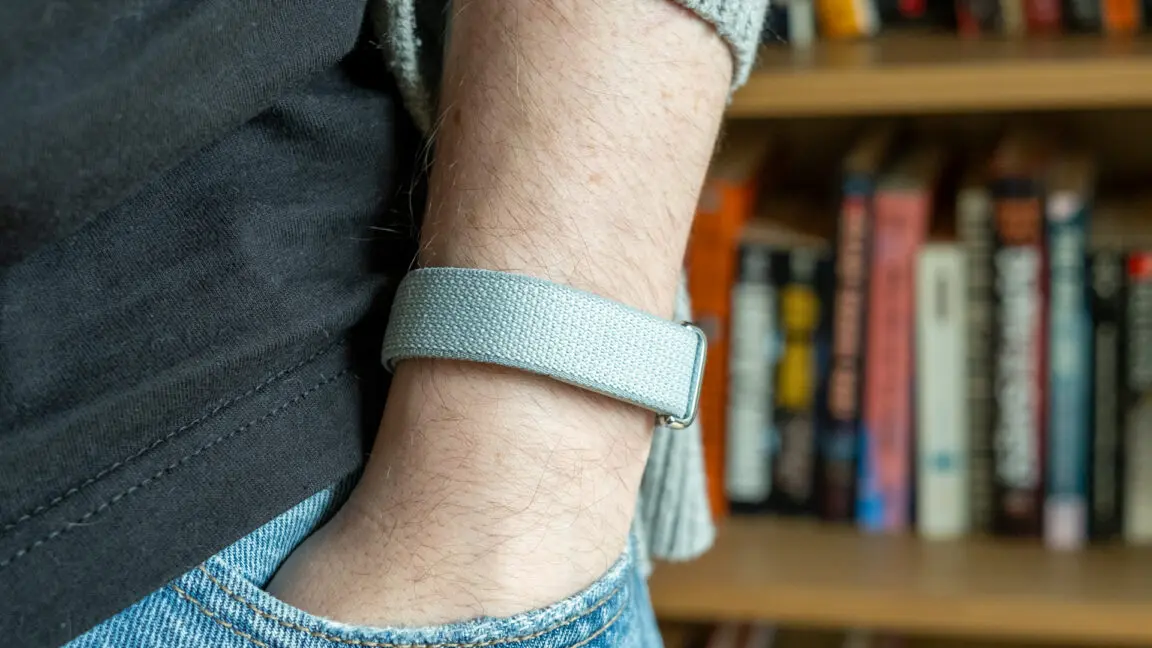
The Fitbit Air is essentially a small plastic puck that houses a full array of health sensors. There is no screen, no buttons—just a single LED on the side that indicates battery level. The device is worn by snapping it into various bands. The stock Performance Band is made of a smooth polyester yarn with velcro and a metal loop; it is durable but tends to absorb moisture. For swimming or intense workouts, Google offers a silicone Active Band for an additional $35. There is also a more premium Elevated Band at $50, made of polyurethane. Considering the tracker itself costs $100, spending half that amount on a band seems excessive. The lack of a display means there is no way to see notifications, and the vibration motor is only used for alarms. This minimalist approach is both a strength and a limitation. The Air is easy to forget on the wrist, making it ideal for continuous wear, including sleep tracking.
Sensors and Tracking Capabilities
Despite its simplicity, the Fitbit Air includes most of the sensors found in high-end smartwatches. It tracks steps, heart rate, blood oxygen, and skin temperature. It does not include an electrocardiogram (ECG), but for general fitness and health monitoring, the sensor suite is more than adequate. The data is fed into the Google Health app, where users can view trends, readiness scores, and sleep phases. The accuracy of sleep tracking is reliable, detecting sleep and wake times as expected. The smart alarm function works well, waking users during light sleep phases. The readiness score, which combines various metrics, often aligns with how the user feels on a given day. However, the dependence on the phone app is a downside: during workouts, users must pull out their phone to see live stats, as there is no screen on the tracker.
The Google Health App and AI Coach
The Fitbit Air is the first device to launch with the new Google Health app, which replaces the classic Fitbit app. The app is generally well-designed, offering clear graphs and logs. However, the headline feature is the AI-powered Health Coach, available to Premium subscribers. (The Air comes with a three-month Premium trial.) The Coach is built on Google's Gemini model and is tuned specifically for health advice. It provides summaries of workouts, sleep, and daily activity, often with verbose encouragement. The AI can factor in user-provided context, such as travel or family obligations, and adjust its recommendations. However, it also produces hallucinations—inventing workouts that did not happen—and sometimes misses data that is clearly visible elsewhere in the app. The constant, chipper tone can feel cloying, and the summaries are often too wordy for the value they provide. A typical insight might be: "Make sure to rest after a big workout. Maybe go for a light walk or something." This is said in many more words than necessary. Free users, who do not have the AI Coach, actually get a more streamlined, data-focused interface. Google has made it possible to disable the Coach in the app settings, but the option is buried under Your Data > Feature Control > Google Health Coach. Even after disabling, an "Ask Coach" button remains.
Battery Life and Band Options
The Fitbit Air delivers on its promise of a week-long battery life. In testing, it consistently lasted seven full days on a single charge, making it suitable for extended use without frequent charging. The charging method is a simple proprietary cable that clips onto the back of the puck. Unfortunately, the band ecosystem is limited and expensive. The stock Performance Band is adequate, but the silicone Active Band and premium Elevated Band add significant cost. Third-party options are rare, but because the Air uses a simple snap-in mounting system, there is potential for more choices in the future. For now, users should be prepared to spend extra if they want a band suitable for swimming or a more stylish look.
Comparison to Competitors
The $100 price point positions the Fitbit Air against other screenless trackers like the Whoop, which requires a $200 annual subscription. The Air has a clear advantage: no ongoing fees for basic functionality. It also offers more sensor data than many budget trackers. For users who want a simple, comfortable device for 24/7 tracking without the distractions of a smartwatch, the Air is a compelling choice. However, those used to the depth of the old Fitbit app may miss features like blood pressure tracking (via third-party devices) or custom meal logging. Google has promised updates to address some of these gaps, but as of launch, the app feels slightly stripped down for power users. The ability to coexist with a Pixel Watch in the app is a nice touch for those who eventually upgrade to a smartwatch.
Overall, the Fitbit Air succeeds as a hardware product: it is lightweight, comfortable, and accurate. The software, however, is a double-edged sword. The AI Coach, while innovative, often gets in the way. Turning it off yields a cleaner experience. If you can look past the chatty AI, the Fitbit Air is a strong contender in the minimalist fitness tracker market.
Source: Ars Technica News