
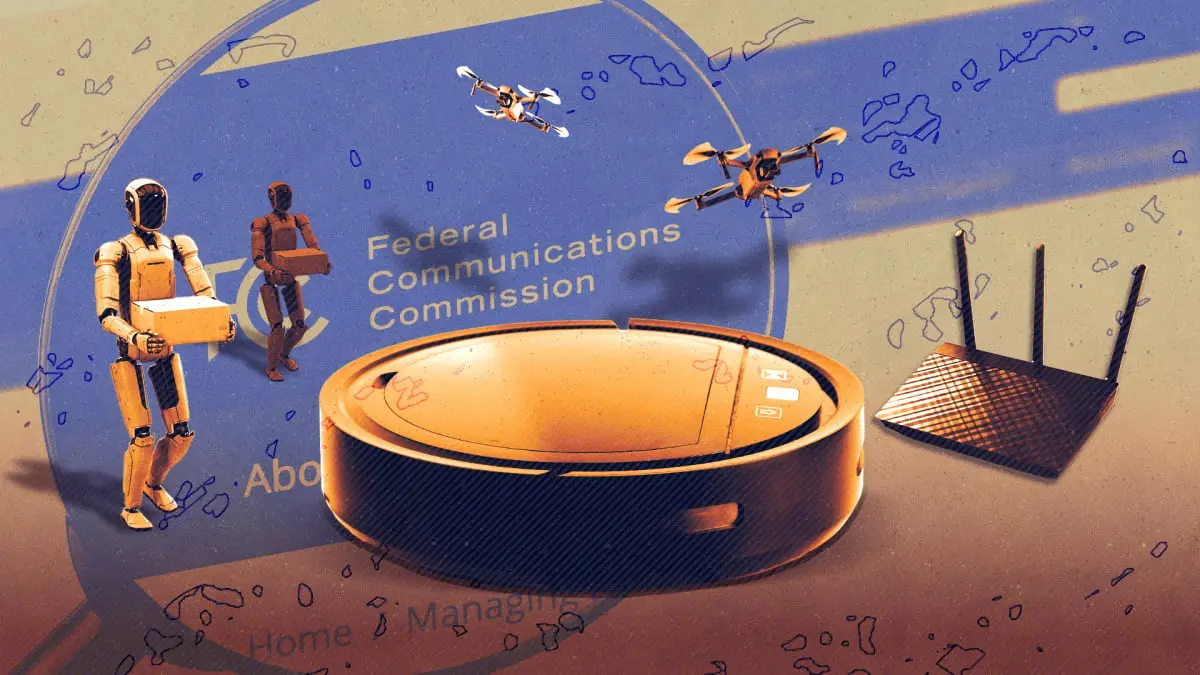
Do you know where the robots running your home — your smart speakers, AI assistants, and especially your robot vacuums — come from? The U.S. government now wants you to know. In a sweeping move, the Federal Communications Commission (FCC) has effectively banned foreign-made robotic devices from the U.S. market, citing national security concerns. The decision expands the FCC's Covered List, a regulatory list of restricted communications equipment, to include internet-connected devices that navigate independently or carry cameras and microphones.
Key facts at a glance
- The FCC has added foreign-made robots, drones, and routers to its Covered List.
- Devices already in consumers' homes are not being recalled or confiscated.
- Pre-approved robots can remain on the market, but new product lines will face stricter review.
- Chinese-owned and Chinese-manufactured brands are most likely to be affected.
- Experts expect future products to face delays and limited availability.
The ruling has sent ripples through the consumer robotics industry. It affects not only futuristic humanoid robots and robo-dogs but also the popular robot vacuums that millions of Americans rely on to clean their floors. Many of these devices now include cameras, microphones, and AI-powered navigation, making them subject to the ban. But before you worry that government agents will seize your Roomba, officials have clarified that devices already in circulation can remain in homes. Pre-approved robots can also stay on the market, at least for now.
What exactly is banned?
The FCC's Covered List is a list of equipment that poses an unacceptable risk to U.S. national security. Historically, it targeted foreign-made routers, drones, and other telecom infrastructure. The latest expansion adds robotic devices that can move independently or record audio and video. This includes humanoid robots, autonomous drones, robot vacuums with cameras or microphones, AI-powered smart assistants with robotic mobility, and robotic toys or companion bots with sensors.
The ban applies to imports and domestic sales. It does not apply to devices already owned by consumers. The FCC also permitted existing approved products to continue being sold temporarily while companies seek new authorizations. That means the robot vacuum you already own is not going to stop working. It also means you can still buy many models that were approved before the new rule took effect.
Why did the FCC take this step?
According to the FCC, the move is meant to protect American consumers and national security from devices that could be used for espionage or cyberattacks. Foreign-made devices with cameras, microphones, and internet connectivity could theoretically be accessed remotely by malicious actors. The agency has been increasingly aggressive under the current administration in restricting technology from certain countries, particularly China.
The FCC's leader, Brendan Carr, has made clear that the agency will take a hard line on foreign-made technology. The new rule is part of a broader policy effort to reduce dependence on foreign manufacturing for critical and consumer technologies. FCC commissioners argue that even consumer devices like robot vacuums can be vectors for data collection and surveillance. A robot vacuum with a camera could map the inside of your home, record images of your family, and transmit that data to an unknown server. For regulators, that is an unacceptable risk.
What robot vacuum brands are saying
Major robot vacuum companies are still evaluating the ruling. Several leading brands are headquartered outside the U.S., including Chinese companies like Eufy, Roborock, and Dreame. The U.S.-based iRobot, maker of the Roomba, primarily manufactures its products in China and Vietnam. Like most consumer tech, robot vacuums are produced overseas even when the brand is American.
Some companies have reassured buyers that current models will remain available. Shark and Narwal both issued statements saying they expect to continue selling their existing products. Shark, which is headquartered in the U.S., said it is confident it can launch new competitively priced models in the future despite constraints on foreign manufacturing. Other brands, including iRobot, remain cautious and are reviewing the regulatory landscape.
The key concern for manufacturers is the FCC's approval process. Under the new rules, each new product line — and potentially each software update — may need a separate FCC approval. That could significantly slow down the release of new robot vacuums with updated features. A company that wants to add a new navigation algorithm or a livestream feature might have to wait months for approval, making it difficult to keep up with the fast-paced consumer electronics market.
What experts are advising
Industry observers say it is too soon to predict exactly how the ruling will affect consumer access. To understand what might happen, they point to earlier FCC actions on foreign drones and routers. In those cases, the FCC issued broad bans rather than targeting specific companies. The approach has been to ban entire categories of equipment that could pose a hypothetical risk, then let companies apply for exemptions or approvals.
When the FCC banned foreign-made routers, it moved relatively quickly to approve time-limited extensions for previously approved products. For example, the agency allowed companies to issue software updates to certain routers until 2029. It also granted exemptions to specific companies such as Netgear and Eero. This led to a situation where existing routers remained usable for years before becoming obsolete.
Similarly, the ban on foreign-made drones did not dramatically reduce access for average consumers. Products already in the supply chain were allowed to remain. New drone models went through an approval process, and many were eventually cleared. However, products made and sold by China-based companies have proven to be an exception. Sources say the FCC has taken an especially strict stance on Chinese imports as part of foreign policy objectives.
What this means for robot vacuum buyers
If you already own a robot vacuum, you can keep using it. The FCC is not recalling devices or forcing anyone to dispose of them. Software updates may become an issue in the future, but current models are expected to function normally for years. If you are in the market for a new robot vacuum, the good news is that many existing models are still available. The longer-term outlook is less certain.
New product launches will likely face delays as companies navigate the FCC's approval process. A robot vacuum released in 2025 may have been designed before the ban was announced, but it will still need to comply with the new rules. Products that use cameras or microphones for navigation, object detection, or livestreaming will be subject to the most scrutiny. Even simple robot vacuums without cameras may be swept into the ban if they have AI-enabled navigation or autonomous movement.
Consumers who are planning to upgrade in the next year or two may want to consider the range of options currently available. Several brands have already confirmed they will continue selling their latest models. However, future innovation could slow as companies redesign products to avoid triggering the FCC's restrictions.
How routers and drones set the precedent
The FCC's approach to the Covered List has been consistent. Rather than naming specific companies that pose a threat, the agency bans categories of technology. This creates a burden on all manufacturers within that category to prove their products are safe. It also gives the FCC enormous leverage over the consumer electronics industry.
The router ban, announced in 2021, was one of the first major uses of the Covered List. The agency banned the marketing of certain foreign-made routers and extended the restrictions to software updates. In May of the following year, the FCC granted an extension keeping routers compliant until 2029. This suggests the agency is willing to allow existing devices to remain in service for a long time, even as new models face stricter rules.
The drone ban followed a similar pattern. DJI, the world's largest drone maker and a Chinese company, was effectively barred from selling new drones in the U.S. unless it obtained special approval. Existing drones were not grounded, but future sales were severely limited. The same logic now applies to robot vacuums. Once the FCC identifies a category of technology as risky, it becomes very difficult for foreign manufacturers to stay in the U.S. market.
What about Chinese brands?
The FCC's ruling has an outsized impact on Chinese robot vacuum companies. Brands like Roborock, Dreame, and Eufy are market leaders in the U.S. They have built their reputation on advanced features and aggressive pricing. If the FCC blocks their products from entering the U.S., American consumers will have fewer choices and may face higher prices.
Chinese companies are not the only ones affected. American and Japanese brands that manufacture in China also face hurdles. iRobot, for example, has already been struggling financially. The company was acquired by Amazon in 2022, but the deal was abandoned in 2024 due to regulatory pressure in Europe. The new FCC ruling adds another layer of uncertainty for a company that relies on foreign manufacturing.
The FCC's actions are part of a broader trade and technology conflict between the U.S. and China. The agency has been increasingly willing to use its regulatory authority to achieve policy goals. For consumers, this means the era of cheap, feature-packed smart devices may be coming to an end. Robot vacuums with cameras, lidar navigation, and AI object detection are typically made overseas. If those products cannot be sold in the U.S., domestic alternatives may be more expensive and less advanced.
What are your options?
For now, consumers still have plenty of choices. Robot vacuums from Shark, Narwal, iRobot, and other brands are available at major retailers. If you want a device with cameras or advanced AI navigation, you should act soon. The longer you wait, the more likely it is that the specific model you want will be discontinued or unavailable.
It is also worth considering simpler robot vacuums that do not have cameras or microphones. These devices are less likely to be affected by future regulatory action. Basic models can still provide convenient, automated cleaning without the privacy concerns that come with smart cameras.
Privacy-conscious consumers may actually welcome the FCC's restrictions. Having a camera-equipped device rolling around your home is a potential risk, regardless of who made it. If you do not trust foreign-made hardware, the ban gives you a reason to choose domestic or approved alternatives. But it also removes some of the most innovative products from the market.
Future outlook
The FCC's Covered List is likely to grow. The agency has signaled that it will continue evaluating technology categories for potential national security threats. Smart home devices, wearables, and even connected appliances could be next. Manufacturers will need to adapt by building supply chains that comply with U.S. regulations.
For robot vacuum enthusiasts, the immediate takeaway is simple: existing devices are safe to use, but new products will face stricter oversight. If you are happy with your current robot vacuum, there is no need to panic. If you were waiting for the next big upgrade, you might want to buy sooner rather than later. The age of unrestricted foreign-made robotics in the U.S. is officially over.
Source: Mashable News