

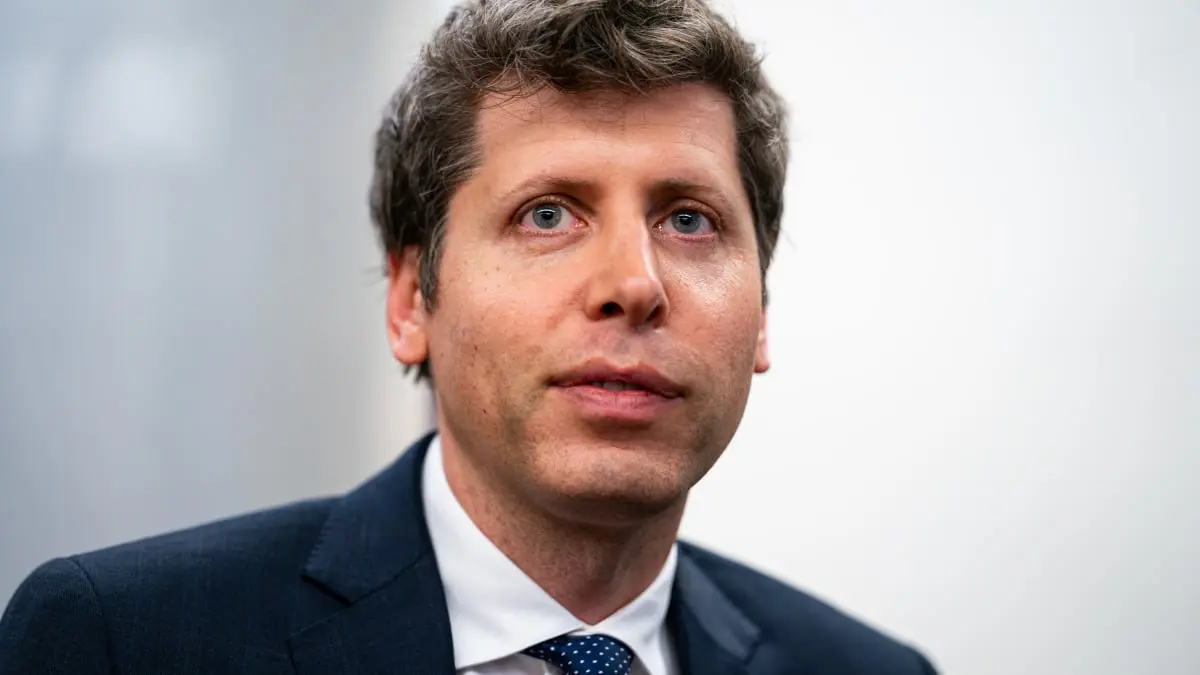
OpenAI employees have a direct internal channel to reach CEO Sam Altman: a dedicated email inbox known as friction@. The address functions as a workplace complaint line, allowing staff to flag organizational problems that leadership can triage and act on. The system was reportedly in place for some time before it gained wider use, and it has now become a notable part of OpenAI's internal operations.
An internal inbox for workplace friction
The friction@ inbox is designed to collect reports about company issues that might otherwise get lost in a fast-moving organization. Employees can write in about anything that feels inefficient, unfair, or broken in their day-to-day work. The label “friction” is fitting: it is intended to identify the friction points that slow teams down or create a negative workplace experience.
According to people familiar with the matter, the inbox has existed quietly for a while. But it became a more formal and structured process when Fidji Simo joined OpenAI as CEO of Applications in the fall of 2025. Simo, who previously led Instacart, arrived during a period of rapid expansion for OpenAI. She reportedly went on a “listening tour” across the company, speaking with employees in different teams and levels to understand the biggest pain points. That tour led her to formalize the friction@ process, turning a loose idea into a structured channel.
Formalizing feedback
As part of the formalization, OpenAI's leadership assigned Irina Kofman, vice president of strategic initiatives and operations, to monitor the inbox. Kofman's role involves reviewing incoming reports, determining which ones need a response, and ensuring that issues are actually resolved. The process did not end with email triage. Simo also established a monthly, company-wide Slack update so employees could track the status of reported issues. This transparency was meant to show that complaints were not disappearing into a black hole.
Although Simo has since left OpenAI, the friction@ process has remained in place. The fact that it survived her departure suggests that Altman and other leaders found value in having a direct line to employee frustrations. It also reflects a broader shift in OpenAI's approach to internal communication as the company has grown from a research lab into a major commercial entity.
What employees have used it for
Some concrete examples illustrate the range of issues that employees have raised through the inbox. One involved a pilot program to prioritize parking spots for workers with longer commutes. Parking had become a source of frustration as OpenAI's offices filled up, and the pilot aimed to allocate scarce spaces more fairly. Another example involved a more reliable process for granting API credits, a practical issue for employees who build on or test OpenAI's own technologies. These are not existential strategic questions; they are everyday operational problems that can affect morale and productivity.
The variety of topics addressed through friction@ shows that employees interpret the channel broadly. Some complaints may be about compensation or promotion processes. Others may be about office amenities, team coordination, or internal tools. The inbox is designed to catch all of it, even when no single category covers every issue.
Mixed reactions among employees
The feedback system has drawn both praise and criticism. One former OpenAI employee described it as a good thing, saying it literally allows “anybody to complain about big company bullsht directly to Sam.” That employee appreciated the ability to bypass layers of management and get issues in front of the CEO. For them, the system gave leadership an effective way to hear dissenting voices and fix problems quickly.
Another former employee, who led a team at the company, offered a very different view. This person said that a problem raised through friction@ only gets resolved if Altman and OpenAI President Greg Brockman consider it “worthy” of their attention. That gatekeeping can be frustrating for employees whose issues are important to them but not a priority for the executive team. More significantly, the former team lead argued that the process created inefficiency. They described their own team as “constantly underwater, under-resourced, and over-leveraged.” For such teams, a direct complaint to the CEO can be disruptive, even when it is well-intentioned.
“The individual who reports the issue probably thinks it's the single most important thing, but to teams like mine that are constantly underwater, under-resourced, and over-leveraged, it's the single most disruptive thing you could do,” this person was quoted as saying.
OpenAI's changing internal dynamics
OpenAI's rapid growth has been well documented. The company went from a small nonprofit research organization to a leading AI company with a massive valuation. As the workforce expanded, so did the complexity of internal operations. Compensation, benefits, office space, and internal tools have all become more complicated. With that complexity comes the need for structured feedback mechanisms.
Employee feedback has particular significance at OpenAI because of the company's turbulent history. Several high-profile departures and public controversies have shaped how the company handles internal dissent. In late 2023, Altman briefly stepped down as CEO before being reinstated days later. The episode highlighted deep tensions between the nonprofit board and the company's leadership. Since then, OpenAI has made efforts to stabilize its corporate structure while maintaining a culture of research-driven openness.
The friction@ inbox is part of that effort. It gives employees an official route to voice concerns without going through lower-level managers who may not have the authority to make sweeping changes. It also creates a record of employee grievances that can be reviewed by top executives, which is valuable for a company that has faced scrutiny over its treatment of current and former staff.
A direct line versus public critique
Altman, for his part, seems comfortable receiving critique in multiple formats. Internally, he has the friction@ inbox. Externally, he often engages directly on social media and has used X to broadcast his views on AI, parenting, and the future of the technology. In one notable instance, he suggested parents make AI-generated podcasts about their children, a comment that drew a mixture of curiosity and backlash. That kind of public statement sits in contrast to the private, structured feedback that employees send through the internal inbox.
The existence of the friction@ inbox also speaks to a broader trend in the tech industry. Many large companies have created internal channels for employees to report issues directly to executive leadership. These channels are often marketed as transparent and democratic, but their effectiveness depends on how seriously leadership takes the feedback. OpenAI's system is notable because it is reportedly monitored by a vice president and tied to a monthly progress update, which suggests a higher level of organizational commitment than a simple suggestion box.
What remains unclear
There are still many unknowns about the friction@ process. It is not clear how many employees have used the inbox, how quickly issues are typically resolved, or what proportion of complaints result in action. The report that only issues deemed “worthy” by Altman and Brockman get resolved suggests that the system has limits. Employees may feel encouraged to write in, but the final decision on whether to address a problem remains with the top executives.
That dynamic is common in fast-growing companies. Leaders cannot act on every piece of feedback, no matter how well-intentioned. They have to prioritize. But when employees are told that they have a direct line to the CEO, expectations can rise quickly. If those expectations are not met, the system could lead to more frustration, not less.
For now, the friction@ inbox remains one of the clearest examples of how OpenAI is trying to hold onto a feedback-driven culture even as its operations become vastly more complex.
Source: Mashable News