

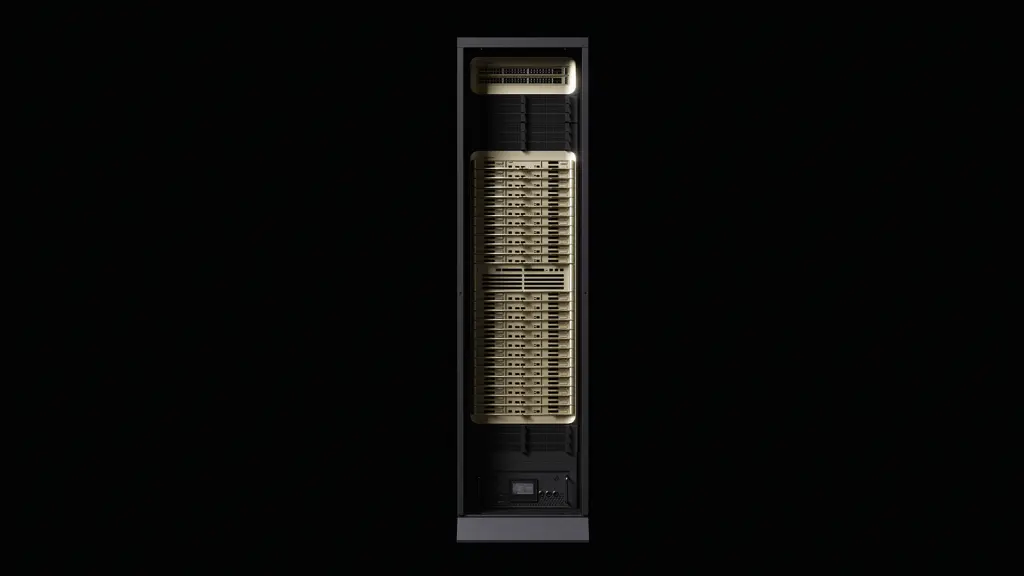
At the ISC High Performance 2026 conference in Hamburg, Nvidia formally launched the Vera Rubin platform, a rack-scale supercomputer designed to converge artificial intelligence and high-performance computing (HPC) for scientific research. The platform combines Nvidia’s Vera CPUs, Rubin GPUs, networking technologies, and software stack into a tightly integrated system that the company claims can deliver more than seven exaflops of AI performance alongside five petaflops of native double-precision (FP64) computing.
“Nvidia’s roots are firmly planted in scientific computing, and native FP64 precision remains absolutely vital for accurate fluid dynamics, climate modeling, and geoscience,” said Dion Harris, senior director of HPC and AI factory solutions at Nvidia, during a conference call. “We are committed to maintaining that support moving forward.”
The Vera Rubin platform is built around a heterogenous architecture: Vera CPUs and Rubin GPUs are linked via NVLink-C2C interconnects, while ConnectX-9 SuperNICs and BlueField-4 DPUs handle networking. The systems rely on direct liquid cooling and support up to 144 GPUs in a single rack. Nvidia claims memory bandwidth has increased by 2.8 times compared to the previous-generation Blackwell GPU, delivering up to four times performance improvements for memory-bound fluid dynamic applications.
The platform is designed to support both traditional HPC simulations and emerging AI-driven scientific applications. Researchers can train foundation models, deploy surrogate models, run simulations, and perform real-time data analysis on a single infrastructure. “AI is shifting from a tool that simply answers questions to an autonomous system that executes complex tasks,” Harris noted. “Early data shows agentic AI increases simulation demand by up to ten times.”
Several leading research institutions have announced plans to build next-generation systems based on the new architecture. The Leibniz Supercomputing Centre (LRZ) in Germany will deploy Vera Rubin in its upcoming Blue Lion supercomputer, scheduled to enter service in 2027. Blue Lion is a second-generation exascale-class HPE Cray system expected to deliver approximately 30 times the computing power of LRZ’s current system, supporting research in astrophysics, environmental science, and life sciences.
In the United States, the National Energy Research Scientific Computing Center (NERSC) will use Vera Rubin technology in Doudna, the next flagship supercomputer for the Department of Energy at Lawrence Berkeley National Laboratory. Built by Dell Technologies, Doudna will support large-scale HPC simulations, AI training, and data-intensive research. Los Alamos National Laboratory has selected Vera Rubin technology for three new supercomputers: Mission (national security workloads), Vision (open scientific research and AI-driven discovery), and Veritas (enabling agentic AI applications by combining Rubin GPUs with standalone Vera CPU partitions).
Vera Rubin NVL4-based systems from Dell and Super Micro were also announced at the event, providing commercial options for enterprises and research institutions. These systems aim to bridge the gap between high-end exascale computing and more accessible AI workloads.
The Vera Rubin platform represents a strategic shift for Nvidia. Historically, the company dominated the AI training market with its GPUs, but the HPC community demanded dedicated support for double-precision floating-point operations. Nvidia has now addressed that with the Rubin GPU’s native FP64 capability, which matches or surpasses the performance of traditional CPU-based HPC systems. The inclusion of Vera CPUs also allows Nvidia to compete directly with AMD and Intel in the CPU market for supercomputing.
The performance claims are staggering. If realized, a single rack of Vera Rubin systems would outperform today’s fastest supercomputer, Frontier, which delivers about 1.2 exaflops of FP64 performance. Nvidia’s seven exaflops of AI performance indicates a heavy reliance on mixed-precision and tensor core operations, but the five petaflops of native FP64 would still be enough to place a single system in the top 10 of the TOP500 list. Updated rankings are due later this week.
Memory bandwidth is a critical factor in many scientific codes. By achieving a 2.8x improvement over Blackwell, Rubin GPUs can handle larger datasets and more complex simulations without hitting memory bottlenecks. This directly benefits computational fluid dynamics, climate modeling, and quantum chemistry—areas where memory access patterns are unpredictable and require high throughput.
Networking is also a key part of the platform. ConnectX-9 SuperNICs provide high-speed interconnects with advanced congestion control, while BlueField-4 DPUs offload data processing and security functions. The combination creates a scalable fabric that can link thousands of GPUs across multiple racks, essential for training large foundation models or running massively parallel simulations.
The research institutions adopting Vera Rubin represent a broad cross-section of scientific computing. LRZ’s Blue Lion will accelerate work in cosmology, molecular dynamics, and AI-driven drug discovery. NERSC’s Doudna, named after CRISPR pioneer Jennifer Doudna, will focus on energy research, climate science, and bioinformatics. Los Alamos’s triplet of systems—Mission, Vision, and Veritas—indicates a growing demand for secure, classified computing alongside open science and emerging AI paradigms like agentic AI.
The commercial availability of Vera Rubin NVL4 systems from Dell and Super Micro is also significant. Previously, Nvidia’s most advanced HPC platforms were reserved for cloud hyperscalers or research labs. By working with system integrators like Dell and Super Micro, Nvidia is making the technology accessible to mid-sized enterprises, government labs, and academic institutions. This could accelerate adoption in fields like financial modeling, autonomous vehicle simulation, and industrial digital twins.
The timing of the announcement is strategic. The ISC High Performance conference is one of the premier events for HPC, drawing researchers, vendors, and system administrators. Nvidia is positioning itself not just as a GPU supplier but as a full-stack platform provider, competing with the likes of AMD (with its Instinct GPUs and EPYC CPUs) and Intel (with Xeon, Gaudi, and Ponte Vecchio). Vera Rubin’s combination of custom CPUs, GPUs, networking, and software could give Nvidia a unique advantage in vertically integrated systems.
Software is also a crucial component. Nvidia has invested heavily in CUDA, but the Vera Rubin platform requires optimizations for both double-precision and AI workloads. The company has released new libraries for fluid dynamics, climate modeling, and quantum chemistry, as well as frameworks for building agentic AI applications. The software stack includes Nvidia’s HPC SDK, AI Enterprise suite, and integration with popular HPC tools like OpenMPI and SLURM.
Industry analysts have noted that the Vera Rubin launch represents a milestone in the convergence of HPC and AI. “Nvidia is essentially saying that the same infrastructure can run both traditional simulations and modern AI workloads,” said Dr. Emily Zhang, a senior analyst at IT research firm TechInsights. “That lowers the barrier for scientific organizations that previously had to maintain separate clusters for HPC and AI. The key is whether the software ecosystem can deliver on the hardware promise.”
The platform’s liquid cooling requirement is another consideration. Direct liquid cooling is more efficient than air cooling for high-density racks, but it requires data center retrofitting. Nvidia has partnered with cooling vendors like CoolIT and Asetek to offer turnkey solutions. For institutions building new facilities, like LRZ’s Blue Lion, liquid cooling is a standard design choice. But for existing data centers, the conversion cost could be a hurdle.
Nvidia’s Harris emphasized that the company is committed to supporting FP64 for the long term. “We understand that the scientific community relies on deterministic, reproducible calculations. Mixed precision is excellent for AI training, but for validation and verification, double precision will always be needed. Rubin delivers that without compromise.”
The adoption by Los Alamos National Laboratory is particularly noteworthy, as it marks one of the first deployments of Nvidia’s integrated platform for classified national security work. The Mission supercomputer will handle weapons simulation, nuclear stockpile stewardship, and cryptography. The Veritas system, designed for agentic AI, could enable autonomous experimentation and real-time analysis of experimental data from facilities like the Los Alamos Neutron Science Center.
Global competition in HPC is intensifying. China is investing heavily in domestic chip production through companies like Huawei and Phytium, while the European Union funds the EuroHPC Joint Undertaking. Nvidia’s Vera Rubin platform could help the United States and its allies maintain a lead in scientific computing. The fact that LRZ (Germany) and NERSC (U.S.) are both early adopters underscores the platform’s appeal across regions.
For Nvidia, the Vera Rubin launch is also a hedge against the slowdown in AI training demand. While AI continues to grow, many large-scale models are already trained, and inference is shifting to more efficient architectures. By targeting the HPC market, Nvidia ensures that its high-end GPUs continue to find buyers in research institutions and government labs, which often have stable, multi-year procurement cycles.
The long-term roadmap suggests that Vera Rubin will be followed by a “Rubin Next” platform in 2028-2029, incorporating further advances in packaging, memory, and networking. Nvidia’s annual cadence of GPU releases has slowed slightly as it integrates CPUs, but the company remains committed to introducing new architectures every two years. The Vera Rubin platform is expected to be available in limited quantities by late 2026, with volume shipments beginning in 2027.
Source: Network World News