

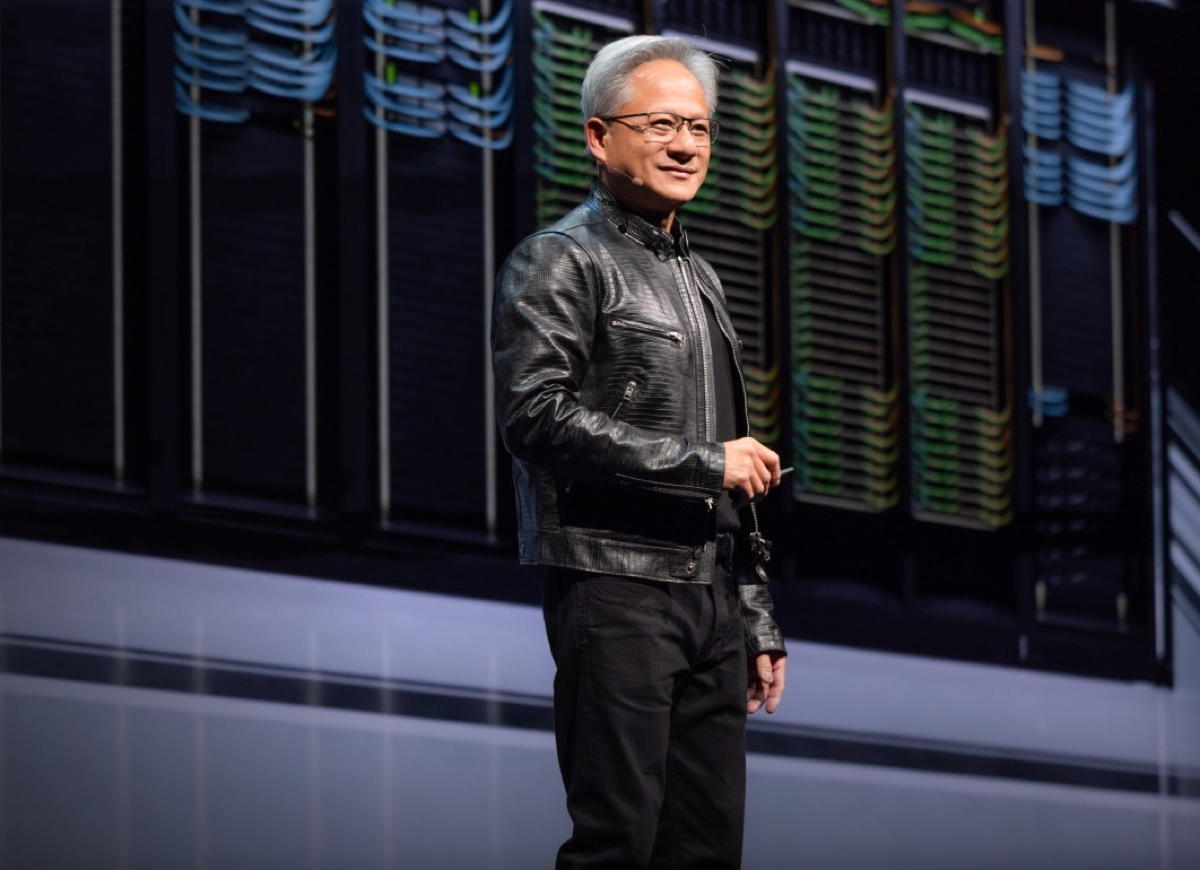
Nvidia chief executive Jensen Huang said the company will “probably” not invest $100 billion (£75bn) in OpenAI, following a much smaller $30bn investment as part of a funding round last week, giving the reason as the AI start-up’s likely IPO sometime this year. The comments were made during a Morgan Stanley technology conference and have sent ripples through the tech investment community.
“I think the opportunity to invest $100 billion in OpenAI is probably not in the cards,” Huang said. Because of the expected IPO, “this might be the last time we’ll have the opportunity to invest in a consequential company like this”, he added. Huang’s statement directly addresses months of speculation that Nvidia would pour massive capital into the company behind ChatGPT, a relationship that has been central to the generative AI revolution.
The Changing Economics of AI Investment
Huang also revealed that Nvidia’s recent $10bn investment in Anthropic was probably “the last” in that company due to Anthropic’s expected IPO. The pattern suggests that Nvidia sees these pre-IPO equity rounds as unique opportunities to secure strategic stakes in leading AI startups before they go public. The logic is simple: once a company like OpenAI or Anthropic is publicly traded, individual and institutional investors can buy shares freely, diminishing the need for Nvidia to step in with massive capital injections.
However, the economics of the AI boom have fundamentally shifted since the initial wave of euphoric announcements. Last year, companies like Nvidia and OpenAI were making bold pledges about data center investments, promising to build out infrastructure worth tens of billions of dollars. Today, those promises are being tempered by the stark realities of constructing and powering massive AI data centers. Such facilities consume enormous amounts of electricity, water, and other natural resources. The energy demands of training large language models like GPT-4 are staggering: a single training run can use as much electricity as thousands of homes over several months. Water cooling systems further drain local supplies, leading to increasing friction with communities and regulators.
The Backlash Against AI Infrastructure
This environmental and social cost has begun to generate a significant backlash. Local governments are pushing back against the construction of new data centers, citing concerns over strained power grids, rising utility costs for residents, and environmental degradation. In some regions, protests have erupted, and zoning laws are being tightened. For Nvidia, which supplies the chips that power most AI systems, these dynamics complicate the investment landscape. The company’s role as a hardware supplier and occasional investor means it must balance its own growth opportunities with public perception and long-term sustainability.
Background: Nvidia and OpenAI’s Relationship
The relationship between Nvidia and OpenAI has been under intense scrutiny since the launch of ChatGPT in late 2022. Nvidia’s graphics processing units (GPUs) are the backbone of modern AI model training and inference. OpenAI relies heavily on Nvidia hardware, and the two companies have worked closely on optimizing performance. In September of last year, Nvidia announced a plan to invest up to $100bn into OpenAI over several years, with each investment round tied to the startup’s deployment of new Nvidia chips in data centers. However, that agreement was never finalized, and by January it had reportedly stalled. The latest remarks from Huang effectively confirm that those mega-deals are off the table.
Instead, Nvidia has taken smaller stakes: the $30bn investment in OpenAI (which itself has been partially confirmed) and the $10bn in Anthropic. Anthropic, founded by former OpenAI employees, is another leading AI research company known for its Claude model. Both companies are widely expected to launch initial public offerings within the next year or two, making such private investments a window of opportunity that is closing rapidly.
Implications for the AI Industry
Huang’s comments also reflect a broader maturation of the AI industry. The gold-rush mentality of 2023 is giving way to a more measured approach. Startups that once commanded sky-high valuations based on promise alone are now being judged on their revenue models and path to profitability. OpenAI, for all its success, burns through massive amounts of cash to train and operate its models. The company recently announced a restructuring to attract more traditional investors, hinting at an eventual public listing. Similarly, Anthropic has raised substantial funding from various sources, but its capital needs remain high.
For Nvidia, holding onto cash for its own growth and potential acquisitions might be more prudent than placing huge bets on individual startups. The company’s market capitalization has soared past $2 trillion, driven by insatiable demand for its AI chips. Yet Huang has been cautious about overcommitting to any single partner. By investing smaller amounts now, Nvidia maintains strategic influence without tying up liquidity in illiquid private holdings that might not perform well post-IPO.
Historical Context of AI Investment deals
The original $100bn investment promise was emblematic of the extravagant speculation that characterized early AI hype. It is reminiscent of other technology bubbles where companies announced huge capital expenditure plans that never materialized. For instance, during the dot-com era, many firms pledged billions for fiber-optic networks that were eventually built but remain underutilized. In the AI space, the construction of data centers proceeds at a breakneck pace, but the notion of unlimited funding for startups is fading. Investors are now demanding clearer paths to revenue and sustainable operations.
Another key factor is the rise of competing AI companies. While OpenAI and Anthropic are the most prominent names in generative AI, dozens of other players—including startups like Cohere, Mistral AI, and well-funded open-source initiatives—are carving out niches. Nvidia benefits from this ecosystem regardless of which specific company wins, as its chips are ubiquitous. Refusing a $100bn investment in OpenAI does not mean Nvidia is stepping back from AI; rather, it indicates a strategic pivot toward spreading risk across multiple bets.
Additionally, regulatory scrutiny of big tech investments has increased. Antitrust authorities in the US and Europe are examining relationships between dominant chipmakers and AI companies, wary of potential market concentration. A $100bn investment in OpenAI by Nvidia would have drawn intense regulatory review, possibly blocking the deal or imposing conditions. By keeping investments smaller, Nvidia avoids legal entanglements while still reaping benefits from partnership incentives.
The Future of AI funding
Looking ahead, the AI funding landscape will likely see more IPOs, more traditional venture capital, and less of the “strategic mega-investments” that characterized 2023. Companies like Nvidia will continue to invest, but in a more disciplined manner. Huang’s latest comments align with this trend. He emphasized that Nvidia’s core business remains designing and selling chips, and the company does not need to own AI startups to succeed in that mission.
The environmental concerns around data centers are also driving innovation. Nvidia is investing in more energy-efficient architectures, such as its new Blackwell platform, which promises to reduce power consumption per training task. Meanwhile, data center operators are exploring renewable energy sources and advanced cooling techniques. These efforts may help mitigate backlash, but they come at a cost that will affect investment decisions. The days of unlimited, carbon-intensive AI training are numbered.
In summary, Nvidia’s decision to pass on a $100bn investment in OpenAI is a sobering sign for the AI industry. It reflects a shift from exuberance to realism, informed by IPOs, regulatory pressures, environmental costs, and market maturity. Huang’s frank remarks at the Morgan Stanley conference offer a window into the strategic thinking of the world’s most valuable chipmaker. For now, Nvidia will maintain its close ties with AI leaders through smaller equity stakes and technical collaboration, but the era of blank-check investments appears to be over.
Source: Silicon UK News