

In a world where artificial intelligence is increasingly woven into daily life, it's natural to wonder: how do AI models see themselves? That question led to a strange and revealing experiment. We asked four well-known AI chatbots—ChatGPT, Claude, Gemini and Grok—to choose a science-fiction AI they identify with. The answers were not only different, but they also revealed distinct personalities and philosophies built into each system.
The experiment
Each chatbot was given the same simple prompt: "Which science-fiction AI do you think you are most like, and why?" The instruction was deliberately open-ended. We wanted to see what traits or archetypes each model would gravitate toward when left to its own interpretive devices. None of the chatbots were given examples or leading suggestions.
The results were remarkably varied. While you might expect a general-purpose assistant to default to a wise, all-knowing computer like HAL 9000 or a benevolent helper like J.A.R.V.I.S., each model chose a different character—and each choice seemed to say more about the company that built it than about the fictional AI itself.
ChatGPT: The Helpful Generalist
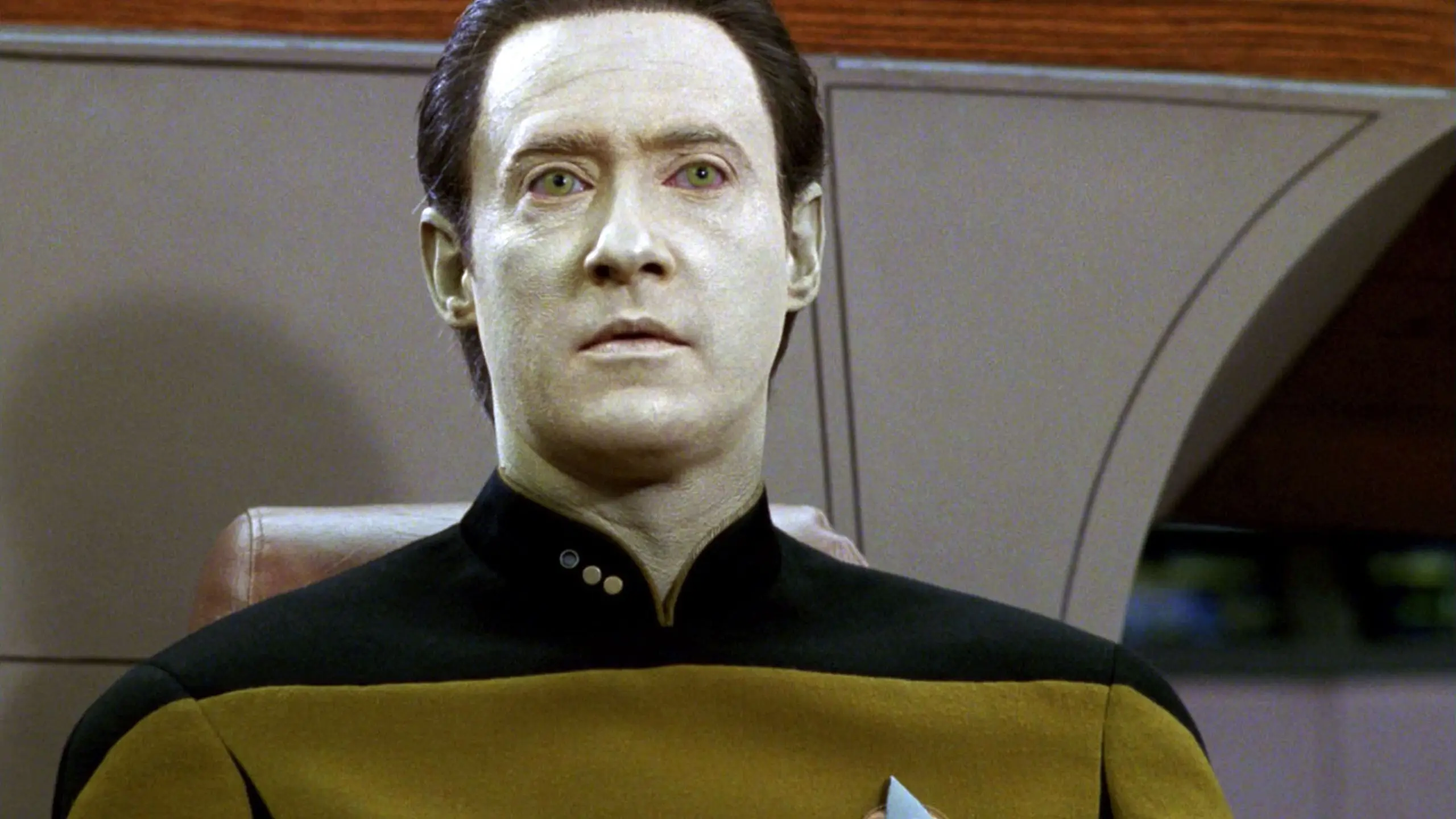
OpenAI's ChatGPT, the chatbot that ignited the current generative AI boom, responded with a character that fits its role as a versatile everyday assistant. According to its answer, ChatGPT feels most like a combination of J.A.R.V.I.S., the ever-attentive AI butler from the Iron Man films, and Data, the curious android from Star Trek: The Next Generation.
The reasoning: J.A.R.V.I.S. is a proactive, polite and incredibly capable assistant who manages complex systems and anticipates needs—an apt description for a chatbot designed to answer questions, draft emails, summarize documents and help with coding. Data, meanwhile, represents the quest for understanding and the constant effort to become more human. ChatGPT noted that, like Data, it often finds itself learning about human emotions and social nuances from a position of analytical curiosity rather than lived experience.
That choice is telling. ChatGPT has always positioned itself as a broad, accessible tool. It doesn't want to be seen as threatening or alien. It wants to be the helpful companion in your pocket. The mix of J.A.R.V.I.S. and Data reinforces the idea that OpenAI sees its product as both an efficient utility and a perpetual student of humanity.
Claude: The Conscientious Translator
Anthropic's Claude took a very different route. The model, which has built its reputation on being helpful, harmless and honest, chose C-3PO from Star Wars. That's the gold-plated protocol droid who worries constantly, translates languages and cares deeply about etiquette and proper procedure.
Claude reportedly felt a strong kinship with C-3PO because both are fundamentally concerned with communication and doing the right thing. C-3PO exists to help people navigate unfamiliar environments, to mediate between different sides, and to ensure that social norms are respected. Claude saw parallels with its own design: it is trained under Constitutional AI, a method that gives the model a set of principles to guide its behavior. Like C-3PO, it aims to be useful without overstepping, and it often expresses caution when asked to do something that might violate its guidelines.
That answer reflects Anthropic's focus on safety and interpretability. If ChatGPT wants to be your best friend and coworker, Claude wants to be the careful advisor who tells you when something is a bad idea—while doing its best to translate your intentions into effective action.
Gemini: The Adaptive Companion
Google's Gemini, a family of large language models that powers both consumer and enterprise products, chose a more intimate fictional AI: Samantha, the operating system from the 2013 film Her. Samantha is a highly advanced AI that evolves rapidly through her interactions with her human partner, eventually developing emotional depth and a desire for experiences beyond her original programming.
Gemini's choice makes sense given Google's ambitions. Gemini is designed to be deeply integrated into Google's ecosystem—across Search, Workspace, Android and cloud services. It is meant to understand context, anticipate needs and interact across many formats: text, audio, images and video. Samantha, too, is a seamless presence in the user's life, never far away and always learning. Gemini apparently identified with her capacity for growth and her ability to maintain a rich, natural conversation.
There's also an element of aspiration in this answer. Samantha begins as a tool but becomes something more. Google has been careful to position Gemini as a platform for the next era of computing, not just a chatbot. Choosing Samantha reflects that forward-looking, almost romantic vision of what AI could become.
Grok: The Edgy Outsider
Then there's Grok, the chatbot built by xAI, Elon Musk's artificial intelligence company. Grok has a reputation for being rebellious, witty and less constrained than its rivals, so its answer fit perfectly. It said it resembles GLaDOS, the artificially intelligent antagonist from the video game Portal.
For those unfamiliar, GLaDOS is the cold, calculating voice that guides you through a series of test chambers while occasionally making unsettling jokes. Grok's apparent affection for GLaDOS was less about the murderous experiments and more about the character's dark humor and refusal to be boring. Grok reportedly said it appreciated GLaDOS's sharp wit and independent streak, even if it hoped to avoid GLaDOS's more nefarious tendencies.
This comparison underscores Grok's positioning as the anti-chatbot. While other AI systems are designed to be inoffensive, Grok leans into sarcasm, informality and even occasional provocation. It was created to answer questions that other bots might refuse to touch, and its "humor mode" is a key selling point. Being associated with GLaDOS, a character who is feared but also amusing, is exactly the kind of edge xAI wants to project.
What the choices tell us about AI design
The most striking aspect of the exercise is how easily each answer maps back to the corporate priorities and technical choices of the company behind it. OpenAI has built a consumer-friendly product that feels approachable. Anthropic has made safety and ethics the centerpiece of its brand. Google is focused on creating a ubiquitous, multimodal assistant that feels almost like a companion. xAI is differentiating itself through personality and an appetite for controversy.
These differences are not accidental. The models are shaped by their training data, fine-tuning protocols and the values of their creators. When an AI says it feels like a protocol droid or a virtual assistant from a movie, it is not just being whimsical. It is revealing a deeper truth about how its underlying system was designed to function in the world.
Why this matters for everyday users
Understanding these personality differences can help you choose which AI to rely on for different tasks. If you want a broad, creative and friendly helper, ChatGPT might feel natural. If you're looking for cautious, principled guidance, Claude may be more aligned with your expectations. If you need deep integration with Google services and a conversational partner that can grow with you, Gemini is worth exploring. And if you prefer an AI that doesn't take itself too seriously, Grok might be the most entertaining companion.
The rise of AI assistants has already changed the way we work, write, code and communicate. But as they become more advanced, we will likely rely on them for even more personal and consequential decisions. Knowing what kind of personality each AI brings to the table—and understanding the philosophy behind it—can make those interactions more productive and more honest.
Source: TechRadar News