
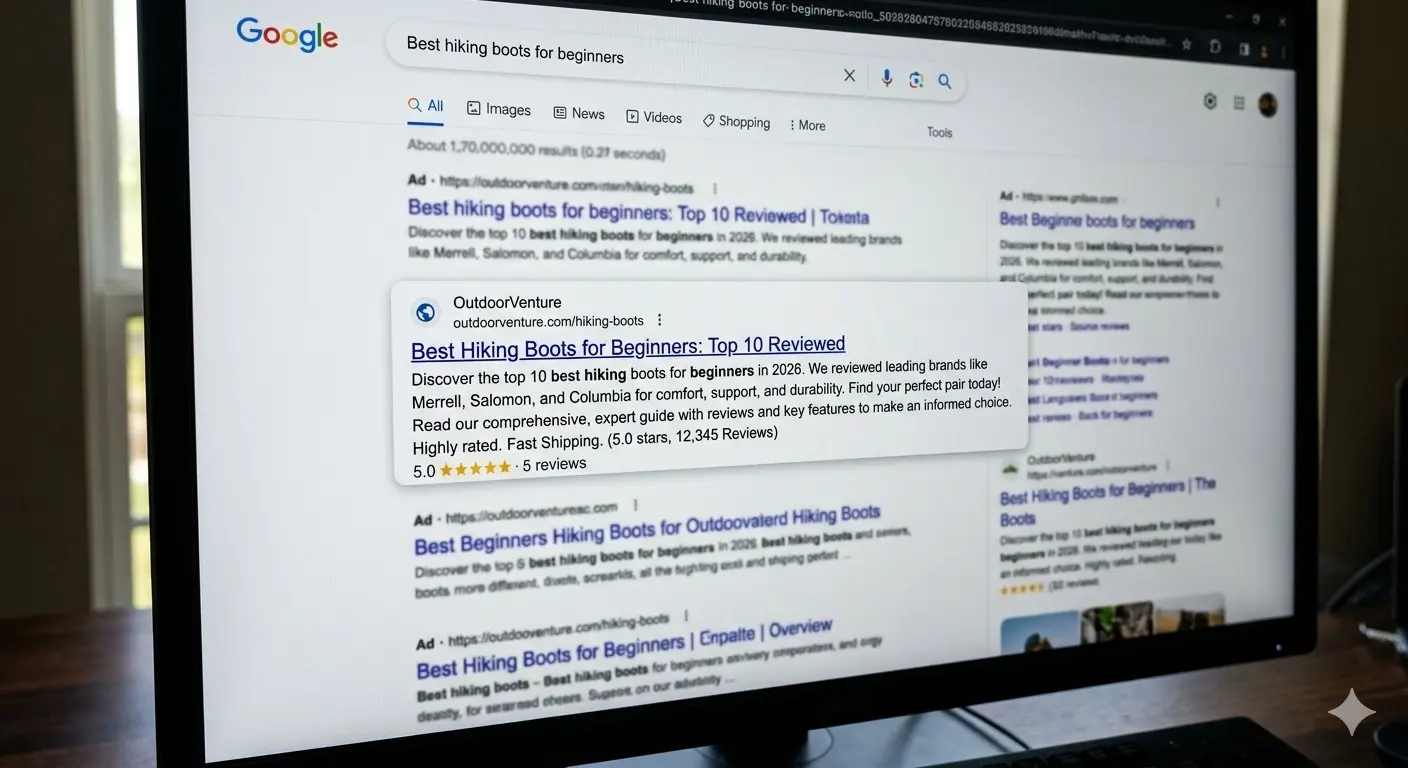
Quick Answer: To improve click-through rates, write meta descriptions between 120 and 155 characters that combine a clear value proposition with a specific call to action. Use your primary keyword naturally and address the searcher's intent directly. This tiny snippet acts as your organic "ad copy" to win the click over competitors.
The Art of the Organic Pitch
You've spent hours crafting the perfect piece of content. You’ve secured high authority backlinks and invested in high DA guest posting to get your page onto the first page of Google. But here is the cold truth: ranking isn't enough. If your search snippet looks like a robotic mess of keywords, users will simply skip over you.
I’ve seen dozens of sites rank in the top three only to lose traffic to the guy in position five because their meta description was boring. Think of this snippet as your digital storefront. If the window display is dusty and cluttered, nobody is walking through the door. We need to treat meta descriptions as high-performance sales copy, not just an SEO checkbox.
What is a Meta Description and Why Does It Matter?
Meta Description: A brief HTML attribute that summarizes a webpage's content, appearing under the blue link in search engine results pages to help users understand if the page meets their needs.
While Google has stated that these descriptions aren't a direct ranking factor, they are a massive indirect one. A high click-through rate (CTR) tells search engines that your result is relevant. If you're using manual outreach guest posting to build your brand, you want every person who sees your link to feel a physical urge to click it.
Here’s the thing: Google often rewrites these descriptions if they think they can do a better job. However, by writing a targeted, high-quality snippet, you give yourself the best chance of controlling that narrative.
Why Click-Through Rate Optimization Matters
The search world is changing. With the rise of AI-generated overviews, the "real estate" on the first page is shrinking. You aren't just competing with other websites anymore; you're competing with AI summaries. In 2026, a generic meta description is a death sentence for your traffic.
What most people overlook is that "search" is becoming "answering." People want to know immediately if you have the solution. In my experience, the most successful snippets in the current climate are those that acknowledge a specific pain point right in the search results. It's about being the most relevant answer, not just the loudest voice.
How to Write Meta Descriptions That Win the Click: Step-by-Step
Writing these shouldn't feel like a chore. Follow this process to ensure your snippets actually perform.
Analyze Search Intent: Before writing a single word, look at what’s already ranking. Are people looking for a "how-to" guide or a list of guest posting for SEO? Match your tone to their "why."
Include the Primary Keyword: Mentioning [Guest Posting Services] or your specific topic early on is vital. Google often bolds these terms in the results, which naturally draws the eye.
Highlight the Unique Value: What do you offer that others don't? Maybe it’s "White Hat Guest Posting" or "100% Manual Outreach." Put the "good stuff" front and center.
Keep it Under the Limit: Aim for 150 characters. If you go too long, Google will chop your sentence off with an ellipsis (...), which looks unprofessional.
Add a Strong Call to Action (CTA): Tell them what to do. "Learn more," "Get the list," or "See the results" works wonders.
Expert Tip: Don't just repeat your page title in the description. The title is the "What," the description is the "Why you should care." Use that extra space to solve a problem the title couldn't fit.
The Counterintuitive Truth: Why You Should Sometimes Ignore Keywords
Here is a hot take that might upset some SEO purists: sometimes, the best meta description doesn't use the primary keyword at all.
I know, it sounds crazy. But if every single result on the page is stuffed with the same three keywords, they all start to look like grey noise. I once ran a test for a client where we swapped a keyword-heavy description for a purely emotional, benefit-driven one. Even though the "SEO score" in their plugin went down, the actual traffic went up by 22%.
Why? Because it looked human. It stood out. If you are struggling to move the needle, try writing like a person talking to another person rather than a robot talking to an algorithm.
Expert Tips for High-Authority Results
When you are dealing with premium guest posting sites, your snippets need to reflect that authority. You can't use "clickbait" tactics that feel cheap. Instead, focus on transparency and data.
If you have a case study, put a number in the description. "How we increased ROI by 40%" is infinitely more clickable than "Tips to increase ROI."
Let me be direct: most SEOs are lazy. They let their plugins auto-generate descriptions using the first sentence of the blog post. That is a massive mistake. The first sentence of a post is usually an intro; a meta description needs to be an invitation.
Best Press Release Submission Platforms for SEO & Brand Visibility
If you want to amplify your reach beyond [Guest Post Backlinks] and [High DA Guest Posting], you need a multi-pronged approach. This is where online PR marketing comes into play. Combining a solid guest post outreach strategy with press release distribution sites creates a "wall" of authority around your brand.
Using a press release agency allows you to get your news onto news distribution platforms that regular blog posts can't reach. These PR submission sites provide high-quality, dofollow guest posts and backlinks that signal to Google that you are a legitimate entity, not just another niche site. In my experience, the synergy between niche guest posts and a well-timed press release is the fastest way to build high authority backlinks that actually stick. It’s about creating a narrative that the search engines simply cannot ignore.
People Most Asked about Meta Descriptions
Does Google always use the meta description I write?
No, Google ignores it about 70% of the time. They will often pull a snippet from your page content that they feel better matches the user's specific search query. However, providing a great one increases the odds they'll use yours.
How long should my meta description be in 2026?
The sweet spot is generally between 120 and 155 characters. On mobile, this limit is slightly shorter, so make sure your most important information and keywords are in the first 100 characters just to be safe.
Can I use the same meta description for multiple pages?
Definitely not. Duplicate meta descriptions are a wasted opportunity and can confuse search engines. Each page should have a unique pitch that reflects its specific content and intent.
Will a better meta description help me rank higher?
Not directly. It isn't a "ranking signal" in the traditional sense. But it improves your CTR, which sends positive signals to Google about your site's quality, which probably helps your rankings over the long term.
Should I use emojis in my meta descriptions?
They can work for some niches, but be careful. In a professional B2B setting, they might look spammy. In a lifestyle or travel niche, a simple checkmark or arrow might help your result pop.
Summary of Best Practices
To truly master this, you need to think like a copywriter. Mix short, punchy sentences with clear benefits. Use "you" and "your" to make it personal. Avoid the fluff and get straight to the point. Whether you are looking to [buy guest posts] or doing [white hat guest posting] manually, the goal is always the same: get the user to stop scrolling and start clicking.