

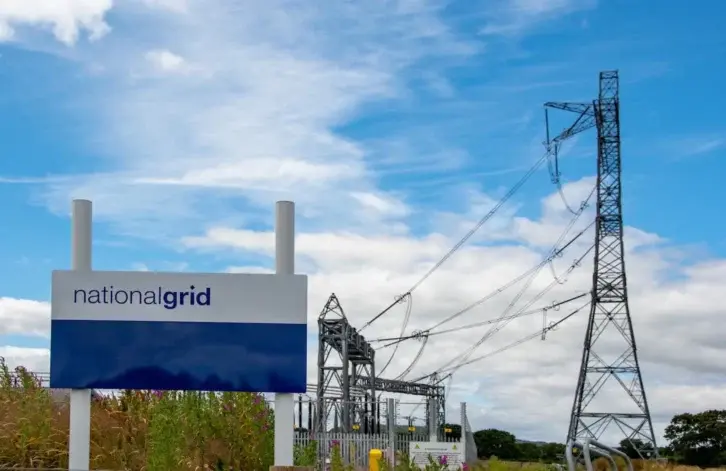
The United Kingdom's energy grid is confronting a new and formidable challenge: the explosive growth of artificial intelligence (AI). As AI models become more sophisticated, they require immense computational power, often provided by energy-intensive data centers. This surge in demand is placing unprecedented strain on the national grid, raising concerns about reliability, costs, and environmental impact. However, technology itself may hold the key to resolving this crisis through innovations in grid management, energy efficiency, and renewable energy integration.
AI's energy consumption is staggering. For instance, training a single large language model can consume as much electricity as hundreds of homes use in a year. With the proliferation of AI applications across industries—from healthcare to finance—the cumulative energy demand is skyrocketing. In the UK, data centers currently account for about 1% of total electricity consumption, but this figure is projected to rise sharply, potentially reaching 5-10% within a decade. This trend threatens to overwhelm the aging grid infrastructure, which was not designed for such rapid load increases.
One of the most promising technological solutions is the development of smart grids. A smart grid uses digital communication technology to detect and react to local changes in usage, improving efficiency and reliability. By integrating advanced sensors, IoT devices, and real-time data analytics, smart grids can dynamically balance supply and demand, reduce wastage, and incorporate distributed energy resources like rooftop solar panels and battery storage. For example, utilities can use AI algorithms to predict demand spikes and automatically adjust power flows, preventing blackouts and reducing the need for expensive peak-time generation.
Another critical area is improving the energy efficiency of AI itself. Researchers are developing novel hardware such as neuromorphic chips that mimic the brain's architecture, drastically reducing power consumption compared to traditional GPUs. Additionally, techniques like model compression, pruning, and quantization allow AI models to run on less powerful—and less energy-hungry—processors. Software optimizations, such as scheduling computation during off-peak hours or in locations with surplus renewable energy, can further mitigate grid stress.
The integration of renewable energy sources is also essential. The UK has made significant strides in wind and solar power, but their intermittency creates challenges for a grid increasingly burdened by AI loads. Technologies like advanced battery storage, pumped hydro storage, and green hydrogen can store excess renewable energy and release it when needed. AI-powered forecasting tools can improve the prediction of weather patterns, enabling better planning for renewable generation. Moreover, microgrids—localized grids that can operate independently—can help communities and data centers become more self-sufficient and resilient.
Policy and regulatory frameworks must evolve alongside these technologies. The UK government has already introduced initiatives like the Energy Digitalisation Taskforce and funding for smart grid research. However, faster deployment is needed. Incentives for energy-efficient data centers, mandates for renewable energy usage, and streamlined permitting for grid upgrades can accelerate progress. Public-private partnerships can also drive innovation, particularly in areas like edge computing, which reduces the need to transmit large amounts of data to central data centers, thereby lowering energy use.
Historical context provides lessons: the UK faced a similar energy crisis in the mid-20th century with the rise of industrialization and later with the adoption of personal computing. Each time, technological advancements—from more efficient coal plants to the invention of the microprocessor—helped meet demand. Today, the situation is more complex due to climate goals, but the same principle applies: innovation can outpace crisis. The career highlights of engineers and scientists who developed early smart grid prototypes or energy-efficient server farms show that dedicated research can yield transformative results.
Detailed analysis of current projects underscores the potential. For instance, the Energy Superhub Oxford project integrates a large battery system with smart charging for electric vehicles and heat pumps, demonstrating how local energy management can reduce strain on the national grid. Similarly, Google’s DeepMind has used AI to reduce cooling energy in its data centers by 40%. If scaled across the UK's data center fleet, such savings could free up significant capacity. Moreover, the development of 'digital twins'—virtual replicas of the grid—allows operators to simulate scenarios and optimize operations without risk.
In the longer term, emerging technologies like quantum computing and nuclear fusion could revolutionize energy production and consumption. However, more immediate solutions lie in optimizing what we already have. The UK's energy grid crisis, driven by AI, is not insurmountable. By leveraging the same digital tools that cause the problem, we can create a more resilient, efficient, and sustainable energy system. The path forward requires collaboration between tech companies, energy providers, policymakers, and researchers. With concerted effort, the grid can not only survive the AI revolution but thrive alongside it.
Source: Uktech News