

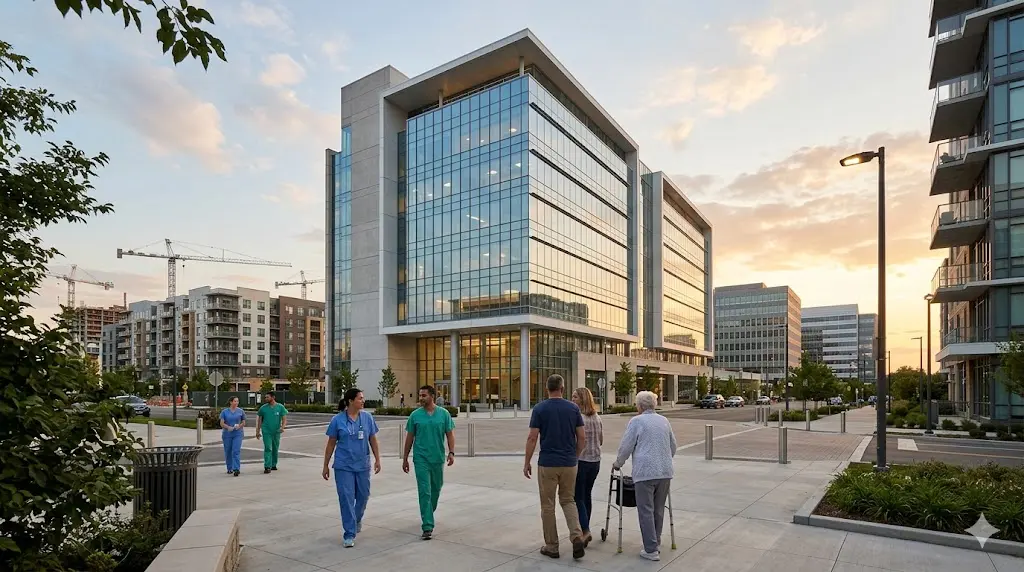
Healthcare access is quietly becoming one of the strongest forces influencing where people live, where businesses expand, and where investors place their money. When a community offers reliable hospitals, clinics, and specialized care, property values tend to strengthen and long-term demand often becomes more stable.
Healthcare access reshapes real estate investment by increasing housing demand, attracting employers, supporting aging populations, and reducing market risk. Investors who track medical infrastructure often spot high-growth opportunities before prices fully reflect the area's potential.
Healthcare Access: Reshaping Real Estate Investment is no longer a niche idea discussed only by institutional analysts. It has become a practical framework for investors, developers, and property owners who want to understand what truly drives sustainable demand.
I've seen many investors focus almost entirely on transport, schools, and employment data. Those factors matter, of course. But what most people overlook is that access to healthcare often influences migration patterns, retirement decisions, rental occupancy, and even commercial leasing. In 2026, this connection is becoming too important to ignore.
Healthcare Access — the ability of individuals to obtain timely, affordable, and quality medical services close to where they live and work.
What Is Healthcare Access and Why Does It Matter in Real Estate?
Healthcare access refers to the availability of hospitals, urgent care centers, specialist clinics, pharmacies, rehabilitation facilities, and telehealth support. In real estate terms, it acts as an anchor of stability.
People want to live where they feel safe. Businesses prefer locations where employees can receive quality care. Retirees often choose communities based largely on proximity to medical services.
That simple human need creates powerful investment consequences.
A neighborhood with strong healthcare infrastructure tends to attract:
Families seeking pediatric and emergency care
Older adults planning for future medical needs
Medical professionals looking for nearby housing
Support businesses such as pharmacies and labs
Employers wanting healthier, more productive workers
In my experience, healthcare access can be just as influential as transportation, and in some cases even more important.
Real-World Example
Consider a mid-sized suburban market where a new regional hospital opens. Within three years, developers build apartment communities, medical offices, retail centers, and senior housing nearby. Rental demand rises as nurses, technicians, and physicians move into the area. Restaurants and convenience stores follow.
The hospital doesn't just serve patients. It creates an entire local economy.
Why Healthcare Access Matters in 2026
The importance of healthcare access is increasing because demographic and economic trends are converging.
Aging Populations Are Redefining Housing Demand
Millions of older adults are prioritizing proximity to hospitals and specialists when choosing where to relocate. Retirement communities and age-friendly developments near healthcare hubs are seeing strong interest.
This trend isn't slowing down.
Remote Work Expands Location Choices
Since more professionals can work from almost anywhere, many are choosing communities that offer better quality of life. Healthcare is now part of that equation.
People ask themselves, "If my family needs care, how quickly can we get it?"
Healthcare Employment Is Growing
Medical systems are among the largest and most consistent employers in many regions. New hospitals and clinics generate thousands of jobs, supporting both residential and commercial property demand.
Mental Health and Wellness Influence Buying Decisions
Healthcare isn't limited to emergency rooms. Communities with therapy centers, wellness clinics, and rehabilitation facilities are increasingly attractive to buyers and tenants.
Counterintuitive Insight
Here's the surprising part: some investors chase trendy downtown districts, while quieter suburban areas near major medical campuses often produce steadier returns with lower volatility.
That might sound boring, but boring can be very profitable.
Expert Tip: If you're evaluating a market, study planned hospital expansions and healthcare employment growth before reviewing flashy marketing brochures.
How to Use Healthcare Access to Identify Real Estate Opportunities
Healthcare Access: Reshaping Real Estate Investment becomes most useful when applied as a practical research method.
Step 1: Map Major Hospitals and Medical Centers
Start by identifying hospitals, trauma centers, specialty clinics, and outpatient facilities. These institutions often serve as economic anchors.
Look for areas within a short commute of major healthcare campuses.
Step 2: Analyze Population Trends
Markets with growing senior populations, young families, or medical professionals often show strong demand for healthcare-oriented housing.
Demographics tell the story before prices do.
Step 3: Review Healthcare Employment Growth
Job creation in healthcare tends to be resilient even during economic slowdowns. Rising medical employment supports apartments, retail centers, and office properties.
Step 4: Track New Development Activity
Follow permits for medical office buildings, assisted living communities, pharmacies, and wellness centers. These projects often signal broader neighborhood growth.
Step 5: Assess Transportation and Accessibility
Healthcare facilities create the most value when they are easy to reach. Good roads, public transit, and walkability strengthen surrounding real estate.
Step 6: Evaluate Risk and Competition
Not every hospital-driven market is undervalued. Compare property prices, vacancy rates, and supply pipelines before investing.
Expert Tip: Medical office and senior housing investors often move early. If you notice both sectors expanding in the same area, pay close attention.
Which Property Types Benefit Most?
Healthcare access affects nearly every property category, though some benefit more directly than others.
Residential Real Estate
Homes near reputable hospitals often attract families and retirees. Rental units appeal to healthcare workers seeking convenient commutes.
Multifamily Properties
Apartments close to medical campuses can enjoy consistent occupancy from nurses, residents, and support staff.
Senior Housing
Independent living, assisted living, and memory care communities depend heavily on nearby medical services.
Medical Office Buildings
Clinics, imaging centers, and specialist practices create a highly targeted commercial opportunity.
Retail Real Estate
Pharmacies, fitness studios, and healthy food stores frequently cluster around healthcare-oriented neighborhoods.
Industrial and Logistics
Distribution centers serving pharmaceuticals and medical equipment can boost demand in strategic locations.
The Common Mistake Investors Make
Assuming Healthcare Access Only Matters to Seniors
This is probably the biggest misconception.
Families care about pediatric hospitals. Young professionals value urgent care and mental health resources. Employers want healthier workers. Students and international residents often prioritize nearby medical support.
In other words, healthcare access matters to almost everyone.
I used to think it was mainly a retirement-market factor. That view was far too narrow.
Healthcare Infrastructure as an Economic Engine
Hospitals function like mini-cities. They employ doctors, nurses, administrators, janitorial teams, technicians, researchers, and contractors.
Each job supports additional housing demand.
What starts as one healthcare facility can trigger:
New apartment construction
Retail and restaurant growth
Hotel development for patient families
Laboratory and office expansion
Transportation improvements
This ripple effect makes healthcare one of the most dependable local growth drivers.
A Mini Case Study: The Hospital Expansion Effect
Imagine a regional health system announces a $600 million campus expansion in a suburban market.
At first, the news seems relevant only to the healthcare sector.
Within 18 months, developers acquire nearby land. An apartment complex targeted to medical staff begins leasing. A hotel opens for visiting families. A grocery store and pharmacy secure anchor leases. Single-family home prices rise as professionals move in.
Five years later, investors who bought early enjoy both appreciation and reliable rental demand.
That's the kind of chain reaction healthcare access can create.
How Healthcare Access Reduces Investment Risk
Real estate always involves uncertainty, but healthcare-related demand tends to be durable.
People need medical care regardless of economic cycles. Hospitals continue operating during recessions. Medical professionals maintain relatively stable employment.
This creates three major advantages:
More consistent tenant demand
Lower vacancy risk in certain submarkets
Stronger long-term population retention
What most guides miss is that resilience can matter more than rapid growth.
A market that grows slowly but steadily often outperforms one that booms and crashes.
Expert Tip: Stability isn't exciting, but it usually compounds better over a decade.
Healthcare and Social Equity in Property Markets
Healthcare access also influences community outcomes. Areas with limited medical services may experience slower growth, weaker investment, and reduced housing demand.
Conversely, improvements in healthcare infrastructure can revitalize underserved neighborhoods.
This matters for investors who care about both returns and broader social impact.
Developments near clinics and wellness centers can contribute to healthier communities while generating sustainable income.
Expert Tips and What Actually Works
If I were evaluating a new market today, healthcare would be one of my first filters.
Not because it's trendy. Because it reflects something fundamental: people want to live where they feel protected.
My hot take? A well-run hospital can be a better predictor of future property performance than a flashy mixed-use project.
I've watched markets with modest amenities outperform because they offered dependable healthcare, strong medical employment, and a sense of security.
That emotional factor is hard to measure, but it's real.
When families choose a home, they aren't just buying square footage. They're buying peace of mind.
People Most Asked About Healthcare Access: Reshaping Real Estate Investment
How does healthcare access increase property values?
Areas with strong medical infrastructure attract residents, employers, and retirees. Greater demand often supports higher home prices and stronger rental rates over time.
Are hospitals good indicators for investment opportunities?
Yes, in many cases. Hospitals create jobs, stimulate surrounding development, and provide economic stability that can strengthen both residential and commercial markets.
Which real estate sectors benefit most?
Multifamily housing, senior living, medical offices, retail centers, and hospitality properties often benefit directly from healthcare-driven demand.
Does healthcare access matter to younger buyers?
Absolutely. Young professionals and families value emergency care, mental health support, and convenient clinics just as much as retirees do.
Is this trend stronger in 2026?
Yes. Aging populations, remote work, and healthcare employment growth are making medical access a more important location factor than ever.
Can healthcare improve underserved neighborhoods?
It can. New clinics and hospitals often attract additional investment, jobs, and infrastructure improvements that revitalize local communities.
What metrics should investors track?
Hospital expansions, healthcare employment growth, demographic shifts, and nearby development activity are some of the most useful indicators.
Final Thoughts on Healthcare Access: Reshaping Real Estate Investment
Healthcare Access: Reshaping Real Estate Investment reflects a deeper truth about property markets: real estate follows human priorities.
People want security, convenience, and confidence that help is close when they need it. Investors who understand this can identify markets with durable demand and lower long-term risk.
At least from what I've seen, healthcare access is no longer a secondary consideration. It's becoming one of the clearest signals of where smart real estate capital will flow next.
Our network helps businesses, agencies, and startups gain high authority backlinks and stronger brand visibility through PR Wires and Web Info Matrix. With expert press release distribution services, SEO services, and link building services, you can boost SEO ranking, attract organic traffic, and secure instant publishing that delivers meaningful media coverage and measurable growth.