
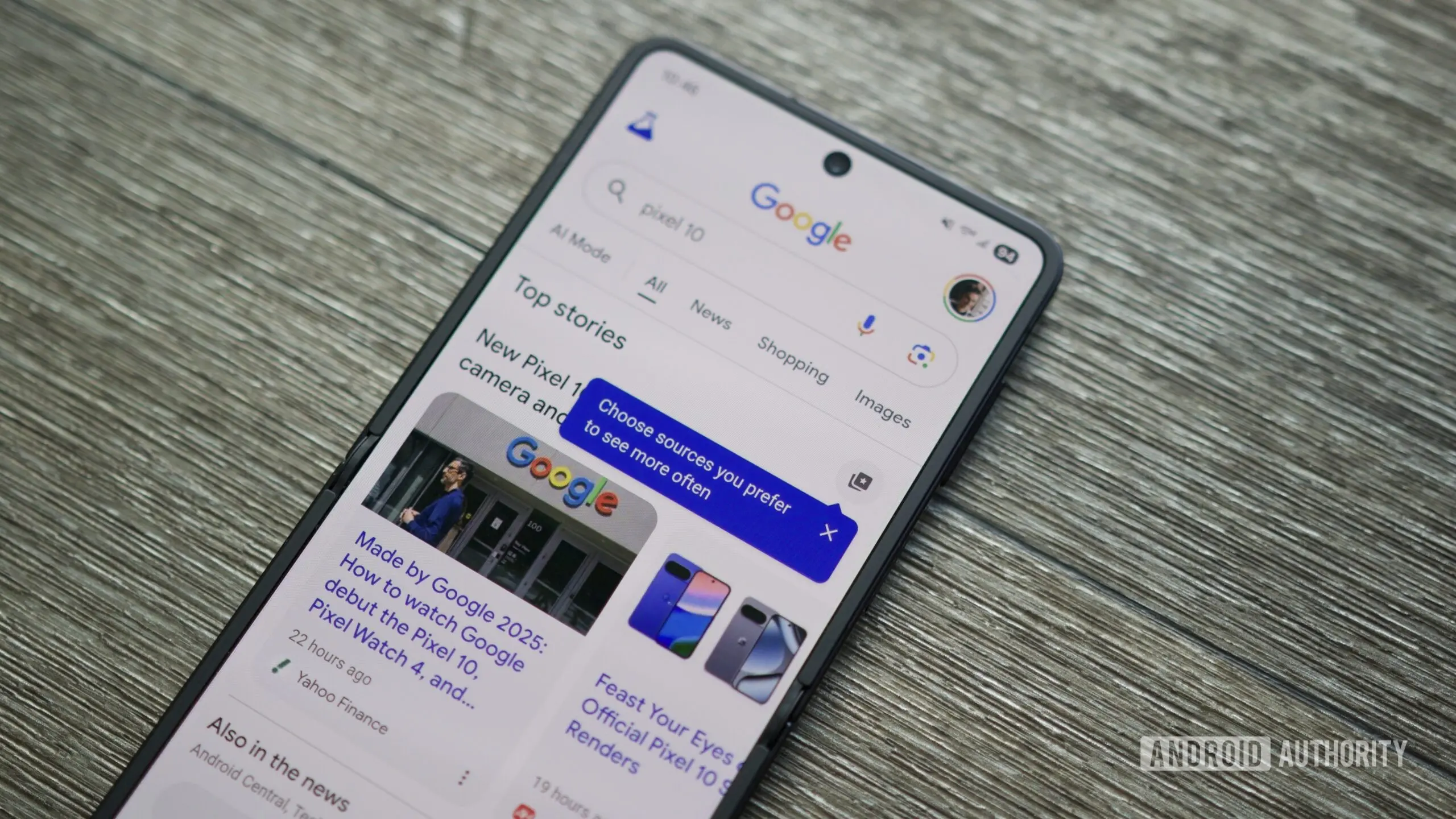
A solo game developer has reported a strange incident in which Google’s AI Search surfaced a specific, unreleased video-game character name that apparently existed nowhere except in a private Google Docs file. The developer, working under the studio name Klub Kofta Studio, said the discovery happened when a player asked the AI playful questions about their tower defense game Operation Octo. Rather than receiving comedic nonsense, the player was given the name “Vantage Tripod,” an unreleased character with no public footprint.
According to the developer’s Reddit post, the character had never been shared with the public, did not appear in any downloadable game files, and had only been recorded in a private document. The developer said the game is a small indie project with a tiny online footprint, so there was essentially no public speculation or fan chatter that could have led the AI to guess the name. “As far as I know,” the developer wrote, “the information only exists digitally in a private Google Docs file.” They added: “My game is not big enough for there to be much noise out there to confuse Google’s AI, so I guess that’s why it managed to give actual, scarily real leaks on my game (without being confused by online speculations), and I have no idea how it knew all this.”
Google’s response
After the story began spreading online, a Google representative provided a statement denying that the company uses private Workspace content to train its foundational AI models. The statement said: “Google does not scan your private Workspace content (which includes Drive and Docs) to train our foundational AI models (including Gemini).” The representative also said that links to publicly shared docs may be indexed if someone posted them publicly, where search engine crawlers could see them. The statement reminded users that they have full control over their sharing settings for Drive content, and directed people to resources about adjusting those settings.
The statement draws a clear line between private Workspace content and publicly shared links. But it does not fully explain how Google’s AI Search could have accessed the developer’s private document. It also does not address whether Google’s search engine or other products might use private user data in ways that are separate from foundational AI model training.
A history of surprise answers
Google’s AI Search, often known as AI Overviews, has been criticized before for producing bizarre and factually wrong responses. There have been cases where the AI recommended adding glue to pizza, eating rocks, or using dangerous nonstick-pan substitutes. Those incidents were widely mocked and highlighted the difficulty of making large language models reliable. But the Operation Octo situation is different. Instead of giving a hallucinated wrong answer, the AI appears to have produced a highly specific and accurate piece of information that the developer did not intend to share.
AI systems are generally trained on enormous amounts of text scraped from the internet. They do not have direct access to private databases unless those databases are somehow exposed. However, they can also memorize or infer patterns from their training data. If a private document is inadvertently indexed by a search engine, or if it is shared through a link that is later crawled, the content could become part of a model’s training data or be retrieved by a search-based AI feature. Google’s statement suggests that the company believes the information may have come from a publicly shared version of the doc, but the developer says they never shared it.
How could this happen?
There are several possible explanations for the leak, and none of them definitively clears Google or the developer. One possibility is that the developer accidentally left the Google Docs file set to “anyone with the link” for at least some period of time. Search crawlers are known to index public Google Docs, and once a page is indexed, it can be used in search results and possibly in AI-generated answers.
Another possibility is that a collaborator, friend, or beta tester had access to the document and mentioned it somewhere publicly. Even a single mention on a forum, social media post, or Discord server could be enough for a search engine to pick it up. The developer says they never told anyone about the character publicly, but it is hard for any person to be certain about every copy of a file, every screenshot, or every conversation.
There is also the possibility that Google’s AI Search is pulling from a source that is not the document itself but some other file or data store associated with the developer’s account. For example, if the developer used Google Docs to draft the document, the title or content might have been indexed in an internal Google system. However, without direct access to Google’s internal infrastructure, this is impossible to verify.
Google has repeatedly said that it does not scan private Workspace content to train its AI models. This is consistent with its legal commitments to enterprise customers who use Google Workspace. Many businesses store confidential data in Google Docs, and any suggestion that Google uses that data to train a public-facing AI would be a major breach of trust. But the company has also been vague about exactly how its AI-powered search feature retrieves information from across the web. Search-based tools often combine traditional search results with generative language models, so they may be able to surface indexed pages that are not widely known.
The bigger privacy picture
The incident raises broader concerns about private data in an age of generative AI. Companies like Google, Microsoft, and OpenAI have all built AI systems that can recall or retrieve information from vast data sources. When something sensitive appears in an AI response, it is natural to suspect that the company read private files. But there are more mundane explanations, including accidental over-sharing, password leaks, and third-party apps with permission to read documents.
For solo developers and small studios, the case is a reminder that cloud documents are not inherently private just because they are stored in a personal account. Many people use Google Docs for game design notes, unpublished character names, plot details, and other creative work. If any of that material is exposed to search crawlers, it can become very difficult to take back. A single altered sharing setting can make the difference between a private note and public searchable content.
This is not the first time a generative AI system has appeared to reveal private information. There have been reports of language models regurgitating training data, including personal details of individuals. There have also been cases where AI chatbots exposed internal company information when they were integrated into workplace tools. In many of these instances, the root cause turned out to be poor configuration or a lack of proper access controls, rather than a deliberate decision by an AI company to read private files.
What this means for developers and users
For developers who use cloud documents to store unreleased game content, the best defense is to review sharing settings carefully. Google offers several visibility options for Docs files: private, anyone with the link, and public on the web. Any setting other than fully private means the document can potentially be found by someone with the link, and if it is public on the web, it can be indexed by search engines. Developers should also be aware that some browser extensions, third-party editing tools, or embedded widgets can request access to documents and may inadvertently expose their contents.
For users who are concerned about AI Search revealing private information, the same advice applies. Do not put highly sensitive information in cloud documents unless you have verified that they are private. Do not share links that grant edit or view access without checking the access level. And remember that anything that has been indexed by a search engine may continue to surface long after it has been deleted from the original source.
The Operation Octo incident also raises questions about how AI companies handle take-down and retraction. If a piece of private information leaks through an AI answer, how does a person get it removed from the model? Most AI companies do not have straightforward processes for deleting information from a trained model. Even if a document is taken offline, the model may have already memorized it, or the search index may still have a cached copy.
There is also a challenge for AI search systems themselves. The Reddit post about the Operation Octo leak is now indexed and widely shared. Any user who asks Google’s AI Search about future Operation Octo content will likely receive answers based on that viral thread, making it impossible to determine what the AI originally knew. The developer joked that the thread has made the situation worse because the only reliable answer now is the thread itself. “Now that the Reddit post has gone viral, any questions you ask the AI about this topic now pulls from this thread,” the developer said.
In the end, the most likely explanation might be simple: somewhere, somehow, the document was exposed to the web. But the lack of transparency from AI companies makes it hard to know for sure. The incident shows that even a small indie game developer can become the center of a privacy mystery when a generative AI produces an answer that is too accurate for comfort. The broader conversation about AI training data, private documents, and search engine indexing is only beginning, and the developer’s unanswered question still hangs over the industry: how did it know?
Source: Android Authority News