

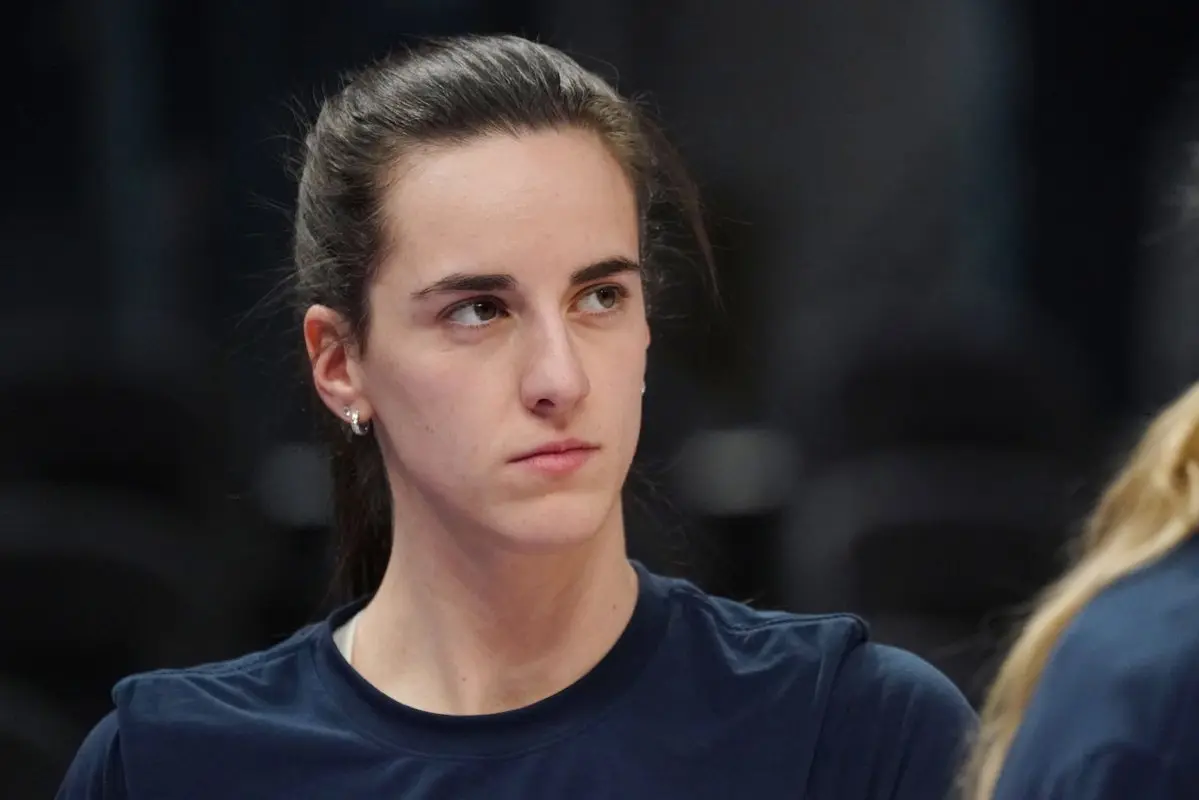
The Indiana Fever and Phoenix Mercury rivalry reached a new level of tension after an incident on Wednesday night that left Caitlin Clark with a neck injury and the basketball world questioning the WNBA's officiating standards. The league quickly responded by suspending Mercury forward Alyssa Thomas for one game and assessing a Flagrant Foul 2 for what they described as "recklessly making contact with her fist to the throat area" of Clark.
Fever president Kelly Krauskopf broke her silence on the matter, releasing a statement through the team's official social media channels. "Player safety should be paramount in our league," the statement read. "We appreciate the WNBA's review of last night's incident and the action taken. Right now, our focus is on Caitlin and our entire team as we prepare for Saturday." The statement came a day after the game, which saw the Fever lose 111-109 at Gainbridge Fieldhouse.
The incident occurred with 6:52 remaining in the second quarter. Clark was driving to the basket while guarded by Lexie Held but slipped and fell. As she lay on the court, Thomas, who was also on the ground, fisted her hand and pushed it into Clark's neck. The referees did not call a foul at the time, allowing play to continue. Fever head coach Stephanie White later revealed she was made aware of the non-basketball play during halftime and brought it to the officials' attention, but no corrective action was taken during the game.
"I'm not sure if it had any effect on her health or not, but it was egregious," White told reporters after the game. "The fact that it was a no-call, I heard about it at halftime, I brought it to the officials' attention at halftime, yet we still had 11 fouls in the fourth quarter today, too. Number one, you gotta call it. It's absolutely egregious and utterly disrespectful. Number two, you're coming in here knowing what happened two nights ago, and that still happens? Absolutely unacceptable."
The reference to "two nights ago" was about the previous game between these two teams on Monday, which had already been a chippy affair with six technical fouls called. That game set the stage for increased physicality, but Wednesday's rematch escalated beyond what many considered acceptable. Clark left the game with 5:15 remaining in the third quarter and did not return due to back issues. The team announced she was day-to-day, with no further update provided.
This was not the only controversial non-call involving Clark during the game. Just a few possessions after the Thomas incident, Clark jumped for a three-pointer and landed on the foot of Mercury guard Valeriane Ayayi. Despite a review, the officials only called a shooting foul and did not upgrade it to a reckless closeout, which would have penalized Ayayi for not allowing Clark sufficient landing space. Clark made all three free throws, but the inconsistency in officiating remained a sore point.
The WNBA has been under pressure to improve officiating consistency, especially after forming an officiating task force during the 2025-26 offseason. The task force, consisting of players, coaches, and general managers, aimed to crack down on excessive physical play and improve consistency from game to game. Initial data showed an increase in foul calls—41.8 per game in the first month of the 2026 season, up from 32.4 the previous year. Yet, incidents like Wednesday's continue to raise questions about whether the changes are being applied equally to all players.
White echoed that sentiment, stating, "We spent all offseason looking at officiating. And I keep saying the one thing we keep asking for is consistency. She is not called the same way as everybody is called." The "she" in question was Clark, who has been a focal point of the league since her rookie season and has often been the target of physical play. Last season, the league upgraded a foul on Marina Mabrey to Flagrant 2 after she pushed Clark to the floor while Clark was talking to a teammate. Thomas herself had a similar incident last season when she pushed her fist into Angel Reese's throat, resulting in a Flagrant 2 call and ejection from that game.
Caitlin Clark's rise in the WNBA has been meteoric. Drafted first overall by the Fever in 2024, she quickly became the face of the league, breaking multiple records and drawing unprecedented attention to women's basketball. Her ability to score from deep and facilitate has made her a target for aggressive defense. However, the physicality she endures has sparked widespread debate about player safety and the need for more robust enforcement of rules designed to protect players, especially those driving to the basket or shooting.
The suspension of Thomas means she will miss the Mercury's game against the Toronto Tempo on Saturday, June 27. Thomas, a two-time WNBA All-Star and known for her defensive tenacity, will serve her one-game ban. The Mercury will be without her services as they try to maintain their playoff push. For the Fever, the biggest concern remains Clark's health. Her availability for the next game, and potentially beyond, is uncertain, and the team is taking a cautious approach.
Beyond the immediate implications for both teams, this incident has reignited conversations about the officiating task force's effectiveness. Despite the increased number of fouls called, players and coaches argue that the calls are not being applied uniformly. Star players, in particular, seem to receive less protection, a complaint that has been leveled in both the WNBA and the NBA. The league's "Freedom of Movement" rule, intended to limit hand-checking and physical contact away from the ball, has also been questioned, as moments like Thomas's punch suggest that the spirit of the rule is not being enforced.
Social media erupted after the game, with fans and analysts pointing out the lack of a penalty on the floor and the subsequent decision to suspend Thomas only after review. Many asked why the on-court officials did not catch such a blatant act, especially given the history between the two teams earlier in the week. The WNBA's officiating department reviews all games and can upgrade or downgrade fouls retroactively, but the damage to the game's integrity is done when such plays are not flagged in real time.
The league's response echoed similar measures taken in the past. The suspension of Thomas aligns with the WNBA's stated priority on player safety. By issuing a Flagrant 2 and a suspension, the league sent a message that such conduct will not be tolerated, but it also highlighted the gap between what is acceptable on the floor and what is punished after the fact. For Clark, who has been at the center of multiple physical altercations, the question remains whether the league can do more to protect her and other players in real time.
Meanwhile, the Fever are preparing for their next game, with or without Clark. The team, which has championship aspirations this season, relies heavily on Clark's playmaking and scoring. Her absence would be a significant blow. Head coach Stephanie White has stressed the importance of adapting, but the incident has cast a shadow over what was supposed to be a promising season. The Fever and Mercury are scheduled to meet again on July 9, a date that is now circled on many calendars as a potential flashpoint.
The Thomas incident also brings to mind other instances of on-court violence in women's professional sports. In 2024, a similar altercation occurred between players in the Australian NBL1, and the WNBA has seen its share of flagrant fouls and ejections over the years. However, the involvement of Clark, whose popularity extends far beyond typical basketball audiences, has magnified the scrutiny. The league now faces pressure to not only punish but also prevent such incidents through better training, more consistent officiating, and perhaps even stricter rules regarding physical contact with fallen players.
As the WNBA continues to grow, with increased television ratings and attendance, the spotlight on officiating will only intensify. The league's task force has acknowledged the need for improvement, but incidents like Wednesday's suggest that there is still a long way to go. For now, the Fever and their fans are left hoping that Caitlin Clark recovers quickly and that the league takes further steps to ensure that player safety truly becomes paramount.
Source: Yahoo Sports News