

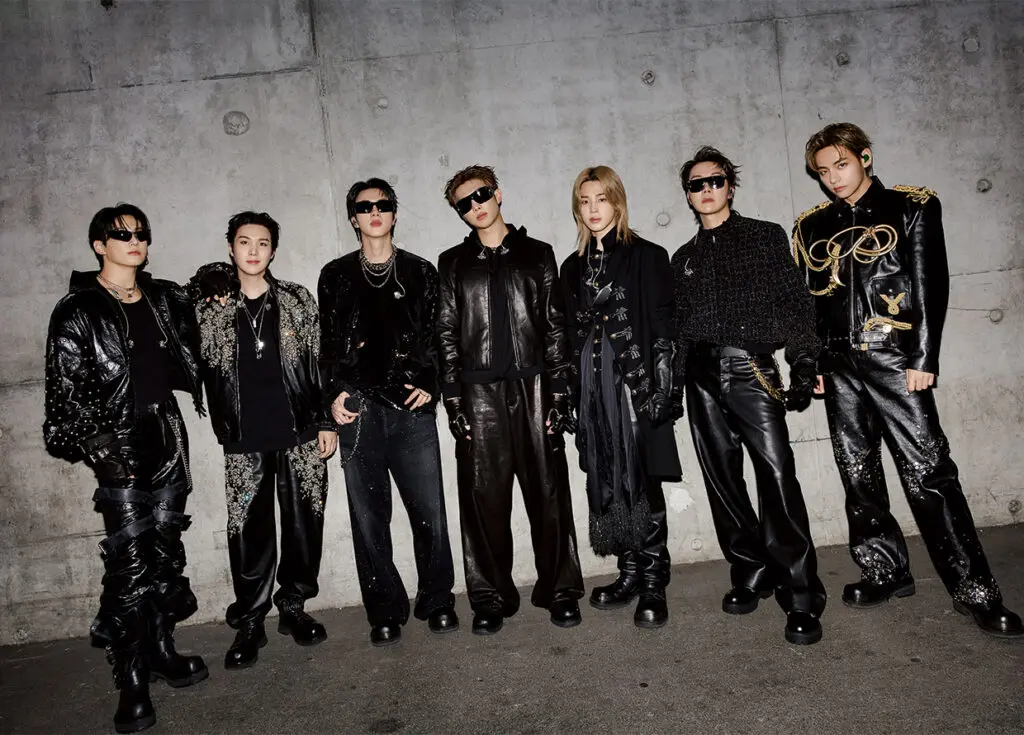
BTS's long-awaited return to touring following their Permission to Dance on Stage series has been marked by the release of their new album Arirang. The septet began their world tour in Goyang, South Korea, before moving to South America, Europe, and eventually Southeast Asia. While fans have been captivated by the new setlist, fashion enthusiasts have equally focused on the tour's incredible wardrobe.
The opening night in Goyang set a powerful tone. Stepping onto the stage in custom Juntae Kim, BTS wore all-black ensembles that reinterpreted Korean cultural codes through the label's punk-inflected tailoring. This tribute to homegrown design demonstrated the group's commitment to celebrating Korean heritage on an international platform. Juntae Kim is known for his avant-garde approach that merges traditional Korean elements with contemporary streetwear, and the outfits featured intricate cuts and asymmetrical details that moved dynamically under stage lights.
Paris: French Fashion Takes Center Stage
When the tour reached Paris, French luxury houses dominated the wardrobe. Jimin showcased Dior throughout the stop, switching between sharply tailored looks with military-inspired codes and more relaxed ensembles. One standout was a red hoodie paired with denim, a sleeveless leather jacket layered over a shimmering knit. The military references appeared in structured coats and jackets with epaulettes and brass buttons, nodding to Dior's long history of incorporating uniform aesthetics.
Jung Kook was dressed in custom Balenciaga by Pierpaolo Piccioli. Inspired by the house's Autumn 2026 and Spring 2027 collections, the looks reinterpreted Balenciaga's signature codes through sculptural silhouettes and oversized tailoring. Accessories included the brand's Venom Boots and Boomerang Cat Sunglasses, which added an edgy, futuristic vibe. Piccioli's work at Balenciaga has been characterized by a blend of streetwear and haute couture, and the custom pieces for Jung Kook featured exaggerated shoulders, dropped crotches, and structural lines that emphasized movement.
Animal Prints and Streetwear Luxe
V's wardrobe from Celine featured recurring animal prints, including leopard-print leather and zebra-patterned velvet. These bold patterns added a playful edge to relaxed looks built around washed denim and the house's silk scarves. Celine under Hedi Slimane has embraced a rock 'n' roll aesthetic, and V's outfits reflected that with skinny jeans, leather jackets, and layered accessories. The animal prints were not just trendy but also referenced the youthful rebellion that Slimane has championed.
j-hope's Louis Vuitton looks showcased his knack for blending street style and luxury. He wore a Swarovski crystal-embellished varsity jacket paired with beige wool pleated trousers and combat boots. This combination of high and low elements is a signature of Pharrell Williams's direction at Louis Vuitton menswear. j-hope also incorporated accessories such as chunky chains and statement sunglasses, making each outfit feel both accessible and opulent.
Subtle Details and Bold Drama
Suga's Givenchy looks brought unexpected detail to his often more understated style. Leather and denim pieces were punctuated by silver floral embellishments and crystal detailing, adding an ornate finish. Givenchy under Matthew M. Williams has focused on hardware-heavy designs and industrial sensibilities, and Suga's stage fits included zippered pants, distressed jackets, and subtle metallic accents that caught the light during performances.
Jin and RM were both dressed by Gucci, now under the creative direction of Demna. The duo embraced the house's darker aesthetic. RM appeared in a black leather bomber jacket and cargo trousers, exuding a tough, no-nonsense attitude. Jin leaned into full-on sparkle through a sequin-embroidered long-sleeve top and crystal-covered denim. Demna's Gucci has moved away from the maximalist romance of previous years into a more cynical, streetwear-inspired luxury. The contrast between the two members—RM's muted toughness and Jin's glittering extroversion—highlighted the breadth of the collection.
Background and Significance
BTS's relationship with fashion has evolved significantly over the years. Early in their career, they often wore coordinated stage outfits that emphasized uniformity. As their fame grew, individual members began to develop distinct personal styles, and luxury brands took notice. The group has served as global ambassadors for several houses, including Louis Vuitton, Dior, and Calvin Klein. Their influence on fashion is substantial: items worn by members often sell out within hours, and their endorsement can drive trends worldwide.
The Arirang tour is particularly notable because it marks the first time that every member has had a dedicated designer sponsor. In previous tours, the group sometimes relied on stylists' discretion, but now each member has a formal partnership with a major house. This shift reflects both the individual members' rising star power and the brands' recognition of BTS's massive global reach. The tour's fashion has been closely watched by industry insiders, and the looks are likely to influence upcoming menswear collections.
Moreover, the use of Korean designer Juntae Kim for the opening night was a strategic decision to emphasize national pride. Kim's work often deconstructs hanbok elements and reimagines them through a punk lens, aligning with BTS's own blend of traditional and modern elements in their music. The black-and-white motifs and bold silhouettes created a visual statement that resonated with both domestic and international fans.
As the tour progresses, fans can expect more surprises. With each city stop, the members may incorporate local cultural references into their outfits. Past tours have seen BTS wearing hanbok-inspired modifications in Korea and contemporary streetwear in the United States. The Arirang tour is likely to continue this trend, offering a rich tapestry of fashion that celebrates both global luxury and local heritage.
The attention to detail in every look—from the choice of fabrics to the placement of embellishments—speaks to the professionalism of BTS's styling team and the dedication of the designers. Whether it's Jimin's Dior military coats, Jung Kook's architectural Balenciaga, or V's playful animal prints, each outfit is crafted to enhance the performance and express the member's personality. The wardrobe is not merely clothing; it is an integral part of the show's narrative.
For those following the tour, the fashion updates are almost as exciting as the concert footage. Social media platforms light up with photos and breakdowns of each look, and fashion magazines have dedicated multiple articles to analyzing the choices. The intersection of K-pop and high fashion has never been more pronounced, and BTS is at the forefront of this cultural moment.
The Arirang album itself explores themes of journey, identity, and connection, and the costume design echoes these themes. The blend of Eastern and Western influences in the wardrobe mirrors the album's musical fusion of traditional Korean sounds with contemporary pop. Every detail is intentional, from the color palettes to the textures, creating a cohesive visual identity for the tour.
As BTS continues to break records and expand their influence, their fashion choices will undoubtedly remain a subject of fascination. The Arirang world tour outfits are a testament to the group's evolution as artists and style icons, and they offer a glimpse into the future of celebrity-fashion collaborations. With each concert, the members not only deliver unforgettable performances but also redefine what it means to be a fashion icon in the 21st century.
Source: BURO. News