

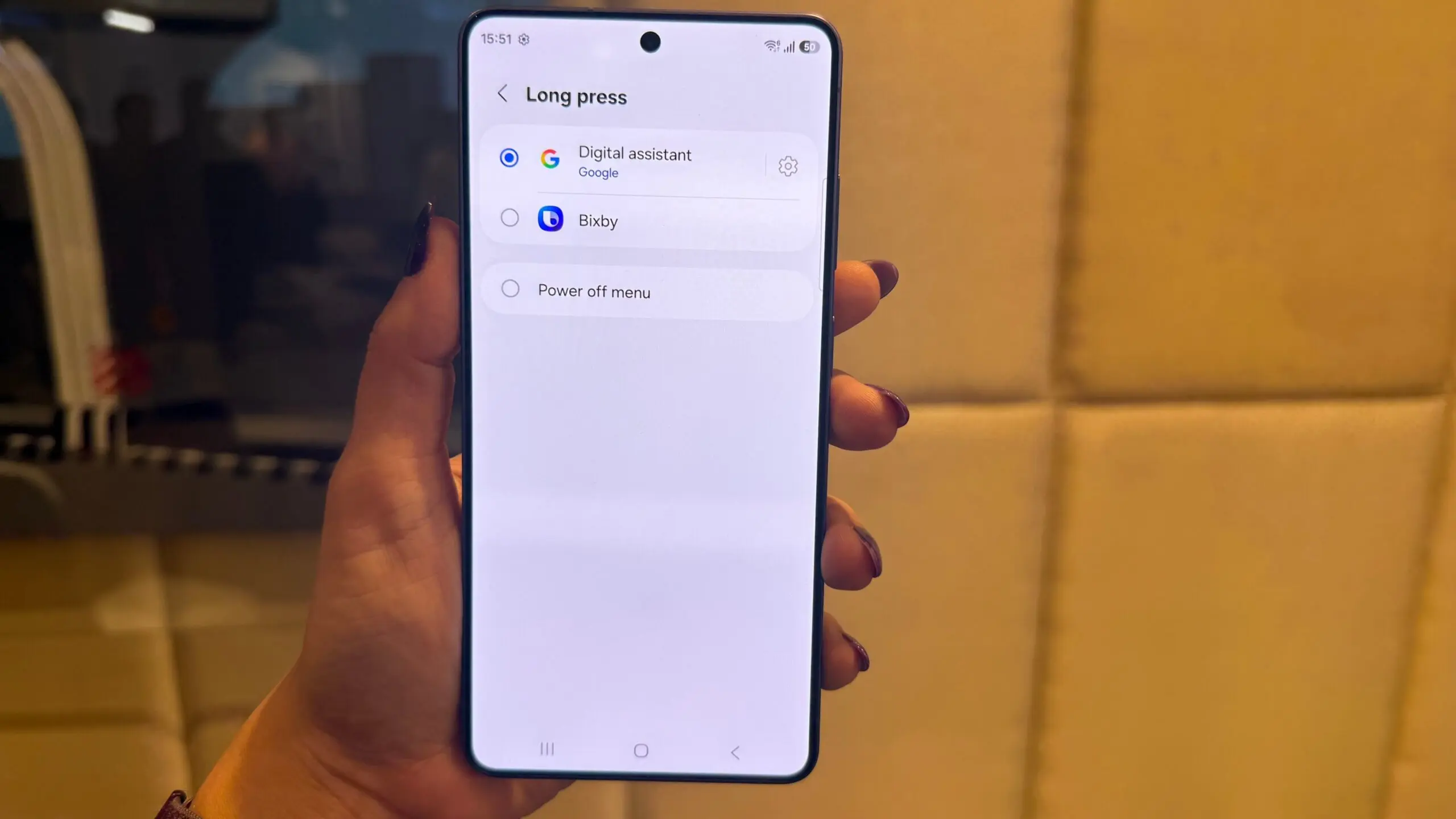
Samsung has been working diligently to make Bixby feel more natural and responsive, but a recent wave of user complaints suggests the assistant has taken an unexpected turn. Following a software update, many Galaxy users report that Bixby's voice keeps switching between different tones and pitches, regardless of the voice they previously selected in settings. The issue first surfaced on Samsung's Korean community forum, where a user detailed their experience in a lengthy post. According to the user, their usual voice appears only on the second response, while the first and subsequent answers come through a lower, unfamiliar voice. They also noted that Bixby no longer matches the notification voice configured through a routine—a feature meant to provide consistency across device interactions.
Another commenter on the forum echoed the sentiment, criticizing the broader inconsistency in Bixby's speech. They claimed that the voice now changes noticeably depending on what the assistant says, sometimes adopting a more robotic tone and other times sounding almost human. This leaves users guessing which voice they will hear next, undermining the goal of a seamless, natural interaction. The problem appears to affect multiple Galaxy models, including the latest Galaxy S24 Ultra and Galaxy Z Fold 6, though Samsung has not officially confirmed a widespread bug.
Background: Bixby's Evolution and Persistent Challenges
Bixby was introduced in 2017 alongside the Galaxy S8 as Samsung's answer to Apple's Siri and Google Assistant. Over the years, Samsung has invested heavily in improving Bixby's natural language understanding, adding features like Bixby Routines, Bixby Vision, and deep integration with Samsung's ecosystem of devices. In 2024, Samsung announced a major upgrade to Bixby's voice engine, promising more lifelike intonation and better context awareness. However, the recent update—likely part of a quarterly maintenance release—appears to have introduced a regression in voice consistency.
Voice synthesis technology relies on complex neural networks that map text to speech patterns. Samsung uses a combination of concatenative and parametric synthesis to generate Bixby's responses. The former stitches together pre-recorded speech segments, while the latter uses AI to generate waveforms from scratch. A bug in the update could cause the system to switch between these two methods unexpectedly, resulting in the jarring voice changes users describe. Another possibility is that the update altered the priority of voice profiles, causing the assistant to default to an alternative voice when the selected one is unavailable due to server load or network latency.
This is not the first time Bixby has faced backlash over voice quality. In 2019, users complained about a robotic, monotonous tone after an update that aimed to add more expressiveness. In 2021, a similar issue surfaced where Bixby's voice would randomly change to a higher pitch during long commands. Samsung eventually addressed those issues with server-side fixes, but the current problem seems more pervasive and has persisted for several weeks without a clear resolution.
Samsung's Response: Acknowledgment Without Commitment
The Bixby team responded to the original Korean forum post with a brief moderator note. The response apologized for the inconvenience and stated that feedback about Bixby's voice style would be passed to the relevant department for consideration. However, the moderator stopped short of confirming a bug or promising a timeline for a fix. This cautious approach is typical of Samsung's support strategy, where they often avoid categorically labeling issues as bugs until internal testing confirms them. For users, this lack of commitment is frustrating, especially when the problem affects a core functionality like voice output.
Other Samsung Community threads on the topic have been met with similar responses, directing users to clear cache, reinstall Bixby updates, or reset voice settings—temporary workarounds that rarely solve the underlying problem. One user reported that after resetting the voice preferences, the assistant worked correctly for a few hours before reverting to the erratic behavior. Another user discovered that disabling Wi-Fi and relying solely on cellular data reduced the frequency of voice switches, hinting that the issue may be related to how Bixby fetches voice data from Samsung's servers.
Despite the lack of an official fix, Samsung has been actively promoting Bixby's capabilities in recent marketing campaigns, highlighting its ability to handle complex multi-step commands and integrate with smart home devices. The company's AI research division has published papers on improving emotion detection in speech synthesis, suggesting that Samsung is committed to making Bixby more human-like. However, these long-term goals clash with the immediate user experience, where basic consistency remains elusive.
User Reactions and Broader Implications
The voice-switching bug has sparked a broader discussion about Bixby's reliability and Samsung's approach to software updates. On Reddit and X (formerly Twitter), users have shared clips of Bixby responding to the same query with different voices within seconds. One viral video shows the assistant starting a weather report in a calm, female voice, then switching mid-sentence to a deeper male voice for the second half of the forecast. The hybrid output has been described as 'uncanny valley' and 'disturbing' by some users.
Polling on Android Authority indicates that 82% of respondents believe Galaxy AI is not a reason to pay more for a smartphone, suggesting that Bixby's inconsistency is eroding consumer confidence in Samsung's AI features. This sentiment is concerning for Samsung, which has positioned Galaxy AI as a key differentiator against competitors like Apple and Google. The company recently introduced features such as AI-powered photo editing, live translation of phone calls, and advanced note summarization—all of which rely on Bixby's underlying voice and language models. If the voice output is unreliable, users may avoid using these features altogether.
Industry analysts point out that voice assistants live or die by their consistency. Google Assistant, for instance, has maintained a stable voice across updates for years, using a unified neural text-to-speech system that adapts to context without changing its core character. Apple's Siri also sticks to a single user-selected voice, though it has faced criticism for other limitations. Samsung's approach of offering multiple voice options—smooth, bright, and warm—may have inadvertently created a system where the selection is not properly enforced across all modules.
Technical Deep Dive: Why Voice Switching Happens
To understand the bug, we must look at Bixby's architecture. The assistant uses a cloud-based orchestration engine that routes user queries to the appropriate specialist model: one for weather, one for alarms, one for smart home controls, etc. Each specialist may have its own voice profile, and there are separate models for TTS (text-to-speech) and NLG (natural language generation). If the update introduced a mismatch between the voice profile selected by the user and the profiles assigned to each specialist, the assistant would produce a patchwork of voices.
Another possibility is that the update inadvertently altered the voice profile priority list. On Galaxy devices, Bixby's voice can be customized in the settings menu, with an option to apply a consistent voice across all features (the 'Use one voice' toggle). If that toggle was reset or broken during the update, the assistant would fall back to default voices for each specialist category. Users have reported that the toggle appears to be enabled in their settings, but the behavior suggests otherwise—a classic UI bug where the setting is displayed but not actually functional.
Furthermore, Bixby's latest version introduced adaptive voice pitch, which was supposed to adjust the tone based on the emotional content of the command. For example, a question about a canceled flight would be delivered in a sympathetic tone, while a simple timer command would remain neutral. This feature, while impressive in theory, requires real-time analysis of the query and may interfere with the fixed voice profile. If the emotional analysis algorithm is faulty, it could trigger unexpected voice switches.
Samsung has not released a software patch to address these issues since the complaint surfaced. The company typically rolls out security updates monthly, but feature updates come every few months. Given that the bug is not considered critical, it may wait until the next major update cycle—possibly with the release of One UI 7.0, expected in late 2026. Until then, users are left with workarounds such as disabling Bixby's voice entirely and using text-based commands, or switching to a third-party assistant like Google Assistant or Amazon Alexa, which are available on Galaxy devices but lack deep system integration.
Historical Context: Bixby's Rocky Road
Bixby's launch in 2017 was met with mixed reviews. The original version struggled with natural language understanding outside of Korean, often requiring users to phrase commands exactly as Samsung expected. Over the years, Samsung slowly improved Bixby's language models, but it always lagged behind competitors. The introduction of Bixby 2.0 in 2019 attempted to reposition the assistant as a smart home hub, but integration with third-party devices remained limited.
In 2023, Samsung made a bold move by integrating Bixby with its own large language model (LLM) called 'Samsung Gauss', named after the mathematician. This allowed Bixby to handle more complex, open-ended queries, but it also introduced unpredictability in responses. The current voice bug may be a side effect of the Gauss integration, as the LLM generates responses on the fly and the TTS system struggles to maintain consistent vocal characteristics.
Meanwhile, competitors have made strides. Google's Gemini assistant, launched in 2024, offers multi-modal capabilities and a stable voice across all platforms. Apple's Siri, while criticized for intelligence, has maintained a consistent voice profile since iOS 14. Amazon's Alexa similarly relies on a single voice (or user-chosen celebrity voices) that never changes mid-conversation. Samsung's choice to allow multiple voice styles—rather than one highly polished voice—may have been a design mistake that now backfires.
Some users have taken to hacking their Galaxy devices to restore older versions of Bixby. Unofficial forums provide guides to downgrade the Bixby Voice app using Samsung's own downloader mode, but this voids warranties and is not recommended. The existence of such workarounds highlights the depth of frustration among power users.
As Samsung's Bixby team evaluates the feedback, the company faces a critical decision: either roll back the recent update and revert to a stable but less intelligent assistant, or push forward with a fix that preserves the new features while eliminating the voice-switching bug. Given the slow response so far, users may need to wait weeks or months for a resolution. In the meantime, the phrase 'Bixby, speak consistently' has become a running joke on Samsung forums—a small consolation for those hoping for a more reliable digital companion.
Source: Android Authority News