

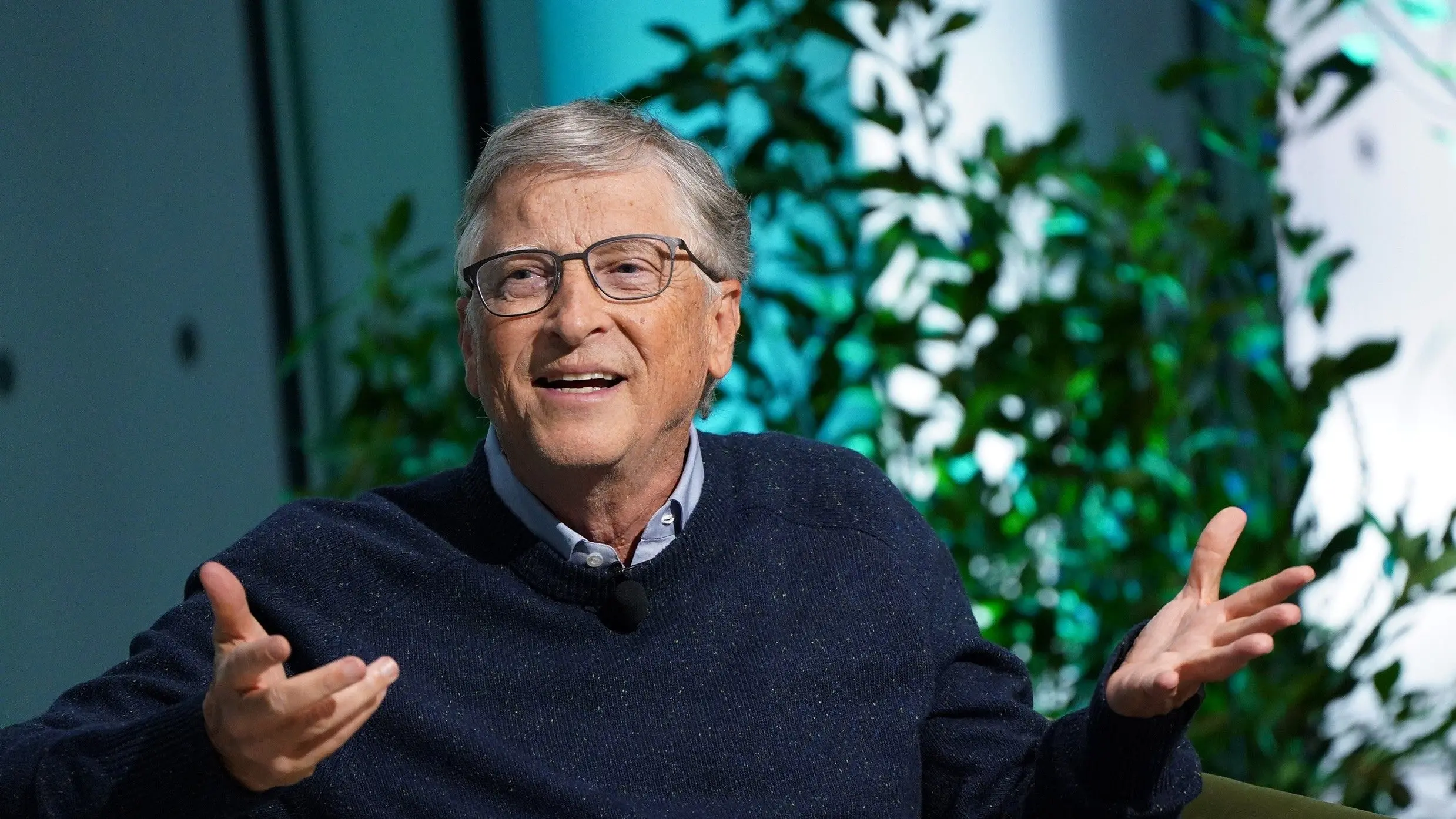
Bill Gates on AI and the Future of Work
Bill Gates, the co-founder of Microsoft and a prominent philanthropist, has long been a vocal commentator on the potential impacts of artificial intelligence. In a recent discussion, he made a striking prediction: AI will replace many jobs across various industries, but it will never replace athletes. The reason, he argues, is simple—no one wants to watch computers play sports. This statement has sparked conversations about the boundaries of AI and the irreplaceable human element in entertainment.
The Context of Gates' Remarks
Gates has consistently emphasized that AI will transform the global economy, automating tasks in manufacturing, customer service, data analysis, and even creative fields like writing and design. He has warned that societies need to prepare for significant job displacement and invest in education and retraining. However, when it comes to professional sports, Gates draws a clear line. The thrill of athletic competition lies in the physical prowess, emotional highs and lows, and unpredictable human drama that AI simply cannot replicate. Even the most advanced robots or simulated players lack the organic mistakes, breakthroughs, and personal stories that captivate audiences.
Why Human Athletes Remain Irreplaceable
At the core of Gates' argument is the fundamental nature of sports as a human endeavor. Fans do not merely watch physical feats; they invest in the athletes' journeys, struggles, and triumphs. The narrative of an underdog defeating a stronger opponent, a veteran's final season, or a team's improbable comeback all rely on genuine human emotion. While AI can mimic strategy or even outperform humans in specific tasks like chess or Go, it cannot feel pressure, joy, or despair. Moreover, the spectacle of live sports—the roar of the crowd, the tension in the final seconds, the raw athleticism on display—is inherently tied to human participants.
AI in Sports: Enhancement, Not Replacement
This is not to say AI has no role in athletics. On the contrary, it is increasingly used to analyze performance, prevent injuries, and optimize training. For example, computer vision systems track players' movements, machine learning models predict opponent strategies, and wearables monitor biometric data. However, these tools serve to enhance human performance rather than replace it. Coaches and athletes use AI insights to improve decision-making and technique, but the actual execution remains in human hands. Even in e-sports, where competition occurs in virtual environments, players are still humans controlling avatars—and audiences connect with their personalities and skills.
Historical Parallels: Automation and Human Entertainment
Throughout history, technological advancements have automated many tasks, but they have also created new forms of entertainment. For instance, the rise of cinema did not eliminate live theater; instead, it coexists with it. Similarly, AI-generated content—such as deepfake actors or AI-written novels—has not replaced human artists. Sports, with its physicality and unpredictability, may be even more resilient. The concept of a purely computer-driven sporting event is not only unappealing but also contradicts the very definition of sport, which involves human competitors. Even simulated sports like video games are enjoyed by fans because they control human avatars, not because the AI is inherently interesting.
Potential Threats to Athletes' Job Security
While Gates is confident that athletes will not be replaced by AI, other aspects of the sports industry may be automated. For example, sports journalism, data analysis, and even some officiating tasks could be handled by AI. However, the athletes themselves—the stars performing on the field—are likely safe. In fact, the demand for authentic human competition may increase as AI makes other domains feel synthetic. People crave real, unscripted moments, and sports deliver that in abundance. This is why live sports broadcasts continue to command premium advertising rates, even as streaming and digital media disrupt other entertainment sectors.
The Unique Value of Human Imperfection
A key insight from Gates' perspective is that human imperfection is part of the appeal. No two games are exactly alike; players fatigue, make errors, and sometimes exceed expectations. This stochastic nature creates drama and surprises. AI, on the other hand, operates on probabilities and optimizations. A perfect AI player would be boring because its actions would be predictable and flawless. The joy of watching a human athlete break a world record or execute a brilliant play is amplified by knowing the effort, sacrifice, and fallibility involved. Even in team sports, the chemistry and communication between human players cannot be fully replicated by machines.
Gates' Broader Vision for AI
Beyond athletics, Gates has outlined a future where AI assists in solving major global challenges, such as climate change, disease, and education. He advocates for responsible AI development that prioritizes human well-being. His remark about athletes is part of a larger conversation about which human activities are essential to preserve. By highlighting sports as a domain safe from AI takeover, he underscores the importance of leisure, passion, and human connection in a technology-driven world. This stance also encourages a balanced perspective on AI—neither fearing it as an all-encompassing threat nor embracing it uncritically.
Reactions from the Sports and Tech Communities
Gates' comments have drawn mixed reactions. Some athletes and sports analysts agree, noting that the emotional connection between fans and players is irreplaceable. Others point out that AI could create new sports, such as drone racing or AI-assisted marathon running, where humans and machines collaborate. However, the core of Gates' argument—that pure computer-versus-computer competitions lack audience appeal—is widely supported. Even in chess, where AI dominates, the most popular events involve human grandmasters using AI as a tool, not AI-only matches. Similarly, in auto racing, the driver remains central, even as cars become increasingly automated.
The Future of Sports and AI Coexistence
Looking ahead, the integration of AI in sports will likely deepen, but it will always serve as a complement rather than a replacement. We may see AI-powered training robots that simulate opponents, enhanced officiating tools that reduce human error, and personalized fan experiences using data analytics. Yet the athletes themselves will remain human, because that is what defines sports. The spectacle of two teams battling for a championship, or an individual pushing the limits of human endurance, speaks to something fundamental in our nature. In a world increasingly mediated by algorithms and screens, live human performance may become even more precious.
Bill Gates' prediction serves as a reminder that while AI will reshape the workforce, some domains are inherently tied to human participation. Athletic competition, with its emotional depth, unpredictability, and physical talent, is likely to survive the automation wave. As Gates himself might say, we should embrace AI for the tasks it can handle efficiently—but never forget that some things are best left to humans.
Source: Windows Central News