

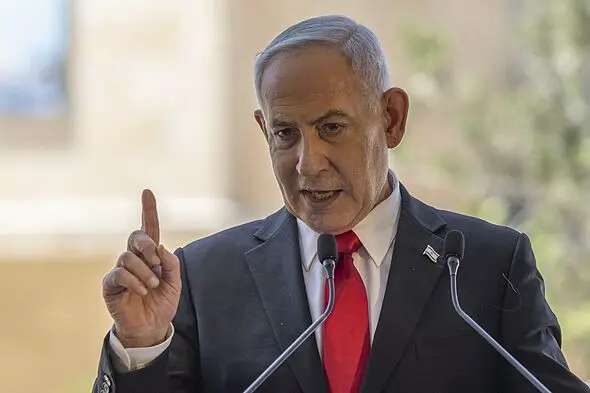
Israeli Prime Minister Benjamin Netanyahu has dealt a significant setback to President Donald Trump's Gaza peace initiative, firmly stating that Israel will not withdraw from the Gaza Strip until Hamas has completely disarmed. The declaration, made in a video posted on social media, directly contradicts the terms of a recent agreement brokered by the Trump administration, which called for a phased approach involving both disarmament and Israeli withdrawal.
The Trump-brokered agreement had outlined a process for Hamas to begin disarming while Israel simultaneously started withdrawing from roughly 60 percent of Gaza and halting its military strikes. However, Netanyahu was unequivocal in his rejection of that framework. "The Trump administration sent us a draft. We did not agree. It is not our draft. We sent our comments. ... This is our position," he said, reiterating that disarmament must come first and that no Israeli withdrawal would occur until that condition is met.
The dispute highlights growing friction between the two leaders at a critical moment. Netanyahu, who faces intense domestic pressure over the October 7 attacks and ongoing corruption charges, is also preparing for elections in Israel scheduled for October. His hardline stance on Gaza appears aimed at appeasing his right-wing political base, but it has placed him on a collision course with Washington's diplomatic efforts.
Background of the Ceasefire and Its Stalled Implementation
The broader ceasefire agreement, mediated by Qatar, Egypt, and the United States, brought an end to major military operations in Gaza and facilitated the release of remaining Israeli hostages held by Hamas. For many, it was seen as a breakthrough after months of devastating war. Yet while those initial objectives were achieved, the agreement has stalled on other critical fronts, including the terms of withdrawal and the disarmament of militant groups.
According to Gaza's Health Ministry, at least 1,252 people have been killed since the ceasefire took effect in October 2025. The figure underscores the fragility of the truce and the continued violence that has plagued the region despite the formal end to large-scale combat. The ceasefire, while reducing the intensity of conflict, has not brought a complete halt to bloodshed, and sporadic Israeli strikes have continued to draw international condemnation.
The issue of hostages has been a particularly emotional and politically charged aspect of the conflict. The release of the remaining Israeli hostages brought hope to families who had campaigned for their return. However, many other families remain in limbo, and the incomplete nature of the ceasefire has left them uncertain about the future. Netanyahu's insistence on full disarmament as a precondition for withdrawal adds another layer of complexity to already fragile negotiations.
Netanyahu's Political Pressures
Netanyahu is navigating an extraordinarily difficult political landscape. He faces mounting criticism over the intelligence and military failures that allowed the October 7 attacks to occur, as well as ongoing legal proceedings related to corruption charges that have plagued his career. With elections scheduled for October, his political survival may depend on projecting strength against Hamas and resisting perceived pressure from the United States or other international actors.
His rejection of the Trump plan is therefore not merely a policy disagreement; it is also a calculated political maneuver. By taking a maximalist position, Netanyahu seeks to solidify support among Israeli voters who are wary of any deal that appears to reward Hamas or leave the group with military capability. At the same time, he risks alienating Washington at a moment when Israel relies heavily on U.S. military and diplomatic support, especially in the context of the ongoing war with Iran.
Mass Funeral Highlights Gaza's Trauma
In a grim reminder of the war's toll, Palestinians gathered on Tuesday for a mass funeral of more than 100 bodies recovered from a deadly Israeli strike in Gaza in 2023. The strike, which occurred on November 22, 2023, weeks into the conflict with Hamas, flattened a residential block in Gaza City's Sabra neighborhood, killing more than 300 people. Rescue efforts at the time were largely improvised, with around 40 bodies recovered using rough tools and bare hands. Most of the victims remained buried beneath the rubble.
Over the weekend, first responders intensified their excavation work and successfully recovered the remains of 112 victims, including 40 children, according to the Civil Defense, a rescue agency operating under the Hamas-run Interior Ministry. The agency reported that 157 bodies are still believed to be buried under the destroyed structures, leaving families in a painful state of uncertainty as they wait to recover their loved ones for proper burial.
The mass funeral was a somber event that drew crowds of mourners carrying coffins wrapped in Palestinian flags. For many, it was another painful chapter in a conflict that has caused immense suffering and loss. The inability to recover and identify bodies for years after the strike has compounded the grief, and the scene in Gaza City underscored the scale of the human catastrophe that the ceasefire has not yet resolved.
Fractures in the U.S.-Israel Alliance
The tensions over the Gaza plan are part of a broader deterioration in U.S.-Israel relations, particularly regarding the war with Iran. Israeli media, citing a security source, reported that President Trump's behavior is damaging and eroding Israel's operational capability. This unprecedented criticism suggests a breakdown in trust between the two allies, who have historically maintained close ties.
Trump himself has shown signs of impatience with Netanyahu. In an interview with Axios, the president revealed that he had cautioned the prime minister about the consequences of prolonging the conflict with Iran. "I said, 'Bibi, you better be careful, or you will be on your own very soon,'" Trump stated. The remark was seen as a direct warning that continued escalation could eventually leave Israel without American backing.
The cracks in the alliance have implications beyond the immediate conflict. The United States has been Israel's most important military and diplomatic partner for decades, providing billions in aid and shielding it from international criticism. Any erosion of that support could change the strategic calculus in the region and weaken Israel's position vis-à-vis adversaries such as Iran and its proxies.
American Public Opinion Shifts
Public opinion in the United States appears to be shifting as well. A Pew Research Center poll conducted in July showed that favorable views of the Israeli people have fallen significantly, from 67 percent in 2022 to 52 percent today. Even more striking, 62 percent of Americans now hold an unfavorable view of the Israeli government. These numbers reflect growing war-weariness among American audiences and increasing scrutiny of Israel's military actions in Gaza and its broader regional posture.
The combination of pressure from domestic politics, diplomatic disputes with Washington, and a shifting American public mood presents a major challenge for Netanyahu. His refusal to accept the Trump plan may resonate with his immediate political constituency, but it carries substantial risks. Without the backing of the U.S. government and public, Israel's ability to sustain its military positions and pursue its security objectives in Gaza and against Iran may be significantly constrained.
As the ceasefire continues to stall and the prospect of further escalation looms, the coming weeks leading up to the Israeli elections will be crucial. Netanyahu's decision to publicly reject the U.S. draft proposal signals that he is prepared to go it alone if necessary. Whether that position will lead to a breakthrough or further isolation remains to be seen.
The toll on Palestinian civilians remains severe, with no clear path forward on disarmament, withdrawal, or reconstruction. The mass funerals of bodies recovered from a 2023 strike are a stark reminder of the entrenched nature of the conflict. Meanwhile, the strained relationship between Washington and Jerusalem adds an unpredictable element to an already volatile situation.
Source: AOL.com News