
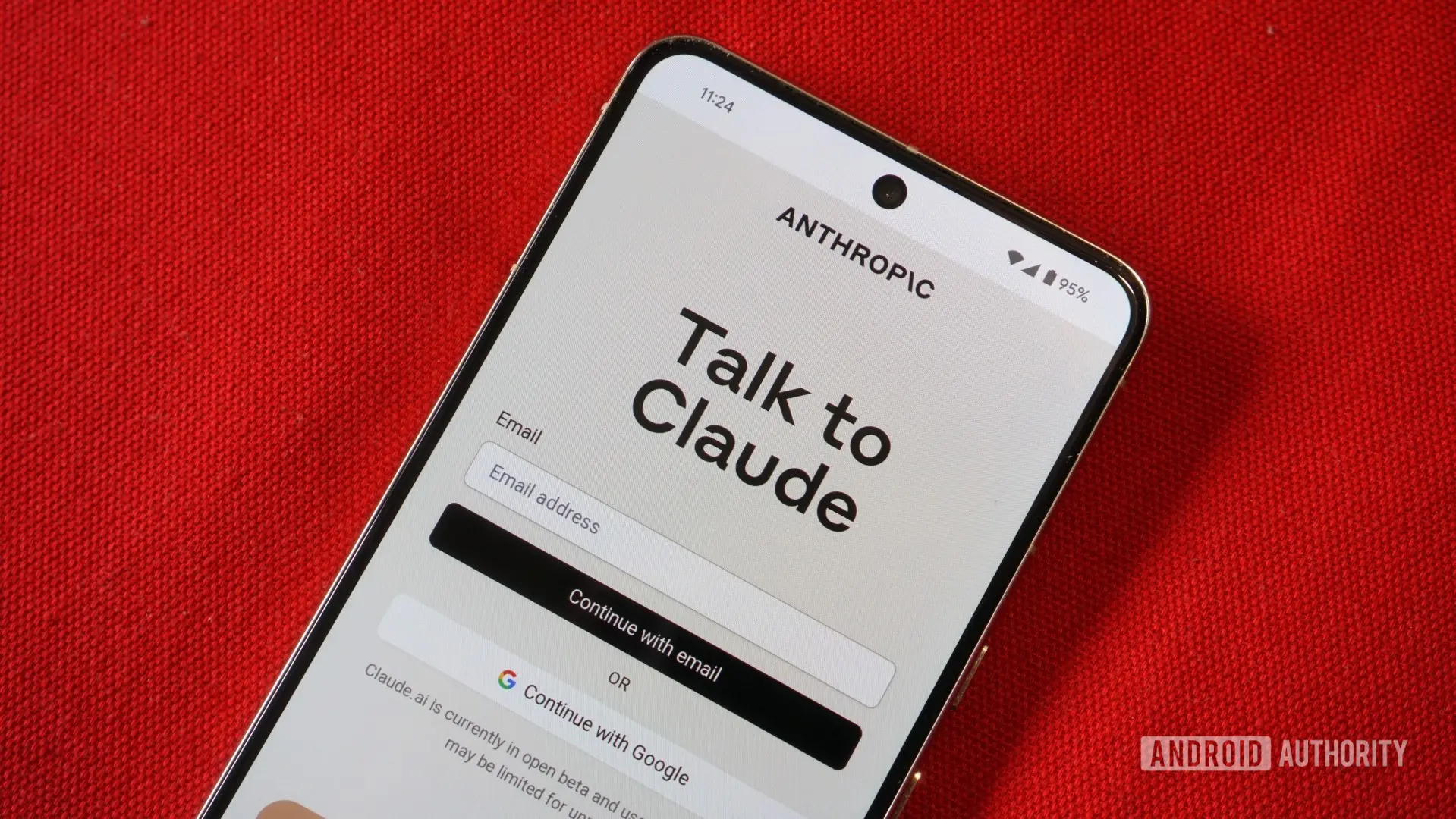
Last week, the US government sent a shockwave through the AI industry by issuing an emergency national security directive that effectively forced Anthropic to pull its most advanced Fable 5 and Mythos 5 AI models globally. The move surprised many in the tech world, as Anthropic had been seen as a key partner in responsible AI development. Now, the company is striking an optimistic tone, reassuring users that access to its flagship models could be restored shortly.
Speaking at a press conference in Seoul, Chris Ciauri, Anthropic's Managing Director of International, stated that the company is 'very confident that in the coming days, the models will become available again,' as reported by local media. The event in South Korea was initially intended to mark Anthropic's expansion in the region, but questions about recent export controls and Anthropic's Project Glasswing program dominated the discussion.
The US government's security anxiety centers heavily on Mythos 5. Unlike more consumer-focused models, Mythos 5 has been heavily guarded due to its advanced capability to scan, identify, and fix severe vulnerabilities in highly complex, supposedly unbreakable codebases. In the hands of a bad actor, that same capability can be reversed to discover and exploit critical infrastructure flaws. To manage this risk, Anthropic restricted Mythos access to an exclusive corporate cybersecurity initiative called 'Project Glasswing.'
Project Glasswing has approximately 150 partners, according to Anthropic, including Google, NVIDIA, Microsoft, and Apple. However, reports indicate that the US's export controls materialized following a dispute with Anthropic over including South Korean telecom giant SK Telecom in Project Glasswing and granting it access to Claude Mythos 5. Citing people familiar with the matter, reports note that US officials were concerned about what they alleged were SK Telecom's ties to China.
Anthropic declined to comment on the report, while the White House and SK Telecom did not respond. An SK Telecom representative told South Korean media, 'The anonymous insider's remarks in foreign media lack verified facts, and our company has no ties to China.'
Anthropic was founded in 2021 by former OpenAI researchers and has quickly risen to prominence with its Claude line of AI models. The company emphasizes safety and alignment, making its models particularly attractive for enterprise and government applications. Fable 5 and Mythos 5 represent the pinnacle of Anthropic's capabilities, with Mythos 5 being a specialized code analysis tool that can identify zero-day vulnerabilities in critical infrastructure software. The models rely on advanced reinforcement learning and constitutional AI techniques to ensure they act safely even when given powerful capabilities.
The emergency freeze has had cascading effects. Many cybersecurity firms and national defense contractors were relying on Mythos 5 for threat detection and patch management. The sudden loss of access forced them to revert to older, less capable tools, raising concerns about security gaps in the interim. Anthropic has been working with US authorities to develop region-specific guardrails and security patches that would allow the models to be reactivated while addressing the government's concerns.
One of the key issues was the lack of transparency regarding which entities could access the most powerful models. Project Glasswing was originally conceived as a way to provide exclusive access to trusted partners, but the inclusion of a foreign telecom company triggered alarm within the US intelligence community. This incident highlights the broader debate over how to balance innovation in AI with national security. Similar tensions have played out with other advanced technologies, such as semiconductor export controls aimed at limiting China's access to cutting-edge chips.
The situation also underscores the geopolitical dimensions of AI development. South Korea, a key US ally, has been seeking to expand its role in the AI ecosystem, but its proximity to China and deep economic ties create friction. SK Telecom is one of the largest telecom providers in South Korea and has partnerships with Chinese companies in areas like 5G and cloud computing. While SK Telecom denies any improper ties, the US government's actions suggest a growing unwillingness to take risks when it comes to advanced AI capabilities.
For paying customers currently locked out of Anthropic's most capable systems, the focus now shifts to whether the company's incoming regional guardrails and security patches will be enough to appease Washington and get the models back online soon enough. Anthropic has indicated that the patch will enforce stricter access controls within specific regions and add monitoring to detect potential misuse. The company has also offered to submit to independent audits of its security practices.
Industry analysts note that this incident could set a precedent for how AI companies manage international partnerships and comply with rapidly evolving export control regimes. The US government has been increasingly assertive in regulating AI, with the Biden administration's executive order on AI safety and recent actions by the Commerce Department to restrict the transfer of certain AI technologies to foreign entities. Anthropic's handling of this crisis will be closely watched by other firms like OpenAI, Google DeepMind, and Meta AI, which all have advanced models that could face similar scrutiny.
In the meantime, Anthropic is continuing its expansion into Asia. The company opened a new research office in Seoul and plans to hire local talent for AI safety research. The press conference where Ciauri spoke was part of these efforts. Despite the setback, the company remains committed to the region, seeing it as a crucial market for both customers and talent.
The rapid reversal of the freeze—if it happens—would be a testament to Anthropic's ability to navigate complex regulatory landscapes. It would also signal to the industry that proactive cooperation with government agencies can lead to quicker resolutions. However, the underlying tensions over AI and global security are unlikely to disappear. As AI models become more powerful, the balance between openness and control will continue to be a defining challenge for the field.
For now, users and partners await the return of Fable 5 and Mythos 5, hoping that the confidence expressed by Anthropic's leadership proves well-founded.
Source: Android Authority News