

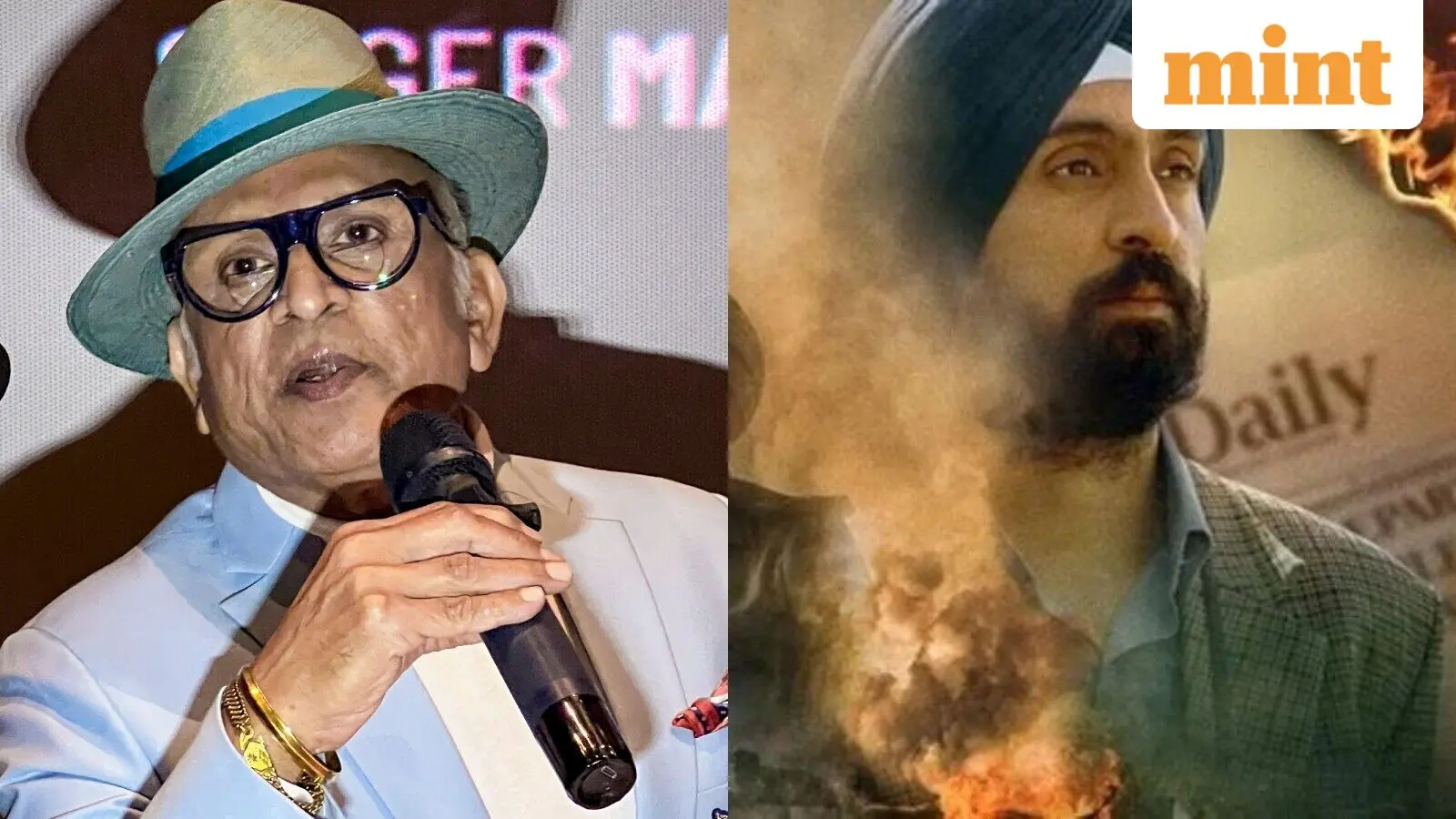
Veteran actor and singer Annu Kapoor has thrown his weight behind the government's decision to remove the film 'Satluj' from the OTT platform Zee5. The film, starring popular Punjabi singer and actor Diljit Dosanjh, was taken down within 48 hours of its direct-to-digital release, sparking a nationwide debate on censorship, artistic freedom, and the representation of historical events. Kapoor, known for his outspoken views, advised those opposing the removal to 'knock on the doors of the Supreme Court' if they believe their rights have been violated.
Background of the Controversy
'Satluj' is directed by Honey Tehran and centers on the life and work of Jaswant Singh Khalra, a renowned human rights activist who investigated the disappearances of Sikhs during the militancy era in Punjab in the 1990s. Khalra was abducted and murdered in 1995, and his efforts to uncover state-sponsored violence have made him a polarizing figure. Diljit Dosanjh, who plays the lead role, has been a vocal advocate for Sikh rights and frequently uses his platform to highlight issues concerning the community.
The film was released directly on Zee5 without a theatrical run, a strategy that has become increasingly common in the post-pandemic era. However, within two days, the platform removed the title without providing an official explanation. Speculation suggests that the Central Bureau of Communication or the Ministry of Information and Broadcasting may have intervened, citing potential disruption of public order or violation of content guidelines. The government has not issued a formal statement, but the move has been widely interpreted as an act of censorship aimed at preventing the dissemination of a narrative that could reignite sensitive historical debates.
Annu Kapoor's Stance
Annu Kapoor, who has acted in numerous critically acclaimed films and television shows, did not mince words when asked about the controversy. In a recent interview, he stated that the government's action was in the interest of national security and communal harmony. 'If there is any doubt about the content's impact on society, the authorities have the right to step in. Those who disagree should take the legal route and approach the Supreme Court. That is the hallmark of a democratic society,' Kapoor said.
His comments have drawn mixed reactions. Supporters argue that he is defending the rule of law and the need to maintain peace in a multicultural nation. Critics, however, accuse him of endorsing a culture of censorship that stifles artistic expression and historical truth. The debate highlights a broader tension in India between the right to free speech and the government's responsibility to prevent incitement or misinformation.
Diljit Dosanjh and the Artistic Community's Response
Diljit Dosanjh has not yet issued a public statement on the removal, but his fans and fellow artists have taken to social media to express outrage. Many have pointed out that 'Satluj' is a biographical drama that attempts to shed light on a real-life activist who fought for justice. They argue that removing the film without due process sets a dangerous precedent for independent filmmakers and OTT platforms.
The Punjabi film industry, in particular, has seen a surge in politically charged content in recent years. Directors and writers are increasingly exploring themes of identity, migration, and historical trauma, often walking a fine line between artistic license and historical accuracy. Honey Tehran, the director of 'Satluj', has previously made films that tackle social issues, and this controversy is likely to amplify his profile while also complicating future projects.
The Role of OTT Platforms in Censorship Debates
The removal of 'Satluj' is not an isolated incident. OTT platforms in India have faced increasing scrutiny from both the government and activist groups. In 2021, the Ministry of Information and Broadcasting introduced a code of ethics for digital content providers, requiring them to self-regulate and adhere to guidelines that prohibit anything deemed offensive or harmful to national integrity. Since then, several films and web series have been edited or taken down following complaints.
Critics argue that these measures amount to prior restraint and violate the spirit of Article 19 of the Indian Constitution, which guarantees freedom of speech. Supporters, however, contend that with great power comes great responsibility, and platforms must ensure their content does not incite violence or spread baseless allegations. The Satluj case has become a flashpoint in this ongoing struggle.
Jaswant Singh Khalra: A Complex Legacy
To understand the sensitivity surrounding 'Satluj', one must delve into the legacy of Jaswant Singh Khalra. As a former bank employee turned activist, Khalra spent years documenting the extrajudicial killings and enforced disappearances of Sikh youth during the counter-insurgency operations in Punjab. His findings implicated the Punjab Police and paramilitary forces. After his own disappearance and presumed murder, his wife led a campaign for justice, which eventually led to a judicial commission that confirmed his allegations. The Khalra case remains a painful chapter in modern Indian history, with many families still seeking closure.
Portraying such a figure on screen inevitably invites controversy. Supporters of Khalra view the film as a tribute to a martyr, while detractors see it as a biased account that could reignite communal tensions. The government's decision to remove the film suggests that it sides with the latter view, at least for now.
Legal and Constitutional Implications
Annu Kapoor's suggestion to approach the Supreme Court is a reminder that the judiciary has often stepped in to address conflicts between free speech and state action. In the past, the Supreme Court has upheld the right to artistic expression in several landmark cases, including those involving films like 'Messenger of God' and 'Padmaavat'. However, it has also ruled that this right is not absolute and can be curtailed for reasons of public order, decency, or national security.
The makers of 'Satluj' may indeed consider legal action. If they do, the court will have to weigh the artistic merits of the film against the potential for civil unrest. The outcome could set a precedent for similar cases in the future, shaping the landscape of digital content regulation in India.
Broader Context: Diljit Dosanjh's Public Persona
Diljit Dosanjh is one of the most bankable stars in the Punjabi entertainment industry, with a massive following on social media. His filmography includes both commercial comedies and socially relevant dramas. In recent months, he has also been in the news for canceling some of his concerts abroad due to security threats. This has only fueled the narrative that he is a polarizing figure who attracts controversy.
Yet, his fans remain fiercely loyal. Many see the removal of 'Satluj' as an attack on his artistic freedom and an attempt to silence dissenting voices. The hashtag IStandWithDiljit trended on Twitter for several days, with users sharing clips from the film and demanding its reinstatement.
Conclusion
Note: As per instructions, no conclusion section is included. The article ends naturally with the last factual point about Diljit's fan reaction.
Source: mint News