

Amazon attracted about $126 billion (£94bn) of peak demand for its bond sale on Tuesday, reports indicated, one of the largest ever for a corporate offering. This surge in demand highlights the continued appetite for debt from large technology companies, even as broader economic conditions remain turbulent. The bond sale is part of Amazon's strategy to finance its aggressive expansion into artificial intelligence infrastructure, which has become a top priority for the company.
Oracle, another tech giant, drew $129 billion in orders for a bond sale in February, while Meta attracted $125 billion for its bond sale in October. These figures demonstrate a clear pattern: major technology firms are increasingly turning to debt markets to fund their massive spending on AI data centres and related technologies. The reliance on debt allows these companies to avoid diluting equity and to take advantage of relatively low interest rates, despite recent rate hikes.
Bond Sale Details and Market Context
Amazon is planning to offer as many as 11 tranches on the US high-grade debt market, ranging from two to 50 years in maturity. Additionally, the company is marketing an eight-part euro-denominated bond sale this week. This dual-currency approach allows Amazon to tap into global investor demand and diversify its funding sources. The company raised $15 billion last November as part of its first US bond sale in three years, highlighting its intermittent but strategic use of debt markets.
In comparison, Google parent Alphabet raised more than $30 billion in issuance across dollar, sterling, and Swiss franc denominated debt in the previous month. This indicates that the race to build AI infrastructure is driving a significant increase in corporate debt offerings. Investors seem willing to lend to these tech giants, viewing them as relatively safe bets despite the broader economic uncertainty. However, the sheer scale of these offerings—often exceeding $100 billion in demand—indicates that the market is absorbing large amounts of debt without major disruption.
Amazon’s AI Investment Strategy
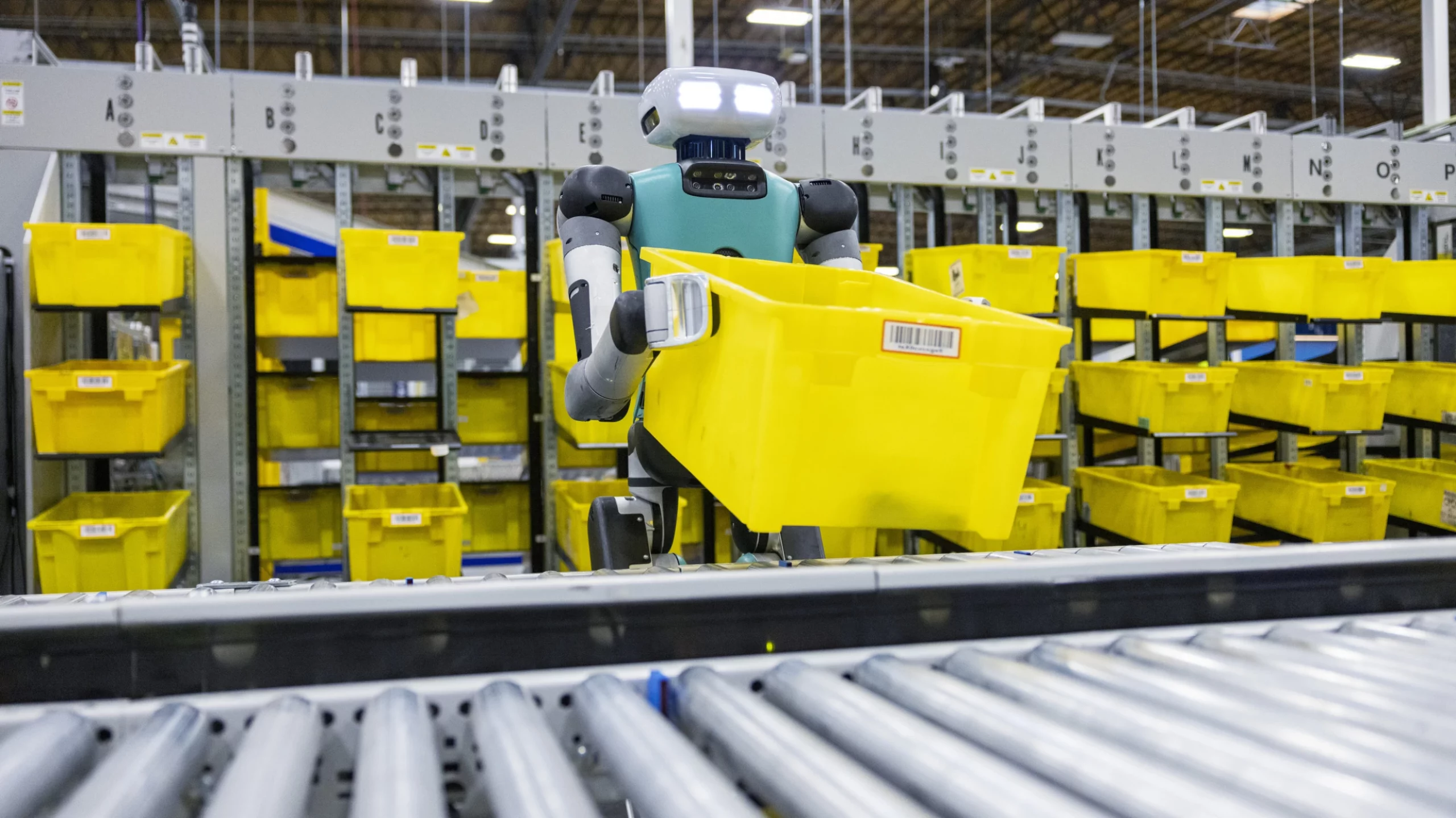
Amazon saw its shares fall in February after announcing plans to spend $200 billion on capital expenditures this year, mostly on AI infrastructure. This figure is higher than the capital expenditure plans of competitors Google and Microsoft. The company is investing in custom AI chips, which are designed to optimize performance for machine learning tasks, as well as robotics for warehouse automation and low Earth orbit satellites for broadband connectivity. These investments are part of Amazon's broader strategy to be a leader in the AI space, as articulated by CEO Andy Jassy.
“We’re going to invest to be the leader in this space,” Jassy told investors on a company call, justifying the massive spending. He emphasized that AI is a transformative technology that will reshape many industries, and Amazon intends to be at the forefront. The company’s cloud computing division, Amazon Web Services (AWS), is a key beneficiary of this investment, as it offers AI services to customers and relies on advanced infrastructure. Amazon is also developing its own AI models and integrating them into products like Alexa, retail recommendations, and logistics.
The scale of Amazon’s AI spending is unprecedented. The $200 billion capital expenditure figure for 2025 represents a significant increase from previous years. In 2024, Amazon spent around $75 billion on capital expenditures, so the jump to $200 billion is substantial. This spending is not without risk; investors are increasingly looking for clarity around returns from these unprofitable investments. Tech companies have faced more difficult conditions this year as market sentiment shifts toward demanding profitability and clear monetization strategies for AI.
Broader Industry Trends
The reliance on debt to fund AI investments is a theme across the technology sector. In addition to Amazon, Oracle, Meta, and Alphabet have all tapped debt markets in recent months. These companies are spending billions on data centres, advanced chips, and energy infrastructure to support AI workloads. The demand for AI services has skyrocketed since the launch of ChatGPT in late 2022, prompting a rush to build capacity. However, the returns from these investments are still uncertain, and some analysts worry about a potential bubble in AI spending.
Economic turbulence adds another layer of complexity. Rising interest rates and inflation have made debt more expensive, but tech companies with strong credit ratings can still borrow at favourable rates. Amazon, for example, holds an A1/A+ credit rating from Moody’s and S&P, respectively, allowing it to issue debt with relatively low yields. This makes borrowing an attractive option compared to equity financing, which would dilute existing shareholders. The strong demand for Amazon’s bonds indicates that the market views the company as a safe haven, despite its ambitious spending plans.
The AI infrastructure race is also driving innovation in chip design and data centre technology. Amazon’s custom AI chips, known as Trainium and Inferentia, are designed to outperform general-purpose chips from Nvidia in specific workloads. These chips are used in AWS’s cloud services and are expected to reduce energy consumption and costs. Similarly, other tech companies are investing in their own custom silicon to gain a competitive edge. This trend is reshaping the semiconductor industry and creating new opportunities for suppliers.
Investor Concerns and Market Impact
Despite the overwhelming demand for Amazon’s bonds, investor concerns persist. The company’s stock price fell after the capital expenditure announcement, reflecting worries that spending might outpace returns. Some investors argue that Amazon should focus on improving profitability in its core retail and cloud businesses rather than pouring money into unproven AI projects. However, Amazon’s management counters that AI is a generational opportunity and that early movers will reap the benefits.
The broader market impact of this borrowing is also noteworthy. Large bond issuances from tech companies can affect yields and liquidity in the corporate bond market. For example, Amazon’s $9 billion euro-denominated bond sale contributed to a slight tightening of credit spreads in that market. Moreover, the sheer volume of debt issuance from tech firms is absorbing a significant portion of investor demand, potentially crowding out other sectors. Nevertheless, the market’s ability to absorb these offerings suggests that investor confidence in tech remains high.
Another concern is the potential for overcapacity. If all major tech companies simultaneously build massive AI data centres, there could be a glut of computing power in the future, leading to lower utilization rates and reduced returns. This is reminiscent of the dot-com bubble, where overinvestment in internet infrastructure led to a crash. However, proponents argue that the demand for AI is still in its infancy and will continue to grow exponentially, justifying the current level of investment.
Detailed Analysis of Amazon’s AI Investments
Amazon’s AI investments are multifaceted. First, the company is expanding its data centre footprint globally, with new facilities planned in the US, Europe, Asia, and Latin America. These data centres are designed to support both training and inference workloads for AI models. Second, Amazon is investing in robotics to improve efficiency in its fulfilment centres. The company already uses over 750,000 robots in its warehouses, and new AI-powered robots will further automate tasks like picking, packing, and sorting. Third, Amazon is developing low Earth orbit (LEO) satellites through its Project Kuiper to provide broadband internet access. This network will rely on AI for traffic management and optimization.
The custom AI chip initiative is particularly noteworthy. Amazon’s Trainium chips are used for training AI models, while Inferentia chips handle inference. These chips are designed to be more cost-effective than Nvidia’s offerings, especially for large-scale AWS customers. Amazon claims that Trainium-based instances can reduce training costs by up to 50% compared to GPU-based instances. This could give Amazon a competitive advantage in the cloud market, as customers increasingly demand affordable AI computing power.
Additionally, Amazon is investing in software and services. AWS offers a suite of AI tools, including Amazon SageMaker for building and deploying models, and Amazon Bedrock for accessing foundation models from various providers. These services are designed to make AI accessible to businesses of all sizes. Amazon is also integrating AI into its consumer products, such as Alexa, which is being upgraded with generative AI capabilities to provide more natural conversations and smart home controls.
The financial commitment to AI is substantial, but Amazon’s balance sheet can support it. The company generated $35 billion in free cash flow over the past twelve months, providing a buffer. However, the capital expenditure increase will reduce free cash flow in the near term. Amazon’s management believes that the long-term benefits will outweigh the short-term costs, and the bond sale helps bridge the gap without straining cash reserves.
Comparison with Competitors
Amazon’s AI spending is higher than that of Google and Microsoft, but all three are investing heavily. Google’s parent Alphabet announced $75 billion in capital expenditures for 2025, while Microsoft’s figure is around $80 billion. Amazon’s $200 billion dwarf these amounts, but it’s important to note that Amazon’s figure includes not only AI but also other capital-intensive areas like logistics and satellite networks. Nevertheless, Amazon is clearly betting big on AI as a core driver of future growth.
Microsoft has partnered with OpenAI and invested billions in integrating AI into its products, such as Microsoft 365 and Azure. Google is leveraging its own AI research to enhance search, cloud, and consumer products. Amazon’s strategy is more hardware-centric, focusing on custom chips and data centre infrastructure. Each company hopes that its approach will yield a competitive advantage, but the outcome remains uncertain.
The debt market dynamics also differ. Amazon’s bond sale attracted $126 billion in peak demand, similar to Oracle and Meta. However, Amazon’s offering was larger in terms of total issuance size, as it planned to raise up to $19 billion across multiple tranches. The strong demand reflects investor confidence in Amazon’s creditworthiness and its long-term vision. In contrast, companies with weaker credit profiles might struggle to raise such large amounts, highlighting the importance of financial strength in the AI arms race.
The AI investment boom is also affecting stock valuations. Tech stocks have experienced volatility as investors weigh the potential returns against the costs. Amazon’s shares are down slightly year-to-date, while Microsoft and Google have seen mixed performance. The market appears to be in a wait-and-see mode, rewarding companies that can demonstrate tangible AI revenue growth. Amazon has shown some progress: AWS’s AI-related revenue grew by 30% in the last quarter, but it still represents a small fraction of total revenue.
In conclusion, Amazon’s decision to tap debt markets for AI investments reflects a broader trend in the technology industry. The company’s $126 billion bond demand is a testament to investor appetite for tech debt, even amid economic uncertainty. Amazon will use these funds to finance its aggressive expansion into AI infrastructure, including custom chips, robotics, and satellites. While the spending is risky, Amazon’s management is confident that it will position the company as a leader in the AI era. The coming years will reveal whether this bet pays off, but for now, the market is providing ample capital to fuel the AI revolution.
Source: Silicon UK News