

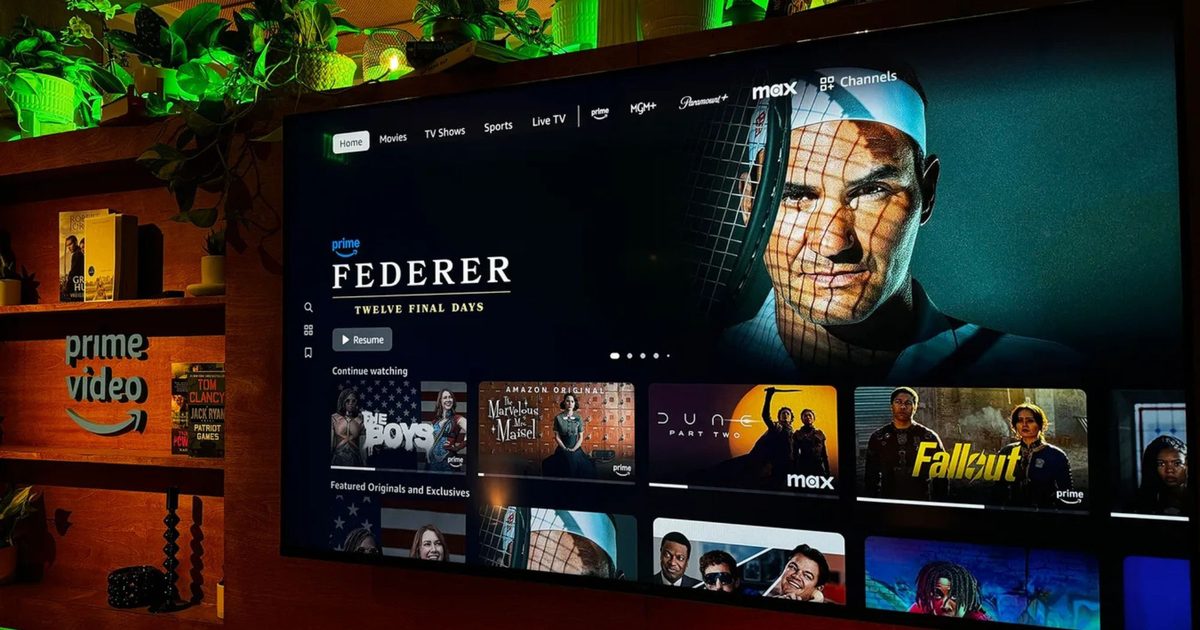
Prime Video's home screen has looked largely unchanged for years, presenting subscribers with endless rows of tiles that rarely align with what they actually want to watch. Amazon is now betting that artificial intelligence can finally solve this frustration, and perhaps surprisingly, Jeff Bezos is personally driving the effort.
According to a Reuters report, Bezos directed Prime Video head Mike Hopkins to overhaul the streaming service so that AI sits front and center. The project, internally codenamed Lighthouse, is already reshaping how the app might work, from its layout to its search capabilities.
What's changing on Prime Video?
The redesign would rebuild the home page around AI-generated recommendations instead of the fixed grid that every subscriber currently sees. One version that Prime Video executives has discussed includes tiles built around prompts like 'action movies from the 1980s' or 'Christmas rom-coms,' shaped by the user's own viewing habits. This represents a significant departure from the traditional linear browsing experience that has dominated streaming services for years.
Amazon is also weighing whether to fold its Alexa voice assistant into search, so subscribers could simply say what they're in the mood for instead of typing it out. Traditional text search is not going anywhere either, and the top of the screen would still hold space for highlights like Thursday Night Football, the NFL game exclusive to Amazon. The integration of voice commands could further streamline the discovery process, especially for users who prefer hands-free interaction.
Behind the scenes, Amazon's engineering teams are reportedly training machine learning models on vast datasets of viewer behavior, including watch history, search queries, and even pause or rewind patterns. The goal is to deliver recommendations that feel intuitive rather than generic. Early prototypes have shown that AI can surface content that users might not have otherwise considered, potentially increasing engagement and time spent on the platform.
What's driving Bezos's sudden push for AI?
The Lighthouse project did not start as a routine product update. Reuters reports that the project grew out of a tense meeting last fall, where Bezos told Prime Video executives that their original plans did not lean hard enough into AI and personalization. The team scrapped that version entirely and rebuilt it from scratch under global design lead Kam Keshmiri. Bezos has stayed personally involved ever since, which is interesting given how far he has stepped back from daily Amazon operations since 2021.
Bezos's involvement signals the strategic importance of Prime Video within Amazon's broader ecosystem. The streaming service not only competes with the likes of Netflix and Disney+ but also serves as a key driver for Amazon Prime subscriptions globally. A poor user experience could undermine subscriber retention, especially as competitors invest heavily in original content and interface improvements.
There is also a much larger story behind Prime Video's redesign. Amazon has committed close to $200 billion in capital spending this year, largely tied to AI, on top of an initial $23 billion investment split between OpenAI and Anthropic. This massive financial commitment underscores Amazon's determination to position itself as a leader in artificial intelligence across all its business segments, from cloud computing to retail to entertainment.
Lighthouse is one piece of Amazon's plans to strengthen its AI reputation while rivals keep moving quickly. Currently, Prime Video holds just 4.2% of US television viewing, falling behind YouTube, Netflix, and Disney+, which gives Amazon plenty of reason to get this right. However, Amazon's other major AI project, which is an overhauled version of Alexa, has delivered mixed results so far, and the unit is reportedly still losing money. The Alexa revamp, codenamed 'Daylight,' was intended to make the voice assistant more conversational and proactive, but early user feedback has been lukewarm.
Does having more AI actually benefit viewers?
Prime Video, like most popular streaming platforms, lets studios pay for prime placement on the home screen. These paid promotions often crowd out organic recommendations, forcing users to scroll through irrelevant content. If personalized rankings start replacing some of that paid real estate, what you see first could depend more on your preferred shows instead of who paid the most. That would mark a real shift toward more honest recommendations, which is good for viewers.
However, there is still some skepticism in this conversation. Netflix has already thrown similar AI fixes at the scrolling fatigue problem, and many viewers still complain of not finding anything bingeworthy to watch on the platform. Netflix's algorithm, while sophisticated, often surfaces titles based on broad genre correlations rather than nuanced personal preferences. It is also unclear if Prime Video's redesigned AI-first approach would make the paid placement disappear entirely or simply relocate it into the algorithm itself, which would not be much of a win for viewers. In such a scenario, sponsored content could still receive preferential treatment under the guise of personalization.
Moreover, the effectiveness of AI recommendations depends heavily on data quality and transparency. If Amazon's algorithms are tuned to prioritize content from its own studios or partners, the personalization may feel manipulative rather than helpful. Striking the right balance between commercial interests and user satisfaction will be critical for Lighthouse's success.
For now, Amazon is testing early versions with a small group of users, and feedback could still reshape the final layout. Whether Lighthouse actually eases your scrolling fatigue, or just dresses it up differently, is something you will only know once it lands on your screen. The broader industry will be watching closely, as Amazon's moves often set trends that other platforms eventually follow.
Given the competitive landscape, Amazon cannot afford to falter. As of early 2025, Prime Video's share of US television viewership has remained stagnant, while YouTube and Netflix continue to grow. Disney+ has also introduced AI-driven content discovery features, such as 'Playlist' and 'Smart Recommendations,' which have received positive early reviews. Amazon's Lighthouse project must not only close the feature gap but also deliver a genuinely superior experience to win back user trust.
Historical context adds another layer: Prime Video was launched in 2006 as Amazon Unbox, and over nearly two decades, its interface has undergone only incremental changes. The original grid layout was designed for a time when streaming was still nascent, and users had fewer choices. Today, with thousands of titles available, a static grid is no longer sufficient. AI-driven personalization could be the key to unlocking the full potential of Amazon's content library, which includes critically acclaimed originals like 'The Marvelous Mrs. Maisel' and 'The Boys,' as well as a vast catalog of licensed movies and TV shows.
Additionally, Amazon's investment in original content has been massive — over $7 billion in 2024 alone. Ensuring that these investments reach the right audience is a top priority. If Lighthouse can effectively match viewers with the content they are most likely to enjoy, it could reduce churn and increase subscriber lifetime value. That is a compelling business case for Bezos to personally champion the project.
On the technical side, Amazon Web Services (AWS) provides the backbone for Lighthouse's AI capabilities. AWS's machine learning services, such as SageMaker and Rekognition, are likely being used to train and deploy recommendation models at scale. This integration gives Amazon a unique advantage over competitors, as it can leverage its cloud infrastructure to iterate rapidly and handle huge volumes of user data securely.
Yet challenges remain. Privacy concerns are paramount, and any misstep in data handling could invite regulatory scrutiny. Amazon has faced criticism in the past for its data practices, and a flawed AI recommendation system could amplify issues like filter bubbles or echo chambers. The company will need to implement robust guardrails to ensure that the AI serves user interests without crossing ethical boundaries.
In summary, Amazon's Prime Video redesign under Project Lighthouse represents a pivotal moment for both the streaming service and Amazon's AI ambitions. With Bezos driving the effort, the company is betting that personalized, AI-powered discovery can turn Prime Video into a formidable competitor against Netflix and Disney+. Early tests are promising, but the ultimate test will be whether viewers actually find what they want to watch — and whether they come back for more.
Source: Digital Trends News