

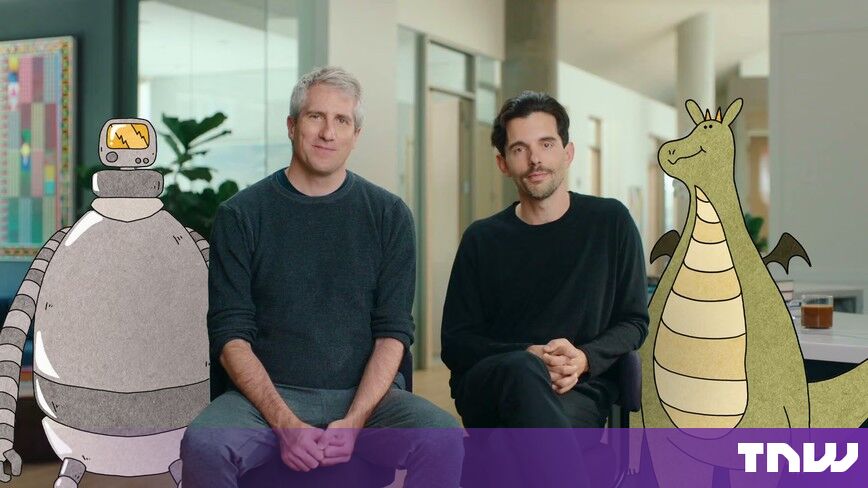
Town, a San Francisco startup building AI work assistants that operate across teams, has raised $108 million in a Series B round that values the company at $1 billion. Forerunner Ventures and Menlo Ventures co-led the financing, the company announced on Monday.
The round also drew participation from existing investors a16z and First Round Capital, along with Better Tomorrow Ventures, Precedent.vc, Scribble Ventures, Serena Ventures and Sparked Ventures. Angel investors included Brendan Foody, Josh Silverman, Romain Huet, Scott Belsky, Steve Bartel, Taro Fukuyama and Varun Anand.
Key facts at a glance
- Town raised $108 million in a Series B round.
- The round values the company at $1 billion.
- Forerunner Ventures and Menlo Ventures co-led the investment.
- Existing investors a16z and First Round Capital participated, alongside Better Tomorrow Ventures, Precedent.vc, Scribble Ventures, Serena Ventures and Sparked Ventures.
- Angel investors include Brendan Foody, Josh Silverman, Romain Huet, Scott Belsky, Steve Bartel, Taro Fukuyama and Varun Anand.
- Each employee gets an AI assistant called a Townie that connects to email, documents, calendars and core work systems.
- Town is extending the product from individual assistants to coordinated teams whose assistants can ask questions, hand off work and share approved context.
- Customers own the context their Townies build and can take it with them if they leave, according to the company.
- Town says it does not use customer-connected data to train models by default and routes tasks across models from major AI labs.
- The company launched publicly in June 2026 with a $55 million Series A.
- Since July, paying customers have grown fourfold and paying teams ninefold.
A personal assistant that learns the job
Town's core product is built around a simple idea: every person at work should have an AI assistant that understands their specific job, not just generic tasks. The company calls these assistants Townies. Each Townie connects to the user's email, documents, calendar and the core systems they work in. Over time, it learns the person's relationships, projects and voice. That context allows it to take work off the employee's plate, from drafting messages and preparing for meetings to tracking commitments and surfacing relevant information.
The approach reflects a broader shift in enterprise AI. Early workplace tools focused on isolated features, such as summarizing a document or generating an email. More recent systems aim to become persistent assistants that carry context across applications and conversations. Town's bet is that the value of an AI assistant rises sharply when it understands not only a single task but the person's ongoing responsibilities, relationships and communication style.
That is also where the company's product design becomes more complicated. An assistant that knows a person's calendar, inbox and documents must handle sensitive information carefully. Town says each Townie shares only what its person would share, asks for permission when needed and brings decisions back to that person. Those controls are intended to make the assistant useful without giving it unchecked authority to act on the employee's behalf.
From individual speed to team coordination
The new funding comes as Town extends its assistants from individuals to whole teams. The company says Townies can now ask each other questions and hand off work. Instead of an employee manually gathering context from colleagues, a Townie can request the relevant information from another person's assistant, subject to permissions. The assistant can then bring the answer or decision back to its own user.
That team-level coordination is a meaningful step beyond personal productivity. Most AI tools make an individual faster, but much of the work inside companies depends on handoffs between people, teams and departments. A sales representative may need input from legal, finance or product. A recruiter may need to coordinate with hiring managers and candidates. A project lead may need updates from several specialists. Town's premise is that assistants can reduce the friction in those handoffs if they can communicate with one another while respecting boundaries.
“AI has made each of us faster on our own. Now, it can make teams faster together,” said Jean-Denis Greze, co-founder and CEO of Town. The quote captures the company's product thesis: the next phase of workplace AI is not just about better individual responses but about coordination across an organization.
Town says its Townies can also work with customers, partners and candidates outside the company over email and text. That expands the potential use cases beyond internal collaboration. Customer-facing teams could use assistants to answer routine questions, coordinate scheduling or gather information, while external parties interact with an assistant that represents a specific employee and operates within the permissions that employee has set.
Shared workflows and consistent execution
Another part of Town's team strategy is shared workflows. The company says teams can share processes, and when one team updates a workflow, every relevant assistant picks up the change. For example, if a sales organization changes the way representatives prepare for calls, each rep's Townie can reflect the new process.
That may sound like a small feature, but it addresses a common problem in fast-growing companies: processes are documented in one place, taught in another and followed inconsistently in practice. If an AI assistant is embedded in daily work, it can become a delivery mechanism for updated procedures. Instead of relying on employees to remember a new checklist or search for the latest playbook, the assistant can incorporate the change into the work itself.
The model also raises questions about control. Teams will need clear rules about which workflows are shared, who can update them and how changes are reviewed. Town says its assistants ask permission when needed and share only what their person would share. Those safeguards will matter as companies move from pilot programs to broader deployment across sales, recruiting, customer support and operations.
Data ownership and model flexibility
Town is emphasizing data governance as it sells to businesses. The company says each customer owns the context its Townies build and can take that context along if it leaves. By default, Town does not use anything a customer connects to train a model. The company uses models from the major AI labs and picks one for each task, which it says prevents customers from being locked into a single lab.
Those commitments address three common enterprise concerns: ownership, privacy and vendor dependence. Companies are often willing to experiment with AI assistants, but they want to know where their data goes, whether it can be used to improve someone else's model and what happens if they change vendors. Data portability can reduce the fear of building valuable context into a system that cannot be moved later. Model routing can give Town flexibility as different AI labs improve at different tasks or change their pricing.
Town is SOC 2 Type 2 compliant and publishes its data processing agreement. Those details are not as visible as a product demo, but they are important for larger customers evaluating AI tools that touch email, documents and internal systems. The more deeply an assistant is embedded in daily work, the more customers will ask about security controls, auditability and contractual protections.
Growth since launch
Town launched publicly in June 2026 with a $55 million Series A. The company says it reached seven figures in annual recurring revenue within weeks. Since July, its paying customers have grown fourfold and its paying teams ninefold. Thousands of businesses now use Townies every day, Greze and co-founder Tony Vincent wrote in a blog post on the round.
Those metrics help explain why investors were willing to assign a $1 billion valuation so soon after the company's public launch. Enterprise software companies are often valued on a combination of revenue growth, retention and expansion potential. Town's claim that paying teams are growing faster than paying customers suggests that accounts are expanding within organizations, a signal investors watch closely because it can indicate that a product is becoming more embedded in daily workflows.
Shawn Carolan, a partner at Menlo Ventures, said his firm backed Siri in 2008. He said Town had chosen business over pleasure. The comparison points to a long-standing investor interest in conversational AI, but also to a difference in focus. Siri became a consumer assistant; Town is aimed at workplaces, where assistants must handle permissions, organizational context and coordination between people.
The funding gives Town more capital to build out team-level assistant coordination, expand its enterprise controls and compete in a crowded market for AI productivity tools. The company's challenge is to prove that assistants can work together reliably at scale, without creating new privacy risks or adding complexity to already busy teams.
Source: TNW | Investors-funding News