

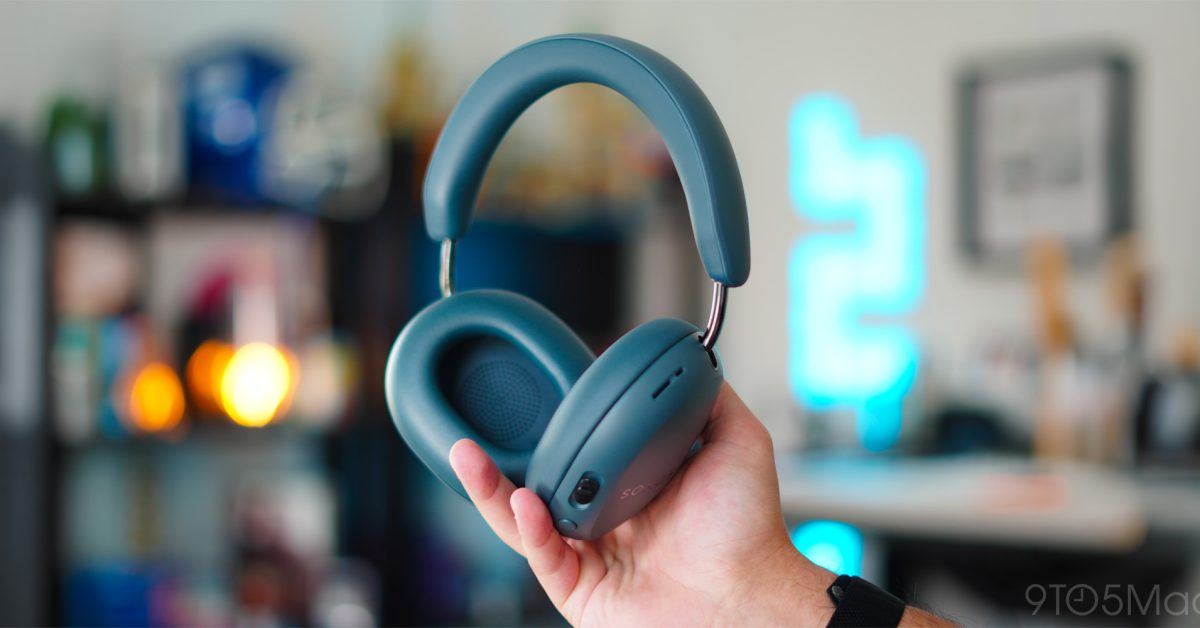
Sonos Ace Ultra Hands-On: A More Complete Premium Headphone
Sonos has returned to the over-ear headphone market with the Ace Ultra, a refined follow-up to its first-generation Ace. The original model arrived about two years ago and earned praise for its clean design, comfortable fit, and tight integration with the Sonos ecosystem. Even so, many listeners, including longtime Sonos customers, felt that a $450 pair of headphones should deliver more bass depth, stronger noise cancellation, and a smoother app experience. The Ace Ultra appears to be Sonos's answer to that feedback, and after nearly a month of daily use across travel, video editing, workouts, walks, and casual listening, the changes are more than cosmetic.
At first glance, the Ace Ultra does not look dramatically different from the original Ace. Sonos kept the same understated silhouette, with subtle chrome accents and a few new color options. The real story is inside the headphones, where redesigned acoustics, a larger microphone array, improved processing, and new customization tools come together. The result is a product that feels less like a first-generation experiment and more like a polished, finished flagship.
What Is New Compared With the Original Sonos Ace
The Ace Ultra introduces a long list of upgrades. The most important changes include redesigned 40mm drivers, a 10-microphone array that replaces the original eight-mic setup, and improved adaptive active noise cancellation. Sonos claims the new ANC is up to twice as effective and can adjust to factors such as glasses, hair, and changes in the seal around the ears. Battery life has also improved to as much as 35 hours with ANC turned on. The headphones move to Bluetooth 6.0, up from Bluetooth 5.4 on the older model, and they add expanded EQ controls with both three-band and advanced eight-band options.
Other updates include linking the headphones with the wider Sonos ecosystem, user-replaceable batteries, updated ear cushion and headband materials, and more rotation in the ear cups so they can sit flat around the neck. Sonos also added two new colors, Agave and Sand, joining Black and White. These changes may sound incremental on paper, but together they address several of the original Ace's weakest points.
Core Features That Carry Over
The Ace Ultra also retains many of the features that made the original Ace appealing. It supports spatial audio and Dolby Atmos, dynamic head tracking, lossless audio on supported devices, USB-C and 3.5mm wired audio, Bluetooth multipoint, and fast charging that can provide up to three hours of playback from a three-minute charge. TV Audio Swap with compatible Sonos soundbars also returns, allowing the headphones to take over television audio without disturbing others. The design remains a mix of plastic and metal that feels premium and lightweight, and the magnetically replaceable ear cups are still on board. For Sonos households, these ecosystem features are a major part of the appeal.
Sound Quality: More Bass Without Losing Clarity
The biggest improvement in everyday listening is the sound. The original Ace was not bad, but its bass lacked depth and impact for a premium headphone. Listeners who favor R&B, hip-hop, and pop often wanted more low-end punch. The Ace Ultra finally delivers that. There is substantially more depth and weight in the low frequencies, but Sonos did not simply boost the bass slider. The harder challenge is keeping bass from overwhelming vocals, instruments, and higher frequencies, and the Ace Ultra handles that separation well. Vocals remain clear and crisp, while the bass hits harder and feels more physical.
That improvement extends beyond music. Podcasts, movies, and streaming video all benefit from the richer low end and cleaner overall presentation. The expanded EQ controls make it easier to tailor the sound to personal taste. A three-band EQ offers quick adjustments, while the advanced eight-band EQ gives more granular control. For listeners who like to fine-tune their headphones, this is a meaningful addition that the original Ace did not offer in the same way.
Adaptive Noise Cancellation That Handles Unpredictable Noise
The improved ANC is another area where the Ace Ultra makes an immediate impression. The 10-microphone array allows the headphones to push away more ambient sound dynamically. Even with no media playing, the headphones can create an impressive sense of quiet in many different environments. Consistent noises like airplane engines have long been the target of noise cancellation, but unpredictable sounds such as passing cars, construction, sirens, and sudden loud noises are harder to manage. The Ace Ultra appears to handle those situations more effectively.
The original Ace occasionally produced a faint hissing noise in ANC mode. It did not happen often, but it was noticeable. So far, the Ace Ultra has alleviated that issue. The adaptive system also accounts for real-world variables like glasses, hair, and changes in the ear seal, which can otherwise degrade noise cancellation. That makes the feature more reliable across different users and different situations.
Comfort, Battery Life, and Sonos Ecosystem Features
Comfort is a major strength. The Ace Ultra is among the most comfortable over-ear headphones available, according to a month of regular use. During a long 8-to-10-hour airplane trip, the headphones were worn for about 95 percent of the time without causing aches, pain, or excessive heat. The updated cushion materials and additional ear cup rotation likely contribute to that experience. Battery life of up to 35 hours with ANC on also reduces charging anxiety on long trips, and fast charging helps when time is short.
For people invested in Sonos speakers, the ecosystem integration remains a differentiator. A new feature lets users move music from a Sonos speaker to the headphones with the press of a button. It is a clever addition that fits the company's multi-room audio strategy, though some users may not need it often. TV Audio Swap remains useful for late-night viewing, and Bluetooth multipoint makes it easier to switch between a phone and a computer. Wired listening through USB-C or 3.5mm is still available for supported devices, and lossless audio support adds appeal for higher-resolution listeners.
Everyday Use and Minor Complaints
Across travel, video editing, workouts, walks, and everyday listening, the Ace Ultra proved to be a dependable daily driver. The sound is noticeably better than the original, the ANC is stronger and smarter, and the app experience is smoother. The Agave color also stands out as a welcome addition to the lineup. The only notable complaint concerns the carrying case. The zipper or mechanism can cause a sticker or internal element to get stuck too often, which is a small but persistent annoyance. A revised case design would make the overall package feel even more complete.
Pricing and Availability
The Sonos Ace Ultra is available now on Sonos's website and Amazon for $449, which matches the original launch price of the first-generation Sonos Ace. It comes in four colors: Black, White, Agave, and Sand. The original Sonos Ace is also still available on Amazon for $239 while supplies last, giving shoppers a lower-cost alternative. At $449, the Ace Ultra sits firmly in the premium noise-canceling headphone category alongside established options from Apple, Bose, and Sony.
For existing Sonos Ace owners, the upgrades may be enough to justify a purchase depending on what they value most. Better bass, stronger ANC, longer battery life, a more advanced EQ, and user-replaceable batteries address the original model's main shortcomings. For anyone shopping for a premium pair of noise-canceling headphones, the Ace Ultra deserves a place on the shortlist, especially for listeners already invested in the Sonos ecosystem. The original Sonos Ace remains available for $239 while supplies last, offering a more affordable entry point to the line.
Source: 9to5Mac News